






PharmExPrep

Free lesson

Shock And Organ Perfusion

The first lesson of BCCCP Prep Course (BCCCP), free to read.

Shock And Organ Perfusion

DOMAIN: Hemodynamics and Shock → Initial perfusion assessment and pharmacotherapy prioritization

What you'll learn

  • DOMAIN: Hemodynamics and Shock → Shock recognition — distinguish the core shock phenotypes using bedside perfusion findings, hemodynamics, and common ICU data.
  • DOMAIN: Hemodynamics and Shock → Organ perfusion targets — identify which perfusion markers matter most for pharmacist monitoring and time-sensitive reassessment.
  • DOMAIN: Hemodynamics and Shock → Fluid and vasoactive decision support — choose when fluid is favored, when vasopressors should not be delayed, and what drug-related safety issues change the plan.
  • DOMAIN: Medication Management → Monitoring and toxicity prevention — build a monitoring plan for MAP, urine output, lactate trend, mental status, renal function, and medication adverse effects.
  • DOMAIN: Critical Care PK/PD → Organ dysfunction impact — connect poor perfusion to altered drug absorption, distribution, metabolism, clearance, and toxicity risk.

Blueprint mapping

  • DOMAIN: Hemodynamics and Shock → Shock recognition → bedside pattern identification
  • DOMAIN: Hemodynamics and Shock → Perfusion endpoints → monitoring target selection
  • DOMAIN: Medication Management → Vasoactive support → agent selection and reassessment
  • DOMAIN: Critical Care PK/PD → Organ dysfunction → dose adjustment logic during hypoperfusion

Estimated time 55–75 minutes

Prereqs Introduction to adult ICU assessment; upcoming connected topics: Inflammation, Sepsis, And MOF; Comorbidities In Critical Illness

Key outputs You should be able to choose the best next pharmacologic action in undifferentiated shock, identify the most useful perfusion target, recognize when fluids are insufficient or harmful, and recommend a monitoring/reassessment plan within pharmacist scope.

Why it matters

  • Shock questions are rarely testing a label alone; they test whether you can identify inadequate tissue perfusion early enough to change drug therapy.
  • For the critical care pharmacist, the exam often turns on what to start first, what not to delay, and what to monitor within minutes to hours.
  • Poor organ perfusion immediately changes drug handling, so the same dose can become ineffective in one patient and toxic in another.
  • Early confusion between distributive, cardiogenic, hypovolemic, and obstructive patterns leads to classic board traps in fluids, vasopressors, inotropes, and medication safety.

Key Terms & Must-Know Facts

Key terms

  • Shock — acute circulatory failure causing inadequate oxygen delivery relative to tissue demand.
  • Organ perfusion — effective blood flow to tissues sufficient to support cellular function.
  • MAP — mean arterial pressure; common hemodynamic target in vasopressor therapy.
  • Lactate — marker of global stress/hypoperfusion, but not a standalone diagnosis.
  • Fluid responsiveness — likelihood that stroke volume or cardiac output increases after fluid administration.
  • Vasoplegia — low systemic vascular tone leading to reduced arterial pressure despite adequate or increased cardiac output.
  • Preload — ventricular filling before contraction.
  • Afterload — resistance the ventricle must overcome to eject blood.
  • Cardiac output — blood pumped per minute; \( CO = HR \times SV \).
  • Systemic vascular resistance — arterial tone/load contributing to blood pressure.
  • Shock index — heart rate divided by systolic blood pressure; a screening clue, not a sole treatment trigger.
  • Capillary refill — bedside sign of peripheral perfusion.
  • Mixed venous or central venous oxygen saturation — surrogate of oxygen delivery-consumption balance.
  • End-organ dysfunction — kidney injury, altered mentation, hepatocellular injury, or worsening acid-base state from hypoperfusion.

Must-know facts

  • Normal blood pressure does not exclude shock if perfusion is poor.
  • Hypotension with cold extremities and rising lactate is a treatment problem first, not a naming exercise.
  • A common initial MAP target is at least 65 mm Hg, but patient-specific goals may differ.
  • Urine output under 0.5 mL/kg/hr is a major perfusion warning sign in adults.
  • Lactate clearance trend is more useful than a single isolated value.
  • Norepinephrine is the usual first-line vasopressor for many distributive shock scenarios.
  • Fluids help only if the patient is likely fluid responsive; excess fluid can worsen oxygenation and organ congestion.
  • Cardiogenic shock often needs caution with fluids and consideration of inotropy or vasoactive support.
  • Obstructive shock does not improve with escalating pressors alone if the obstruction is unaddressed.
  • Poor perfusion can reduce renal and hepatic clearance, increasing drug accumulation risk.

Core content

1.1.1.1 Foundational recognition: what shock means for a pharmacist

A. Explanation

The board-style conflict is usually this: Is this patient merely hypotensive, or are they in true shock requiring immediate pharmacologic support and perfusion monitoring? The rule that resolves the conflict is simple: choose the answer that recognizes inadequate tissue perfusion, not just a low blood pressure number. A patient with MAP 62 mm Hg plus confusion, oliguria, cool mottled skin, rising lactate, or worsening creatinine is in a different category than a stable patient with a transient low cuff reading.

WHY THIS IS TESTED: exam stems often hide the key clue in organ dysfunction rather than in the headline blood pressure. Pharmacist-level reasoning begins with identifying whether oxygen delivery is failing and whether drug initiation, titration, or escalation should occur now.

Think in terms of determinants: pressure, flow, and tissue delivery. Blood pressure reflects the interaction of cardiac output and vascular tone. Organ perfusion then depends on whether that pressure and flow actually reach microcirculation. This is why the exam rewards choosing a therapy that corrects the dominant problem: volume loss, pump failure, vasodilation, or obstruction. See Fig 1.

The most useful bedside pharmacist cues are: MAP trend, heart rate pattern, urine output, lactate trend, mental status, skin temperature/mottling, creatinine, transaminase changes, and whether vasoactive needs are increasing. A single lactate can mislead; beta-agonists, seizures, liver dysfunction, or severe adrenergic stress can elevate it. A single MAP can mislead too; a chronically hypertensive patient may need a higher pressure to perfuse kidneys or brain than another patient would.

Fig 1. Shock recognition framework
Exam takeaway: Identify shock by combining pressure, perfusion, and organ dysfunction rather than relying on hypotension alone.
flowchart TD
A[Low MAP or concerning trend] --> B{Perfusion signs present?}
B -->|Yes| C[Check urine output, mentation, lactate, skin]
C --> D{End-organ dysfunction?}
D -->|Yes| E[Treat as shock and escalate monitoring]
D -->|No| F[Reassess volume status and hemodynamic trend]
B -->|No| G[Repeat assessment and verify measurement]
Concept flow: Recognizing shock at the bedside
Start with instability
Notice hypotension, tachycardia, rising pressor need, or concerning trend.

Decision
If urine output, mentation, skin perfusion, or lactate are abnormal → treat as perfusion failure.

Classify the dominant pattern
Volume loss, vasodilation, pump failure, or obstruction guides medication selection.

Reassess fast
Recheck MAP, urine output, lactate trend, and drug adverse effects within hours or sooner.

High-Yield Connection: This concept is tested alongside Inflammation, Sepsis, And MOF. Know both the hemodynamic pattern of distributive shock and the downstream PK/PD consequences of organ dysfunction because they are frequently paired in stems.
Memory anchor: Think “PUMP, PIPE, TANK, BLOCK” for the four dominant shock mechanisms: \(cardiogenic = pump failure\), \(distributive = pipe dilation\), \(hypovolemic = empty tank\), \(obstructive = block to flow\).
Pharmacist Action: NOTICE: MAP trend, oliguria, mental-status change, rising lactate, and pressor escalation. SAY: “This pattern suggests inadequate tissue perfusion; I recommend immediate hemodynamic reassessment and protocol-concordant pharmacologic support.” MONITOR: MAP continuously or at frequent intervals, urine output hourly, lactate trend every 2–6 hours as clinically appropriate. HOLD/CLARIFY/ESCALATE: Escalate when hypotension persists with new organ dysfunction or when vasoactive need is rapidly increasing.

B. Worked example

A 68-year-old man in the medical ICU has pneumonia, type 2 diabetes, and stage 3 CKD. He received ceftriaxone 2 g IV daily and azithromycin 500 mg IV daily in the ED, plus 1.5 L crystalloid. His current vitals are BP 88/52 mm Hg, HR 118/min, RR 28/min, temperature 38.9°C, SpO2 94% on high-flow oxygen. Lactate is 4.1 mmol/L, creatinine increased from 1.5 to 2.1 mg/dL, urine output over 3 hours is 40 mL total. The distracting clue is a hemoglobin of 10.2 g/dL, which may tempt a transfusion-focused answer.

Identify task: determine the best next pharmacologic action and monitoring priority.

Extract key facts: hypotension, tachycardia, oliguria, rising creatinine, elevated lactate, infectious source, prior fluids but persistent instability. Hemoglobin is not the main discriminator here.

Apply rule: persistent hypotension plus organ hypoperfusion after initial fluid suggests shock requiring prompt vasoactive support while evaluating distributive physiology.

Eliminate distractors: transfusion is not supported by this hemoglobin; diuresis would worsen perfusion; waiting for another isolated lactate before acting delays therapy.

Verify: recommendation should focus on starting protocol-concordant vasopressor support, usually norepinephrine, while continuing source-directed care and reassessing MAP, urine output, and lactate trend.

C. Exam trap

Common wrong answer: “Observe after repeating the blood pressure manually because the diagnosis of shock is uncertain.” WHY IT IS TEMPTING: learners overvalue confirmation of hypotension and underweight the organ dysfunction data. SINGLE CLUE THAT ELIMINATES IT: oliguria plus rising creatinine plus lactate elevation means perfusion failure is already present.

D. Checkpoint

Question: A 72-year-old woman with coronary artery disease and chronic hypertension is receiving piperacillin/tazobactam 4.5 g IV every 6 hours for presumed intra-abdominal infection. BP is 96/58 mm Hg, HR 104/min, lactate 3.8 mmol/L, urine output 15 mL/hr for 4 hours, and she is newly confused. Which finding most strongly supports treating this as shock rather than isolated hypotension?

  1. HR 104/min
  2. Lactate 3.8 mmol/L with oliguria and new confusion
  3. Chronic hypertension history
  4. Receipt of broad-spectrum antibiotics

Answer: B.

  • A: tempting because tachycardia often accompanies shock, but it is nonspecific and can occur with pain, fever, or anxiety.
  • B: correct because multiple perfusion markers and organ dysfunction signs identify clinically important shock rather than a number alone.
  • C: tempting because chronic hypertension affects MAP targets, but by itself it does not prove current perfusion failure.
  • D: tempting because infection suggests septic shock, but antibiotics do not establish the hemodynamic diagnosis.
If you missed this: Review 1.1.1.1 Foundational recognition: what shock means for a pharmacist — focus on the rule that shock is defined by inadequate tissue perfusion and organ dysfunction, not hypotension alone.

1.1.1.2 Foundational classification: distributive vs cardiogenic vs hypovolemic vs obstructive

A. Explanation

Once you recognize shock, the next conflict is: Which physiologic category best explains the bedside pattern, and which medication strategy fits that category? The resolving rule is to match temperature/perfusion clues, volume story, neck-vein or congestion findings, and likely mechanism. See Fig 2.

Distributive shock typically shows vasodilation: warm extremities early, wide pulse pressure, low SVR pattern, infection or inflammatory trigger, and need for vasopressor support when fluids are insufficient. Cardiogenic shock points toward pump failure: pulmonary congestion, cold extremities, rising filling pressures, low output physiology, myocardial injury or severe decompensated heart failure. Hypovolemic shock suggests decreased preload: hemorrhage, GI losses, third spacing, dry mucosa, flat neck veins, and improvement with volume if no major pump limitation exists. Obstructive shock reflects impaired filling or outflow: tamponade, massive pulmonary embolism, tension physiology; the exam clue is that pressure remains poor despite therapies that do not relieve the obstruction.

WHY THIS IS TESTED: the board wants to know whether you can reject therapies that are superficially reasonable but mechanistically mismatched. Large fluid boluses in cardiogenic shock, pressor-only escalation in untreated obstruction, and delayed vasopressors in distributive shock are classic misses.

For pharmacists, the practical distinction is medication selection and monitoring. Distributive shock usually brings norepinephrine early. Cardiogenic shock often raises inotrope-versus-pressor questions and fluid caution. Hypovolemia prioritizes appropriate resuscitative fluid or blood product support based on cause. Obstructive shock still may need temporary vasoactive support, but the key is recognizing that pharmacotherapy alone will not solve the primary problem.

Fig 2. Shock phenotype sorting map
Exam takeaway: Use bedside pattern recognition to match the dominant shock mechanism to the safest pharmacologic direction.
flowchart LR
A[Shock state] --> B{Warm or cold?}
B -->|Warm early| C[Distributive likely]
B -->|Cold clammy| D{Congestion or volume loss?}
D -->|Pulmonary edema JVD| E[Cardiogenic likely]
D -->|Bleeding losses dry exam| F[Hypovolemic likely]
A --> G{Obstruction clues?}
G -->|Tamponade PE tension| H[Obstructive likely]
Concept flow: Sorting the major shock patterns
Assess skin and pulse pattern
Warm vasodilated pattern suggests distributive physiology; cold clammy pattern suggests low-output or low-volume states.

Decision
If congestion predominates → think cardiogenic; if losses/empty tank predominate → think hypovolemic.

Screen for obstruction
Suspect tamponade, PE, or tension physiology when the pattern does not fit fluid or pump failure alone.

Choose matching support
Volume, vasopressor, inotrope, or urgent procedural escalation must fit the physiology.

Fig 3. Bedside comparison of shock perfusion patterns
Exam takeaway: Visual pattern recognition of warm versus cold shock and congestion versus volume loss helps eliminate the wrong therapy quickly.
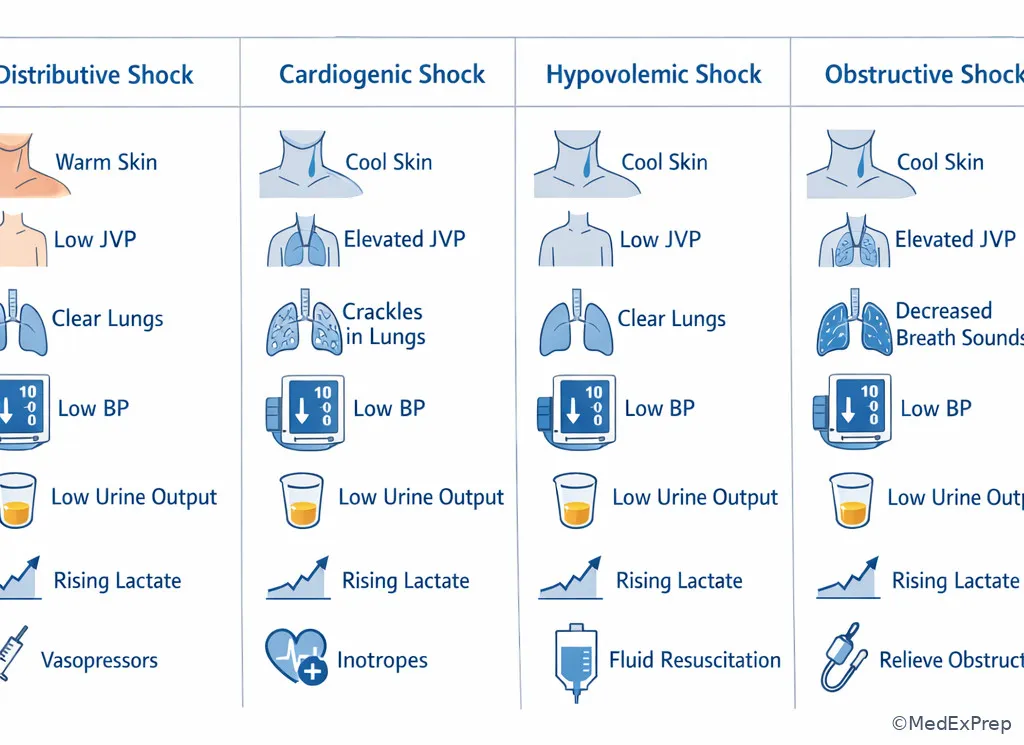
Fig 3. Bedside comparison of shock perfusion patterns
Recall: This is the first topic in the course, so there is no prior lesson to build from. Use this section as your base framework; upcoming topics on sepsis/MOF and comorbidities will add the inflammatory and baseline-disease modifiers to these same shock patterns.
Pharmacist Action: NOTICE: warm versus cold extremities, congestion versus empty-tank clues, and whether vasopressor needs persist after fluids. SAY: “The hemodynamic pattern is more consistent with distributive/cardiogenic/hypovolemic/obstructive physiology; the drug strategy should match that mechanism.” MONITOR: MAP, heart rate, urine output, lactate trend, pulmonary edema signs, and vasopressor/inotrope dose changes. HOLD/CLARIFY/ESCALATE: Clarify before additional fluid if pulmonary edema or severe ventricular dysfunction is suspected.

B. Worked example

A 74-year-old woman with ischemic cardiomyopathy, atrial fibrillation, and chronic kidney disease is admitted after progressive dyspnea. She is receiving furosemide 80 mg IV twice daily at home-equivalent intensity, metoprolol succinate, and apixaban. In the ICU, BP is 82/54 mm Hg, HR 110/min, she is cool and clammy, has bibasilar crackles, elevated jugular venous pressure, lactate 3.2 mmol/L, and urine output 20 mL/hr. A distracting clue is a recent history of poor oral intake, which may tempt a fluid-bolus answer.

Identify task: choose the best pharmacologic direction.

Extract key facts: low pressure plus congestion plus cool extremities plus low urine output suggests low-output cardiogenic physiology, not simple hypovolemia.

Apply rule: when congestion and pump failure dominate, large empiric fluids are rejected; pharmacologic support should prioritize hemodynamic support appropriate to cardiogenic shock while the team evaluates definitive management.

Eliminate distractors: additional loop diuretic alone will not correct shock; large fluid bolus may worsen pulmonary edema; vasodilator therapy is unsafe with current hypotension.

Verify: recommendation should focus on collaborative hemodynamic support, often involving vasoactive/inotropic therapy guided by institutional protocol and bedside assessment.

C. Exam trap

Common wrong answer: “Give another large crystalloid bolus because the patient is hypotensive and tachycardic.” WHY IT IS TEMPTING: learners pattern-match shock to volume loss. SINGLE CLUE THAT ELIMINATES IT: pulmonary crackles with elevated JVP indicates congestion, making cardiogenic shock far more likely.

D. Checkpoint

Question: A 63-year-old man on meropenem 1 g IV every 8 hours has BP 84/46 mm Hg, HR 122/min, warm flushed skin, bounding pulses, lactate 3.9 mmol/L, and diffuse pneumonia on imaging. Which shock pattern is most consistent with this presentation?

  1. Cardiogenic shock
  2. Hypovolemic shock
  3. Distributive shock
  4. Obstructive shock

Answer: C.

  • A: tempting because lactate and hypotension occur in cardiogenic shock, but warm flushed skin and bounding pulses are not typical low-output clues.
  • B: tempting because tachycardia and hypotension fit volume loss, but the warm vasodilated pattern and infection source favor distributive physiology.
  • C: correct because infection plus vasodilated bedside findings strongly support distributive shock.
  • D: tempting because severe instability can occur in obstructive shock, but no tamponade, PE, or tension pattern is given.
If you missed this: Review 1.1.1.2 Foundational classification: distributive vs cardiogenic vs hypovolemic vs obstructive — focus on the bedside pattern that separates warm vasodilatory shock from cold low-output states.
Quick Recall:

  • The dominant medication in early distributive shock is usually ________. Answer: norepinephrine.
  • True or False: pulmonary congestion makes a large empiric fluid bolus less attractive in shock. Answer: True.
  • Name the 4 major shock categories. Answer: distributive, cardiogenic, hypovolemic, obstructive.

1.1.1.3 Application: perfusion endpoints and what to monitor first

A. Explanation

The decision conflict here is: Which endpoint should guide early pharmacist reassessment after fluid or vasoactive therapy? The resolving rule is to choose dynamic, clinically relevant perfusion endpoints rather than isolated numbers. MAP matters, but so do urine output, mentation, lactate trend, skin findings, and organ-function trajectory. See Fig 4.

WHY THIS IS TESTED: stems often offer a familiar number that is incomplete. For example, a lactate decrease is encouraging but does not override worsening urine output. A MAP of 65 mm Hg may still be inadequate in a patient with chronic hypertension, while a brief MAP below target may be tolerated if perfusion is clearly improving and vasopressor titration is in progress. The exam wants the most useful monitoring priority, not the most famous measurement.

Useful early targets include MAP at or above the current clinical goal, improving urine output, better mentation, and down-trending lactate when elevated initially. Capillary refill and peripheral perfusion can be helpful bedside adjuncts. Drug-related monitoring matters too: arrhythmias with inotropes or epinephrine, digital ischemia with high-dose vasopressors, worsening pulmonary edema after fluids, and extravasation risk with vasopressor infusions.

Remember that some markers lag. Serum creatinine rises later than perfusion loss. Lactate may remain elevated for reasons beyond global hypoperfusion. Therefore, the strongest reassessment answer often combines hemodynamic improvement plus organ function signal. See Fig 5 for a high-yield visual of the main endpoints.

Fig 4. Early perfusion endpoint hierarchy
Exam takeaway: Reassess therapy with MAP plus organ-perfusion signals rather than any single laboratory value.
flowchart TD
A[After fluids or vasoactive change] --> B[Check MAP against target]
B --> C[Check urine output and mentation]
C --> D[Trend lactate and renal function]
D --> E{Improving?}
E -->|Yes| F[Continue and monitor for toxicity]
E -->|No| G[Escalate reassessment and revise strategy]
Concept flow: Reassessing perfusion after a therapy change
Set a target
Choose MAP and perfusion goals appropriate to the patient’s baseline and shock pattern.

Decision
If pressure improves but urine output and mentation do not, the resuscitation is not yet adequate.

Track trend markers
Use lactate and organ function trends to support, not replace, bedside reassessment.

Screen for harm
Look for arrhythmia, ischemia, fluid overload, and infusion-related complications.

Fig 5. Perfusion monitoring dashboard in shock
Exam takeaway: The best reassessment plan combines hemodynamic, urine output, neurologic, and laboratory trends in one view.
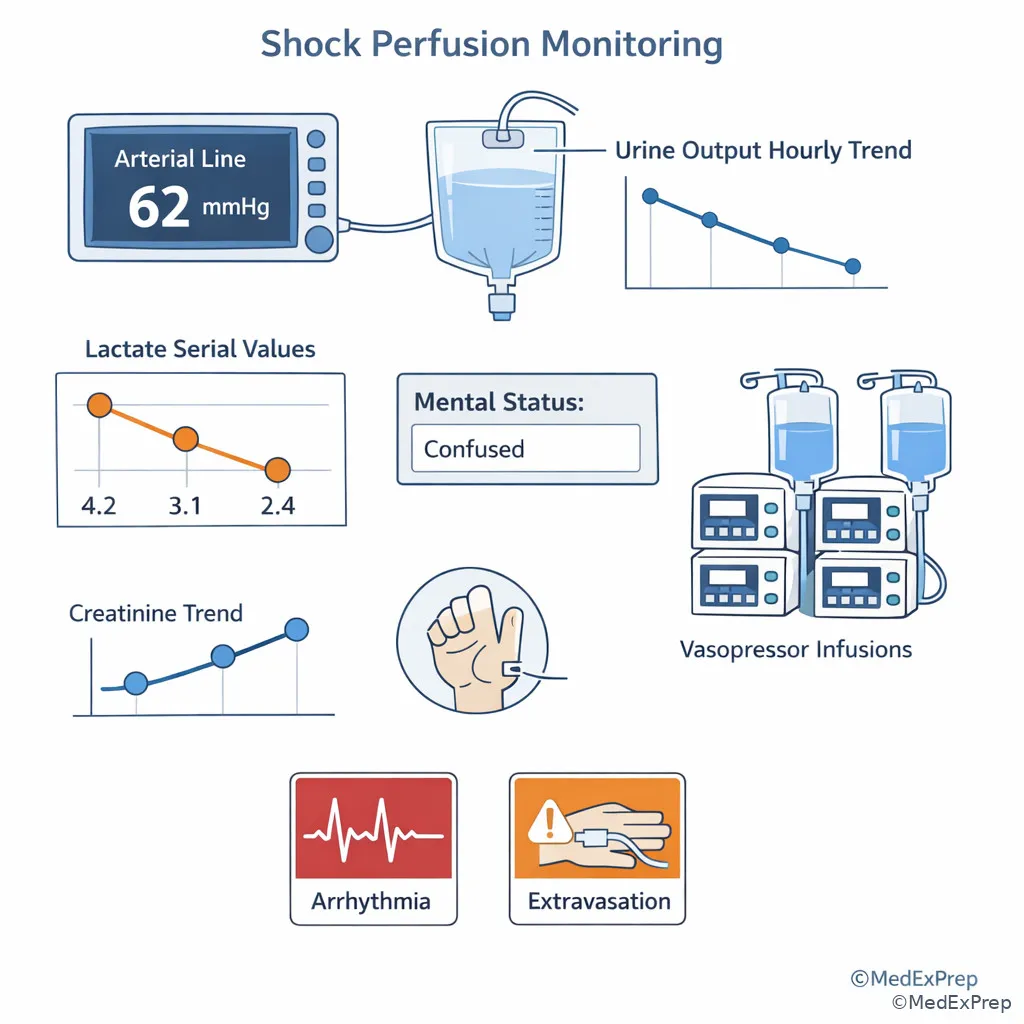
Fig 5. Perfusion monitoring dashboard in shock
High-Yield Connection: This concept overlaps with Therapeutic Targets And Endpoints later in the course. On exam day, know not only which drug to choose, but which parameter proves it is working and which adverse effect means it should be adjusted.
Memory anchor: Use “MULT” for early reassessment: MAP, Urine output, Lactate trend, Thinking/mentation.
Pharmacist Action: NOTICE: whether MAP improvement is matched by urine output, mentation, and lactate trend. SAY: “The current endpoint is incomplete unless organ perfusion is also improving.” MONITOR: MAP continuously, urine output hourly, lactate every 2–6 hours when elevated, creatinine daily or more often with rapid instability. HOLD/CLARIFY/ESCALATE: Escalate when pressure is normalized but end-organ hypoperfusion persists.

B. Worked example

A 59-year-old man with alcoholic cirrhosis and hypertension is on norepinephrine 0.12 mcg/kg/min after presumed septic shock. Piperacillin/tazobactam 4.5 g IV every 6 hours has been started. Two hours later, MAP increased from 58 to 67 mm Hg, but urine output remains 10–15 mL/hr, lactate is unchanged at 5.0 mmol/L, and he is still lethargic. AST and ALT are mildly elevated from baseline. A distracting clue is improved heart rate, which may falsely reassure.

Identify task: determine whether resuscitation is adequate.

Extract key facts: MAP target reached, but multiple organ perfusion markers have not improved yet.

Apply rule: a pressure response alone does not confirm restored tissue perfusion.

Eliminate distractors: stopping reassessment because MAP is above 65 is premature; changing antibiotics solely due to unchanged lactate at 2 hours is not yet justified by this data alone.

Verify: continue active reassessment and communicate that the patient still has persistent hypoperfusion despite an improved MAP.

C. Exam trap

Common wrong answer: “Resuscitation is complete because MAP is now 67 mm Hg.” WHY IT IS TEMPTING: learners overlearn the MAP threshold and stop one step too early. SINGLE CLUE THAT ELIMINATES IT: persistent oliguria and unchanged lactate indicate ongoing perfusion deficit.

D. Checkpoint

Question: A 66-year-old woman receiving norepinephrine 0.08 mcg/kg/min and cefepime 2 g IV every 8 hours for suspected septic shock has improved MAP from 57 to 66 mm Hg over 90 minutes. Which additional parameter most strongly supports improved organ perfusion?

  1. HR decreases from 122 to 108/min
  2. Urine output increases from 10 mL/hr to 45 mL/hr
  3. Temperature rises from 38.2°C to 38.7°C
  4. WBC increases from 14,000 to 16,000/mm3

Answer: B.

  • A: tempting because tachycardia often improves with stabilization, but heart rate alone is less direct than urine output for perfusion.
  • B: correct because improved urine output is a strong early organ-perfusion endpoint in the right clinical context.
  • C: tempting because temperature may track infection severity, but it does not confirm improved perfusion.
  • D: tempting because infection markers matter, but WBC fluctuation is not an early hemodynamic success signal.
If you missed this: Review 1.1.1.3 Application: perfusion endpoints and what to monitor first — focus on choosing dynamic perfusion endpoints over isolated vital signs.

1.1.1.4 Application: fluids, vasopressors, and the first medication decision

A. Explanation

The classic exam conflict is: Should the pharmacist recommend more fluid, start vasopressor support, or reject both as the immediate answer? The single resolving rule is to identify the dominant physiology and whether delay in vasopressor support would worsen perfusion. In distributive shock with persistent hypotension after initial resuscitation, do not wait endlessly on additional fluid if perfusion remains poor; early norepinephrine is commonly favored. In cardiogenic shock or obvious congestion, additional empiric fluid becomes less attractive. In clear hypovolemia, volume replacement is central. In obstructive shock, pharmacotherapy is supportive but not definitive. See Fig 6.

WHY THIS IS TESTED: the most common wrong answer is usually the option that sounds broadly reasonable but is one step out of sequence for the exact patient. The exam may include a tempting-but-wrong “give another 2 liters now” answer in a patient already showing pulmonary edema or a “wait for central access before vasopressors” answer in a patient with clear ongoing shock.

Norepinephrine is generally the preferred first-line vasopressor in many adult distributive shock scenarios because it increases arterial tone with a favorable balance of efficacy and arrhythmia risk compared with some alternatives. Dopamine is a recurrent distractor because it sounds kidney-friendly or heart-rate-supportive; on boards, its arrhythmia liability and less favorable profile often make it inferior in many shock settings. Epinephrine can be appropriate in selected cases but may increase lactate and provoke tachyarrhythmias, creating interpretation traps. Vasopressin is typically an adjunct rather than a first single agent in many adult ICU scenarios.

Pharmacist reasoning must also include route, compatibility, concentration, extravasation risk, and rapid reassessment. Local ICU protocol may govern peripheral norepinephrine initiation, but exam logic generally favors not delaying pressor therapy solely for central-line placement when shock is ongoing and institutional practice supports peripheral initiation with monitoring.

Fig 6. First hemodynamic medication decision tree
Exam takeaway: Choose fluid, vasopressor, or escalation by matching the bedside pattern and rejecting sequence errors.
flowchart TD
A[Patient in shock] --> B{Obvious volume loss without congestion?}
B -->|Yes| C[Give appropriate fluid or blood product strategy]
B -->|No| D{Warm vasodilated pattern after initial fluid?}
D -->|Yes| E[Start norepinephrine and reassess]
D -->|No| F{Congestion low output pattern?}
F -->|Yes| G[Consider cardiogenic support strategy]
F -->|No| H[Evaluate for obstruction and escalate]
Concept flow: Choosing the first hemodynamic medication move
Confirm the pattern
Decide whether the patient looks vasodilated, volume depleted, congested low-output, or obstructed.

Decision
If distributive shock persists after initial fluid → start norepinephrine rather than repeating indefinite boluses.

Screen for harm
Avoid extra fluid in congestion; watch for arrhythmia, ischemia, and extravasation with pressors.

Reassess rapidly
Titrate to target MAP and improved organ perfusion, not to a static dose.

Hemodynamic support infusion setup
Exam takeaway: Link bedside shock pattern to the correct infusion choice and the immediate monitoring priorities.
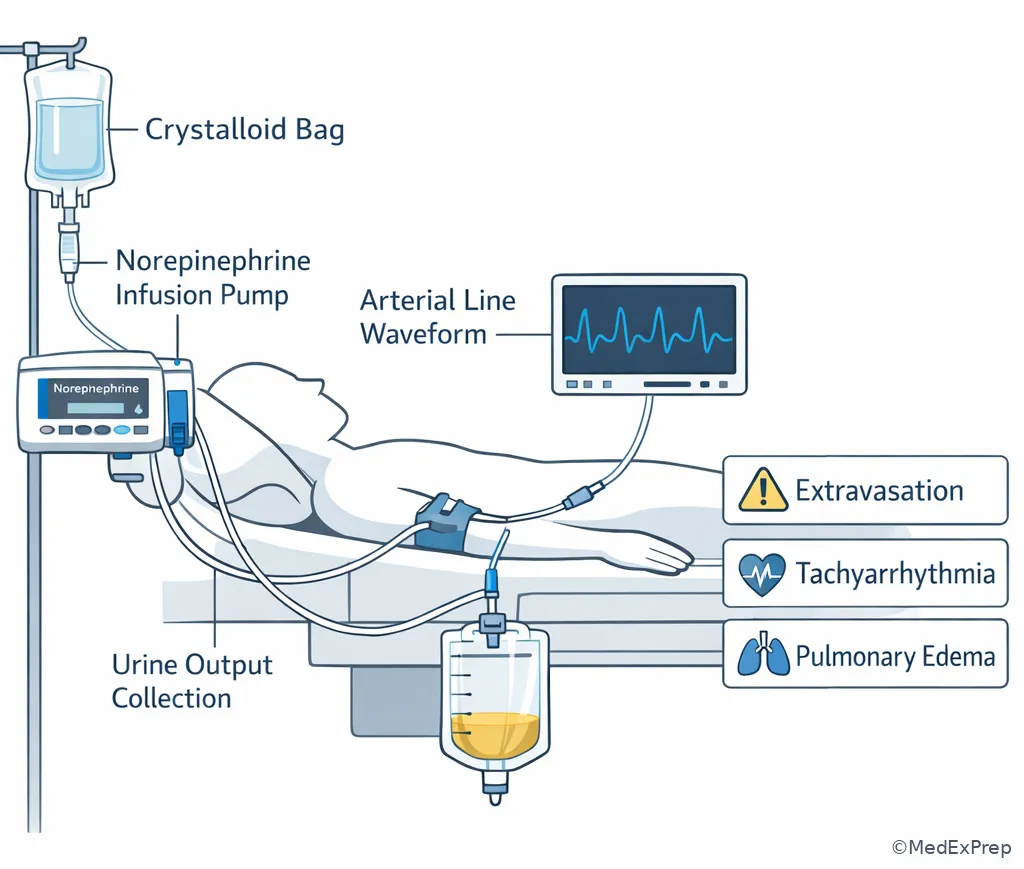
Hemodynamic support infusion setup
Key rule: In persistent distributive shock after initial fluid resuscitation, choose early vasopressor support over repeated blind fluid loading, especially when perfusion remains poor or fluid tolerance is uncertain.
Pharmacist Action: NOTICE: total fluid already given, response to prior bolus, signs of congestion, and current pressor need. SAY: “Given persistent hypotension with hypoperfusion after initial fluid, I recommend protocol-concordant norepinephrine rather than delaying on further empiric boluses.” MONITOR: MAP every minute if invasive monitoring is present or per protocol, rhythm continuously, urine output hourly, extremity perfusion and IV site frequently. HOLD/CLARIFY/ESCALATE: Clarify before more fluid when crackles, rising oxygen need, or JVP elevation suggest poor fluid tolerance.

B. Worked example

A 61-year-old man with COPD and hypertension presents with urosepsis. He received 2 L balanced crystalloid, cefepime 2 g IV every 8 hours, and vancomycin per protocol. BP remains 78/44 mm Hg, HR 126/min, temperature 39.1°C, lactate 5.3 mmol/L, urine output 5 mL in the last hour, and he has warm extremities. Chest exam is clear. A distracting clue is sinus tachycardia, which may tempt dopamine.

Identify task: pick the best next pharmacologic action.

Extract key facts: persistent hypotension despite initial fluid, warm vasodilatory pattern, infection source, severe hypoperfusion, no congestion clues.

Apply rule: start first-line vasopressor support, usually norepinephrine, rather than dopamine or more indiscriminate fluid.

Eliminate distractors: dopamine is tempting because of tachycardia and old “renal” myths, but arrhythmia risk and evidence profile make it less attractive; vasopressin alone is usually adjunctive; phenylephrine lacks the same broad first-line role.

Verify: norepinephrine with rapid reassessment of MAP, urine output, lactate, and source control trajectory is the best next pharmacologic move.

C. Exam trap

Common wrong answer: dopamine as the first vasopressor. WHY IT IS TEMPTING: learners remember chronotropy or outdated “renal perfusion” associations. SINGLE CLUE THAT ELIMINATES IT: distributive shock with severe hypotension after fluids is the setting where norepinephrine is generally preferred because dopamine carries more arrhythmia risk.

D. Checkpoint

Question: A 58-year-old woman with pyelonephritis is receiving cefepime 2 g IV every 8 hours. After 30 mL/kg crystalloid, BP remains 80/48 mm Hg, MAP 57 mm Hg, HR 120/min, lactate 4.6 mmol/L, urine output 8 mL/hr, and she has warm extremities without crackles. What is the most appropriate next pharmacologic action?

  1. Begin norepinephrine infusion per ICU protocol
  2. Give dopamine infusion because tachycardia suggests chronotropic support is needed
  3. Give furosemide 40 mg IV to improve urine output
  4. Delay vasoactive therapy until central venous access is placed regardless of local protocol

Answer: A.

  • A: correct because persistent distributive shock after initial fluid favors early norepinephrine with close monitoring and protocol confirmation.
  • B: tempting because dopamine may seem useful in hypotension with tachycardia, but arrhythmia risk and inferior first-line role make it wrong here.
  • C: tempting because oliguria is present, but low urine output from shock is not fixed by forcing diuresis.
  • D: tempting because central access is ideal, but delaying needed vasopressor support despite protocol-supported peripheral initiation is unsafe.
If you missed this: Review 1.1.1.4 Application: fluids, vasopressors, and the first medication decision — focus on the rule that persistent distributive shock after initial fluids calls for early norepinephrine rather than dopamine or indefinite fluid loading.
Quick Recall:

  • The usual first-line vasopressor in many adult distributive shock cases is ________. Answer: norepinephrine.
  • True or False: oliguria in shock should be treated first with loop diuretics. Answer: False.
  • When crackles and elevated JVP accompany hypotension, repeated blind fluid boluses become more or less attractive? Answer: Less attractive.

1.1.1.5 Integration: organ dysfunction, PK/PD consequences, and medication safety in shock

A. Explanation

The advanced conflict is: How does poor perfusion change medication safety and dosing, and which abnormality demands pharmacist clarification now? The resolving rule is to think beyond hemodynamics: shock alters absorption, distribution, metabolism, and elimination, often rapidly and unpredictably. This is where BCCCP questions become more pharmacy-specific.

WHY THIS IS TESTED: the exam commonly couples shock with a drug decision such as antimicrobial dosing, sedative accumulation, anticoagulant safety, or nephrotoxic combination risk. Learners who stop at hemodynamic classification miss the medication-management layer.

Renal hypoperfusion can lower clearance before serum creatinine fully reflects the change. Hepatic hypoperfusion and congestion may reduce metabolism, especially for high-extraction drugs. Gut hypoperfusion can reduce enteral absorption, making IV therapy preferable in unstable patients. Capillary leak and aggressive fluid resuscitation can increase apparent volume of distribution for hydrophilic drugs, potentially lowering early serum concentrations. Protein binding may also change in critical illness, complicating interpretation of total drug levels.

Practically, this means you must reassess dose, route, concentration, interaction profile, and toxicity monitoring. Nephrotoxic stacks become more dangerous during shock. Renally cleared antibiotics may need later dose adjustment as kidney function worsens or improves. Sedatives and opioids can accumulate unpredictably in hepatic or renal dysfunction. Vasopressor-related peripheral ischemia, arrhythmias, or extravasation are medication harms that can be more immediately testable than deep PK theory.

See Fig 3 for phenotype clues and remember the forward connection: upcoming sepsis/MOF content will expand these PK/PD shifts during inflammatory organ failure states.

Pharmacokinetic changes during shock
Exam takeaway: Poor perfusion changes route reliability, drug distribution, clearance, and toxicity risk at the same time.
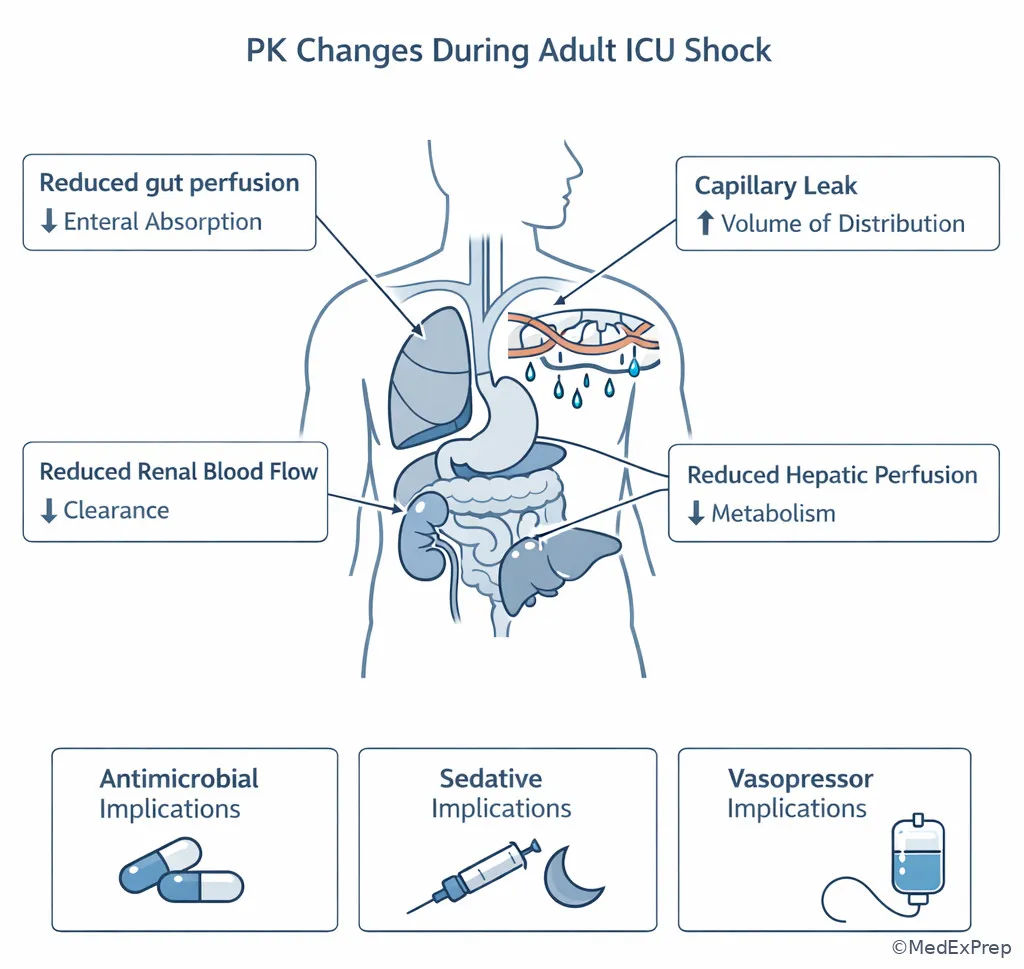
Pharmacokinetic changes during shock
Concept flow: Translating hypoperfusion into medication risk
Recognize unstable perfusion
Assume organ blood flow and PK may be changing faster than routine labs can show.

Decision
If enteral absorption is unreliable or clearance is falling, adjust route, dosing plan, and monitoring.

Screen for high-risk stacks
Look for nephrotoxins, sedative accumulation, anticoagulant risk, and pressor complications.

Recalculate and remeasure
Repeat renal function, drug levels when applicable, and bedside toxicity monitoring as perfusion changes.

Recall: In upcoming Comorbidities In Critical Illness, baseline CKD, cirrhosis, and heart failure will modify these same PK/PD risks. Here, focus on the acute perfusion hit; later, you will layer on chronic organ reserve.
Pharmacist Action: NOTICE: falling urine output, rising creatinine, worsening liver tests, unreliable enteral route, and nephrotoxic drug combinations. SAY: “Shock is likely altering clearance and route reliability; I recommend reassessing drug doses, IV versus enteral administration, and toxicity monitoring now.” MONITOR: serum creatinine and urine output daily to hourly as appropriate, hepatic markers, drug concentrations when available, arrhythmias continuously with catecholamines. HOLD/CLARIFY/ESCALATE: Hold or clarify nephrotoxic add-ons, renally cleared accumulation-prone agents, or enteral-only regimens when gut perfusion is doubtful.

B. Worked example

A 70-year-old man with septic shock is receiving norepinephrine 0.18 mcg/kg/min, vancomycin per pharmacy dosing protocol, and piperacillin/tazobactam 4.5 g IV every 6 hours. He also has type 2 diabetes, CKD stage 3b, and home lisinopril use. Over 12 hours, urine output declines from 35 mL/hr to 8 mL/hr, creatinine rises from 1.8 to 2.7 mg/dL, and lactate remains elevated. A distracting clue is that blood pressure has improved to MAP 66 mm Hg, which may hide the evolving drug safety issue.

Identify task: determine the highest-yield pharmacist action.

Extract key facts: renal perfusion remains poor or kidney injury is evolving despite acceptable MAP; nephrotoxic risk stack is present; drug clearance is changing.

Apply rule: hypoperfusion changes dose-adjustment logic and toxicity risk; medication reassessment must occur even when blood pressure looks better.

Eliminate distractors: maintaining all doses without reassessment ignores evolving AKI; changing antibiotics solely due to creatinine rise may be premature without infection data; oral conversion is inappropriate in ongoing shock.

Verify: the best action is to reassess renal-dose appropriateness, nephrotoxic burden, and monitoring plan immediately.

C. Exam trap

Common wrong answer: “No medication changes are needed because MAP is now at goal.” WHY IT IS TEMPTING: learners confuse hemodynamic stabilization with PK stabilization. SINGLE CLUE THAT ELIMINATES IT: rising creatinine with worsening oliguria means clearance is changing now.

D. Checkpoint

Question: A 64-year-old man with shock is receiving vancomycin, piperacillin/tazobactam, and norepinephrine. Which development most strongly requires immediate pharmacist clarification because it can alter medication safety even if MAP is at target?

  1. Temperature decreases from 39.0°C to 38.2°C
  2. WBC decreases from 19,000 to 17,500/mm3
  3. Urine output falls to 0.2 mL/kg/hr with rising serum creatinine
  4. Heart rate decreases from 124 to 108/min

Answer: C.

  • A: tempting because fever improvement can suggest response, but it does not directly change dose safety.
  • B: tempting because infection labs matter, but modest WBC change is not the strongest immediate medication-safety trigger.
  • C: correct because evolving AKI directly affects clearance, nephrotoxic risk, and dosing/monitoring strategy.
  • D: tempting because improved heart rate may look reassuring, but it does not carry the same medication-risk implication as worsening renal perfusion.
If you missed this: Review 1.1.1.5 Integration: organ dysfunction, PK/PD consequences, and medication safety in shock — focus on the rule that improved MAP does not guarantee stable drug clearance.

1.1.1.6 Integration: choosing the best next pharmacologic action in mixed or unclear shock

A. Explanation

The final integration problem is: What should you recommend when the shock state is mixed, evolving, or incompletely defined? The exam does not require you to act outside pharmacist scope by making every definitive diagnosis. The resolving rule is to recommend the safest protocol-concordant pharmacologic step with the highest likelihood of improving perfusion now, while explicitly calling for collaborative reassessment of the underlying cause.

WHY THIS IS TESTED: many stems are intentionally messy. A patient may have pneumonia and reduced ejection fraction, GI losses and sepsis, or chronic cirrhosis with distributive features. In these cases, the best answer is rarely “do everything” and rarely “wait for more data.” It is the option that addresses the immediate hemodynamic threat while avoiding a mechanism-specific harm.

In mixed vasodilatory and cardiogenic features, you may need pressure support first while avoiding excessive fluid. In possible obstructive physiology, temporary pressors may be appropriate, but the pharmacist should escalate that pharmacotherapy alone will not solve the problem. In unclear shock with severe hypotension and hypoperfusion, choose the intervention that protects perfusion now and can be titrated quickly while further evaluation proceeds. See Fig 6 again for the core decision tree.

This is also where board wording matters. If the answer option asks you to “independently diagnose tamponade” or “take the patient to surgery,” reject it as outside pharmacist framing. Prefer answers such as recommending vasopressor initiation, medication adjustment, emergent team notification, or escalation for collaborative evaluation.

Mixed shock decision support in the ICU
Exam takeaway: In unclear or mixed shock, choose the safest pharmacologic bridge while escalating collaborative reassessment of the cause.
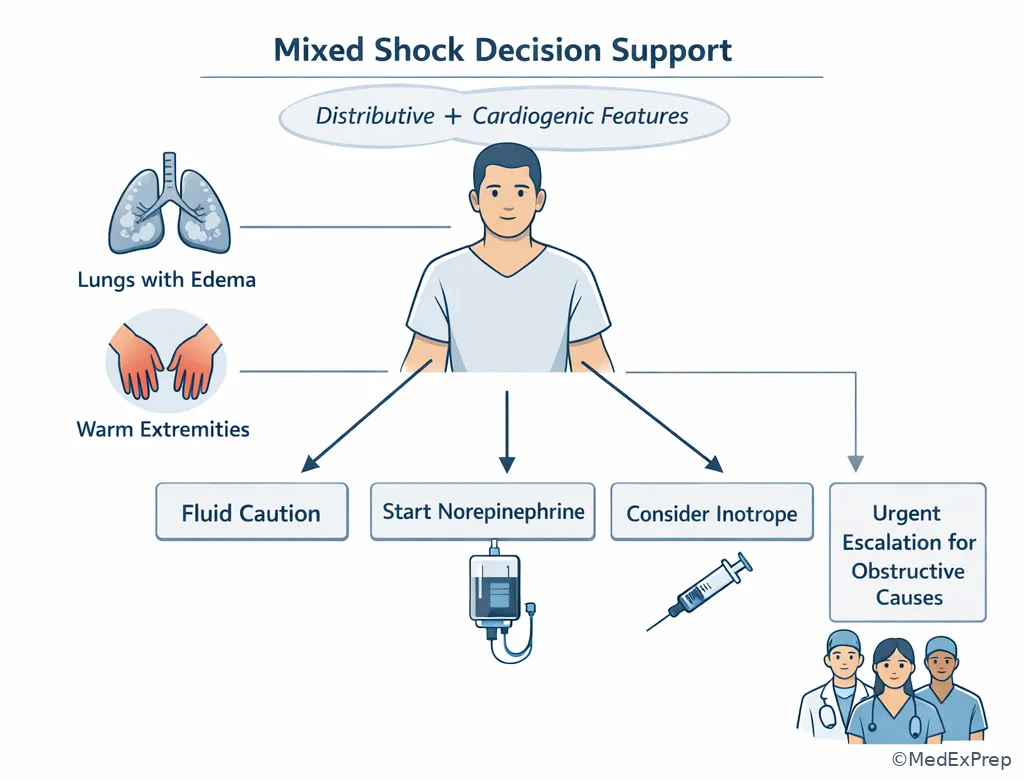
Mixed shock decision support in the ICU
Concept flow: Handling mixed or uncertain shock safely
Name the immediate threat
Severe hypotension with hypoperfusion takes priority over perfect diagnostic certainty.

Decision
Choose the pharmacologic step that is most likely to help and least likely to worsen the suspected mixed physiology.

State limits
Escalate for team evaluation when obstruction, severe pump failure, or procedural causes may be present.

Reassess response
Track whether the chosen bridge therapy improves both pressure and end-organ perfusion.

Memory anchor: For mixed shock stems, use “HELP”: Hypoperfusion first, End-organ clues, Least-harm bridge therapy, Prompt reassessment.
Pharmacist Action: NOTICE: competing clues such as infection plus pulmonary edema or hypotension plus suspected obstruction. SAY: “The physiology may be mixed; I recommend the least-harm pharmacologic bridge now, with urgent collaborative reassessment of the underlying cause.” MONITOR: pressure response, oxygenation, urine output, lactate, congestion signs, and drug toxicity. HOLD/CLARIFY/ESCALATE: Escalate immediately when obstructive or severe cardiogenic features suggest pharmacotherapy alone will be inadequate.

B. Worked example

A 67-year-old man with severe HFrEF, diabetes, and pneumonia is in the ICU on ceftriaxone 2 g IV daily plus azithromycin 500 mg IV daily. BP is 76/42 mm Hg, HR 118/min, lactate 4.4 mmol/L, warm extremities are noted, but he also has bibasilar crackles and chronic lower-extremity edema. Urine output is 12 mL/hr. A distracting clue is chronic edema, which may cause an examinee to dismiss all fluid-related thinking, yet the immediate issue is perfusion failure.

Identify task: choose the best next pharmacologic action in mixed features.

Extract key facts: severe hypotension with organ hypoperfusion, infectious trigger suggesting vasodilation, but poor fluid tolerance due to HFrEF/congestion.

Apply rule: the safest bridge is early vasopressor support rather than a large additional fluid bolus; simultaneously communicate concern for mixed distributive/cardiogenic physiology and need for close reassessment.

Eliminate distractors: large fluid bolus risks worsening pulmonary edema; pure inotrope-first without pressure support may not address severe vasodilation; observation is unsafe.

Verify: norepinephrine-based support with collaborative evaluation of the mixed physiology is the best immediate pharmacist recommendation.

C. Exam trap

Common wrong answer: “No fluids are ever appropriate in heart failure, so only wait for imaging before recommending therapy.” WHY IT IS TEMPTING: learners convert a caution into an absolute. SINGLE CLUE THAT ELIMINATES IT: profound hypotension with rising lactate and oliguria requires immediate hemodynamic support; waiting is the bigger error.

D. Checkpoint

Question: A 69-year-old woman with HFrEF and pneumonia is receiving cefepime 2 g IV every 8 hours. She has BP 78/45 mm Hg, lactate 4.2 mmol/L, urine output 10 mL/hr, warm extremities, and bibasilar crackles. Which is the best next pharmacologic recommendation within pharmacist scope?

  1. Recommend immediate norepinephrine initiation with close reassessment and fluid caution
  2. Recommend a 2-L crystalloid bolus because all shock should first receive more fluid
  3. Wait for echocardiography before recommending any hemodynamic medication
  4. Recommend phenylephrine first because it avoids beta activity entirely

Answer: A.

  • A: correct because mixed vasodilatory and fluid-intolerant features favor a least-harm pressure-support strategy with collaborative reassessment.
  • B: tempting because infection-related shock often begins with fluids, but congestion clues make a large blind bolus unsafe here.
  • C: tempting because diagnostic clarification is desirable, but it should not delay treatment of active hypoperfusion.
  • D: tempting because alpha-agonism may sound cleaner in hypotension, but phenylephrine is not the preferred first-line option in this scenario.
If you missed this: Review 1.1.1.6 Integration: choosing the best next pharmacologic action in mixed or unclear shock — focus on selecting the least-harm bridge therapy when physiology is mixed and perfect certainty is unavailable.

Exam Traps & Differentiators

Most common wrong answer and why: More fluid for every hypotensive patient. This is tempting because fluids feel universally supportive. The discriminator is whether the stem gives congestion, poor fluid tolerance, or persistent distributive shock despite initial volume; in those cases, blind extra fluid is often the trap.
Looks similar But isn’t Single best discriminator Pharmacist implication
Hypotension Shock Evidence of hypoperfusion or organ dysfunction Escalate monitoring and pharmacologic support when perfusion fails
Warm septic patient Pure hypovolemia Warm extremities, vasodilated pattern, persistent hypotension after initial fluid Norepinephrine usually outranks repeated blind boluses
Oliguria in shock Need for diuretic Low urine output with poor perfusion markers Fix perfusion first; do not reflex to loop diuretics
MAP at goal Resolved shock Urine output, mentation, lactate, and renal function may still be worsening Continue reassessment and dose safety review
Tachycardia in shock Indication for dopamine Distributive shock after fluids still favors norepinephrine in many cases Avoid arrhythmia trap
Persistent instability Reason to keep escalating pressors only Obstructive clues or severe pump failure Escalate for underlying cause; pharmacotherapy may only bridge

If the stem says...

  • “Warm extremities, bounding pulses, infection source” → think distributive physiology.
  • “Crackles, elevated JVP, cool clammy skin” → think cardiogenic physiology and fluid caution.
  • “Blood loss, GI losses, dry mucosa, empty-tank story” → think hypovolemic shock.
  • “Sudden severe instability not explained by fluid/pump pattern” → think obstructive causes and escalate.
  • “MAP improved but oliguria persists” → think incomplete resuscitation or ongoing organ hypoperfusion.
  • “Improving BP with worsening creatinine” → think evolving PK change and medication safety review.
Related confusable pair from upcoming topics: In Inflammation, Sepsis, And MOF, elevated lactate may reflect sepsis-related stress and altered clearance, but in this lesson the trap is assuming lactate alone defines the entire shock state. Always pair it with perfusion findings.
Review connection: The traps above test shock-pattern recognition and endpoint selection. If any felt unfamiliar, revisit 1.1.1.2 Foundational classification: distributive vs cardiogenic vs hypovolemic vs obstructive and 1.1.1.3 Application: perfusion endpoints and what to monitor first before attempting the Self-check quiz.

Tables

Reference parameter High-yield adult ICU target or clue Why it matters in shock
MAP Often at least 65 mm Hg initially Common vasopressor target, but not sufficient alone
Urine output At least 0.5 mL/kg/hr often used as a bedside goal Early organ perfusion marker
Lactate Trend down over time rather than rely on one value Supports perfusion assessment and response tracking
Mental status Improving alertness is favorable Brain perfusion/end-organ signal
Skin/capillary refill Warm vs cold and prolonged refill can help classify pattern Rapid bedside adjunct to hemodynamic assessment
Creatinine trend Rising values may lag but still matter Signals evolving kidney injury and dose safety changes
Pressor requirement Escalating dose requirement is a red flag Suggests unresolved shock or incorrect strategy
Shock type Typical bedside clues Medication direction Board trap to reject
Distributive Warm skin early, infection/inflammation, vasodilated pattern Norepinephrine often first-line after initial fluid Dopamine first because tachycardia is present
Cardiogenic Cool clammy, crackles, JVP elevation, low output Fluid caution; consider vasoactive/inotropic support collaboratively Large fluid bolus despite congestion
Hypovolemic Loss history, dry exam, reduced preload clues Resuscitative fluid or blood product strategy based on cause Pressor-only strategy without volume replacement
Obstructive Tamponade/PE/tension clues, mismatch to standard patterns Temporary support plus urgent escalation for cause-specific management Escalating pressors as definitive solution
Differential situation Tempting interpretation Correct interpretation Discriminator
MAP 66, oliguria persists Shock resolved Perfusion may still be inadequate Urine output and organ markers remain abnormal
Lactate elevated after epinephrine Always worsening shock Could partly reflect catecholamine effect Interpret with overall perfusion picture
Shock with rising creatinine Only a nephrology issue Immediate medication-dose and toxicity issue Drug clearance can change before full stabilization
Hypotension in HFrEF with infection No vasoactive therapy until diagnosis is perfect Least-harm bridge therapy should not be delayed Profound hypoperfusion requires timely support
Persistent hypotension after initial fluids Repeat the same bolus strategy automatically Re-evaluate physiology and pressor need Response to prior fluid and congestion clues
Medication issue during shock Mechanism Pharmacist monitoring priority
Reduced enteral absorption Gut hypoperfusion Consider IV route for critical therapies
Hydrophilic drug underexposure early Capillary leak and increased volume of distribution Ensure adequate loading where appropriate
Renally cleared drug accumulation Reduced renal blood flow/AKI Adjust dose and frequency; monitor levels if available
Hepatic metabolism reduction Liver hypoperfusion or congestion Watch for sedative/opioid accumulation
Vasopressor toxicity Alpha/beta adrenergic effects and infusion risk Monitor rhythm, ischemia, and IV site

Algorithm / Approach

Concept flow: Pharmacist approach to adult ICU shock and organ perfusion
Identify active hypoperfusion
Use MAP trend, urine output, lactate, mentation, and skin findings.

Classify the likely pattern
Warm vasodilated, congested low-output, volume loss, or obstructive clues?

Recommend the least-harm initial therapy
Fluid if empty tank, norepinephrine if distributive after initial fluid, fluid caution if congested, urgent escalation if obstructive suspected.

Reassess with the right endpoints
MAP plus urine output, mentation, lactate trend, and organ-function changes.

Review medication safety
Reassess route, renal/hepatic clearance, nephrotoxins, vasopressor adverse effects, and dose adjustments.

Rapid Review

  • Shock vs hypotension → organ hypoperfusion separates them.
  • Distributive shock → warm vasodilated pattern points toward norepinephrine after initial fluid.
  • Cardiogenic shock → congestion plus cold skin argues against blind fluid loading.
  • Hypovolemic shock → loss history and empty-tank clues favor volume replacement.
  • Obstructive shock → pressors may bridge, but they do not fix the obstruction.
  • MAP target → useful starting goal, not a complete resuscitation endpoint.
  • Urine output → strongest simple bedside organ-perfusion trend to follow early.
  • Lactate → trend matters more than one isolated value.
  • Dopamine trap → tachycardia does not make it first-line in distributive shock.
  • Oliguria in shock → do not reflex to diuretics before fixing perfusion.
  • Improved BP with rising creatinine → think changing clearance and drug toxicity risk.
  • Mixed shock → choose least-harm bridge therapy while escalating evaluation.
  • Enteral route in unstable shock → may be unreliable due to gut hypoperfusion.
  • Hydrophilic drugs in capillary leak → early underexposure risk can occur despite later accumulation concerns.

Self-check quiz

Question 1

A 62-year-old man in the ICU is receiving ceftriaxone 2 g IV every 24 hours for pneumonia. BP is 94/56 mm Hg, HR 108/min, urine output is 12 mL/hr, lactate is 4.0 mmol/L, and he is newly confused. Which finding most strongly indicates shock rather than isolated hypotension?

  1. Heart rate 108/min
  2. Urine output 12 mL/hr with new confusion
  3. Receipt of ceftriaxone
  4. Temperature 38.4°C

Question 2

A 57-year-old woman receives piperacillin/tazobactam 4.5 g IV every 6 hours for intra-abdominal infection. After initial fluid resuscitation, she remains hypotensive with MAP 56 mm Hg, warm extremities, and lactate 4.8 mmol/L. Which vasoactive agent is the most appropriate first-line choice in many adult distributive shock scenarios?

  1. Norepinephrine infusion
  2. Dopamine infusion
  3. Phenylephrine infusion
  4. Vasopressin infusion as sole initial agent

Question 3

A 71-year-old man with HFrEF, CAD, and CKD is receiving cefepime 2 g IV every 8 hours for pneumonia. BP is 82/50 mm Hg, HR 112/min, he is cool and clammy, has bibasilar crackles, elevated JVP, lactate 3.6 mmol/L, and urine output 18 mL/hr. Which is the best next pharmacologic recommendation?

  1. Give 2 L balanced crystalloid rapidly
  2. Recommend hemodynamic support with fluid caution for likely cardiogenic physiology
  3. Administer furosemide 80 mg IV immediately as sole therapy
  4. Delay all hemodynamic medications until lactate is repeated in 6 hours

Question 4

A 60-year-old woman with septic shock is receiving norepinephrine 0.1 mcg/kg/min and meropenem 1 g IV every 8 hours. MAP improved from 58 to 67 mm Hg over 2 hours. Which additional finding best supports improved organ perfusion?

  1. Urine output increases from 8 mL/hr to 42 mL/hr
  2. WBC count increases from 13,000 to 15,000/mm3
  3. Temperature increases from 38.1°C to 38.6°C
  4. Heart rate changes from 118/min to 112/min

Question 5

A 65-year-old man with urosepsis receives vancomycin per protocol and cefepime 2 g IV every 8 hours. After 30 mL/kg crystalloid, BP remains 78/46 mm Hg, MAP 57 mm Hg, lactate 5.1 mmol/L, urine output 6 mL/hr, and extremities are warm without crackles. Which option is the most appropriate next pharmacologic action?

  1. Start norepinephrine per protocol
  2. Start dopamine because tachycardia is present
  3. Give furosemide 40 mg IV for oliguria
  4. Wait for central line placement before any vasopressor despite protocol allowances

Question 6

A 68-year-old woman with septic shock, type 2 diabetes, and CKD is receiving norepinephrine 0.14 mcg/kg/min, piperacillin/tazobactam 4.5 g IV every 6 hours, and vancomycin per pharmacy dosing. MAP is 66 mm Hg, but urine output fell from 35 mL/hr to 9 mL/hr and creatinine rose from 1.4 to 2.3 mg/dL over 12 hours. Which pharmacist action is most appropriate?

  1. Continue all current medication doses because MAP is at goal
  2. Reassess renal-dose appropriateness and nephrotoxic burden immediately
  3. Change norepinephrine to dopamine to improve renal perfusion
  4. Convert antibiotics to enteral therapy because blood pressure has improved

Question 7

A 73-year-old man with pneumonia, HFrEF, and chronic edema is receiving ceftriaxone 2 g IV daily plus azithromycin 500 mg IV daily. BP is 76/44 mm Hg, lactate 4.5 mmol/L, urine output 10 mL/hr, extremities are warm, and bibasilar crackles are present. Which is the best next pharmacologic recommendation within pharmacist scope?

  1. Recommend norepinephrine initiation with cautious fluid strategy and close reassessment
  2. Recommend a mandatory 2-L crystalloid bolus before any vasoactive therapy
  3. Recommend phenylephrine as preferred first-line agent because beta activity should always be avoided in HFrEF
  4. Withhold recommendations until echocardiography definitively separates distributive from cardiogenic shock

Question 8

A 64-year-old man is receiving epinephrine infusion for refractory shock, cefepime 2 g IV every 8 hours, and hydrocortisone 50 mg IV every 6 hours. Two hours later, MAP is modestly improved, heart rate is 128/min, lactate increased from 4.2 to 5.0 mmol/L, urine output remains 28 mL/hr, and mentation is slightly improved. Which interpretation is most appropriate?

  1. The lactate rise proves the patient is worsening and all therapy is failing
  2. The lactate rise may reflect epinephrine effect, so overall perfusion context must be assessed
  3. The improved mentation proves shock is fully resolved
  4. The best next action is to add furosemide because urine output is not yet normal

Answer key

Question 1 Answer: B

A. Heart rate 108/min: tempting because tachycardia commonly accompanies shock and can signal physiologic stress. It is incorrect for this question because tachycardia is nonspecific and can result from fever, pain, anxiety, or hypovolemia without confirmed end-organ hypoperfusion. Single discriminator: it does not directly demonstrate organ dysfunction. Source: DiPiro; SCCM/critical care hemodynamic practice principles.

B. Urine output 12 mL/hr with new confusion: tempting because it seems “too obvious,” but that is exactly why it is correct. It is correct because oliguria plus altered mentation are direct end-organ perfusion abnormalities, making shock more likely than isolated low pressure alone. Single discriminator: multiple organ perfusion markers are abnormal. Source: ACCP/critical care texts; DiPiro.

C. Receipt of ceftriaxone: tempting because infection treatment suggests sepsis, and sepsis can progress to shock. It is incorrect because the presence of an antibiotic does not prove current hemodynamic insufficiency. Single discriminator: medication context does not replace perfusion data. Source: DiPiro.

D. Temperature 38.4°C: tempting because fever supports infection as a trigger. It is incorrect because fever indicates inflammatory/infectious stress, not shock by itself. Single discriminator: temperature does not establish organ hypoperfusion. Source: DiPiro.

If you missed this: Review 1.1.1.1 Foundational recognition: what shock means for a pharmacist — focus on the discriminator that shock requires tissue hypoperfusion/end-organ dysfunction, not just hypotension or infection.

Question 2 Answer: A

A. Norepinephrine infusion: tempting because it is the familiar guideline answer, and it is correct here for that reason. PK/PD-wise, norepinephrine increases vascular tone effectively in vasodilatory shock with a commonly preferred first-line profile. Single discriminator: persistent warm distributive shock after initial fluid. Source: Surviving Sepsis Campaign; DiPiro; Lexicomp.

B. Dopamine infusion: tempting because its beta activity may seem useful when heart rate or cardiac output is a concern. It is incorrect because, for many adult distributive shock scenarios, its higher arrhythmia risk and less favorable evidence profile make it inferior to norepinephrine. Single discriminator: distributive shock after fluids does not become a dopamine indication simply because tachycardia exists. Source: Surviving Sepsis Campaign; Lexicomp.

C. Phenylephrine infusion: tempting because pure alpha agonism sounds appealing for low pressure. It is incorrect because phenylephrine is not typically the preferred first-line vasopressor in this scenario. Single discriminator: it lacks the same standard first-line role as norepinephrine in adult distributive shock. Source: DiPiro; guideline summaries.

D. Vasopressin infusion as sole initial agent: tempting because vasopressin is used in shock and can reduce catecholamine dose requirements. It is incorrect because it is more commonly an adjunct than the sole initial first-line agent. Single discriminator: first-line initiation role belongs more often to norepinephrine. Source: Surviving Sepsis Campaign; Lexicomp.

If you missed this: Review 1.1.1.4 Application: fluids, vasopressors, and the first medication decision — focus on the first-line vasopressor rule in persistent distributive shock after initial fluids.

Question 3 Answer: B

A. Give 2 L balanced crystalloid rapidly: tempting because hypotension and low urine output often trigger a volume reflex. It is incorrect because crackles, elevated JVP, cool skin, and HFrEF/low-output clues suggest cardiogenic physiology with poor fluid tolerance. Single discriminator: congestion is present. Source: DiPiro; ACCP critical care references.

B. Recommend hemodynamic support with fluid caution for likely cardiogenic physiology: tempting because it seems less concrete than a specific drug name, yet it is correct because the question asks for the best recommendation within pharmacist scope. PK/PD-wise, cardiogenic shock reflects inadequate forward flow; the correct pharmacologic direction avoids fluid overload and supports perfusion collaboratively. Single discriminator: congestion plus low-output signs. Source: DiPiro; Lexicomp for agent properties.

C. Administer furosemide 80 mg IV immediately as sole therapy: tempting because pulmonary congestion is present. It is incorrect because diuresis alone does not treat active shock with hypotension and hypoperfusion. Single discriminator: the patient is in shock, not isolated volume overload. Source: DiPiro.

D. Delay all hemodynamic medications until lactate is repeated in 6 hours: tempting because lactate trend is useful. It is incorrect because severe instability should not wait for delayed confirmation. Single discriminator: active hypoperfusion is already documented. Source: Critical care practice standards; DiPiro.

If you missed this: Review 1.1.1.2 Foundational classification: distributive vs cardiogenic vs hypovolemic vs obstructive — focus on the congestion clue that argues against blind fluid loading.

Question 4 Answer: A

A. Urine output increases from 8 mL/hr to 42 mL/hr: tempting because it appears like a straightforward bedside metric, and it is correct because improved urine output is a direct early organ-perfusion signal. Single discriminator: it reflects kidney perfusion response, not just systemic pressure. Source: DiPiro; critical care monitoring principles.

B. WBC count increases from 13,000 to 15,000/mm3: tempting because infection severity matters. It is incorrect because WBC trend is not the best near-term perfusion endpoint after a hemodynamic intervention. Single discriminator: it does not directly measure perfusion response. Source: DiPiro.

C. Temperature increases from 38.1°C to 38.6°C: tempting because infection activity is relevant. It is incorrect because fever trend does not establish hemodynamic success or failure. Single discriminator: temperature is not a preferred early perfusion endpoint. Source: DiPiro.

D. Heart rate changes from 118/min to 112/min: tempting because improving tachycardia can look reassuring. It is incorrect because heart rate is less specific than urine output for improved organ perfusion. Single discriminator: it is supportive at best, not the strongest endpoint. Source: ACCP critical care references.

If you missed this: Review 1.1.1.3 Application: perfusion endpoints and what to monitor first — focus on why urine output often outranks nonspecific vital-sign changes as an early perfusion endpoint.

Question 5 Answer: A

A. Start norepinephrine per protocol: tempting because it is the standard answer, and it is correct because the patient has persistent distributive-appearing shock after initial fluid with severe hypoperfusion. PK/PD-wise, norepinephrine improves arterial tone and MAP effectively in this setting. Single discriminator: warm extremities and persistent hypotension after 30 mL/kg without crackles. Source: Surviving Sepsis Campaign; Lexicomp; DiPiro.

B. Start dopamine because tachycardia is present: tempting because learners may think a beta-active pressor fits hypotension with low urine output. It is incorrect because dopamine is not preferred first-line in many adult distributive shock cases due to arrhythmia risk. Single discriminator: distributive shock physiology still favors norepinephrine. Source: Surviving Sepsis Campaign; Lexicomp.

C. Give furosemide 40 mg IV for oliguria: tempting because urine output is low. It is incorrect because oliguria from active shock reflects underperfusion, not a need for forced diuresis. Single discriminator: MAP is 57 mm Hg with lactate 5.1 mmol/L. Source: DiPiro.

D. Wait for central line placement before any vasopressor despite protocol allowances: tempting because central access is ideal for vasopressor administration. It is incorrect because needed pressor support should not be delayed if local ICU protocol allows monitored peripheral initiation. Single discriminator: ongoing severe hypoperfusion makes delay unsafe. Source: ASHP/Lexicomp administration guidance; local protocol note applies.

If you missed this: Review 1.1.1.4 Application: fluids, vasopressors, and the first medication decision — focus on the sequence rule: initial fluid first, then early norepinephrine when distributive shock persists.

Question 6 Answer: B

A. Continue all current medication doses because MAP is at goal: tempting because learners stop once a pressure target is reached. It is incorrect because renal function is worsening, so clearance and nephrotoxic risk have changed despite acceptable MAP. Single discriminator: urine output fell and creatinine rose. Source: DiPiro; Lexicomp renal dosing guidance.

B. Reassess renal-dose appropriateness and nephrotoxic burden immediately: tempting because it adds work beyond hemodynamics, and it is correct for exactly that reason. PK-wise, shock-related AKI alters elimination of renally cleared drugs and magnifies nephrotoxicity risk. Single discriminator: evolving oliguria and creatinine rise. Source: Lexicomp; AHFS; DiPiro.

C. Change norepinephrine to dopamine to improve renal perfusion: tempting because of outdated renal-dose dopamine concepts and the desire to “help the kidneys.” It is incorrect because dopamine is not recommended for renal protection and brings arrhythmia risk. Single discriminator: no evidence-based renal rescue role justifies the switch. Source: DiPiro; guideline-based vasopressor recommendations.

D. Convert antibiotics to enteral therapy because blood pressure has improved: tempting because step-down thinking can emerge once MAP improves. It is incorrect because shock remains clinically significant and enteral absorption may still be unreliable during unstable perfusion. Single discriminator: ongoing oliguria/AKI indicates instability. Source: DiPiro; Lexicomp.

If you missed this: Review 1.1.1.5 Integration: organ dysfunction, PK/PD consequences, and medication safety in shock — focus on the discriminator that improved MAP does not mean stable renal drug clearance.

Question 7 Answer: A

A. Recommend norepinephrine initiation with cautious fluid strategy and close reassessment: tempting because it treats the immediate threat without claiming full diagnostic certainty, and it is correct because the patient has mixed distributive and fluid-intolerant features. This is the least-harm bridge therapy within pharmacist scope. Single discriminator: profound hypoperfusion plus warm extremities plus crackles. Source: Surviving Sepsis Campaign; DiPiro.

B. Recommend a mandatory 2-L crystalloid bolus before any vasoactive therapy: tempting because infection-related shock often begins with fluids. It is incorrect because fixed extra volume is unsafe when crackles and chronic HFrEF signal poor fluid tolerance. Single discriminator: pulmonary congestion clues. Source: DiPiro.

C. Recommend phenylephrine as preferred first-line agent because beta activity should always be avoided in HFrEF: tempting because it sounds tailored to heart failure. It is incorrect because “always avoid beta activity” is an overgeneralization and phenylephrine is not the preferred first-line answer here. Single discriminator: mixed vasodilatory shock still favors norepinephrine-based support. Source: Lexicomp; DiPiro.

D. Withhold recommendations until echocardiography definitively separates distributive from cardiogenic shock: tempting because diagnostic clarity is important. It is incorrect because active hypoperfusion should not wait for perfect diagnostic sorting. Single discriminator: lactate 4.5 mmol/L with oliguria and severe hypotension. Source: Critical care practice principles; DiPiro.

If you missed this: Review 1.1.1.6 Integration: choosing the best next pharmacologic action in mixed or unclear shock — focus on the least-harm bridge-therapy rule when shock physiology is mixed.

Question 8 Answer: B

A. The lactate rise proves the patient is worsening and all therapy is failing: tempting because lactate is a famous shock marker. It is incorrect because epinephrine can increase lactate independent of worsening global perfusion, so interpretation must be contextual. Single discriminator: epinephrine infusion is present. Source: DiPiro; critical care pharmacology references.

B. The lactate rise may reflect epinephrine effect, so overall perfusion context must be assessed: tempting because it requires nuanced interpretation, and it is correct because perfusion markers must be integrated rather than isolated. Slightly improved MAP and mentation argue against using a single lactate value as absolute proof of deterioration. Single discriminator: catecholamine-related lactate effect is plausible here. Source: DiPiro; Lexicomp epinephrine information.

C. The improved mentation proves shock is fully resolved: tempting because neurologic improvement is encouraging. It is incorrect because one improving endpoint does not prove full resolution, especially with persistent abnormalities elsewhere. Single discriminator: urine output is still limited and lactate interpretation remains unresolved. Source: DiPiro.

D. The best next action is to add furosemide because urine output is not yet normal: tempting because urine output remains below ideal. It is incorrect because shock-related oliguria is not corrected by reflex diuresis without a volume-overload rationale. Single discriminator: ongoing shock context. Source: DiPiro.

If you missed this: Review 1.1.1.3 Application: perfusion endpoints and what to monitor first — focus on the discriminator that lactate must be interpreted in clinical context, especially during catecholamine therapy.

References

  • Evans, Laura, et al. “Surviving Sepsis Campaign: International Guidelines for Management of Sepsis and Septic Shock 2021.” Critical Care Medicine, vol. 49, no. 11, 2021, pp. e1063-e1143.
  • DiPiro, Joseph T., et al., editors. Pharmacotherapy: A Pathophysiologic Approach. 12th ed., McGraw-Hill, 2023.
  • Lexicomp Online. Wolters Kluwer Clinical Drug Information, current adult monographs for norepinephrine, dopamine, epinephrine, phenylephrine, and vasopressin.
  • AHFS Drug Information. American Society of Health-System Pharmacists, current monographs on vasoactive agents and critical care drug monitoring.
  • Hall, Jesse B., et al., editors. Principles of Critical Care. 4th ed., McGraw-Hill, 2015.

Last reviewed: March 15, 2026

Lesson 2

Inflammation, Sepsis, And MOF

What you'll learn

  • DOMAIN: Critical Care: Critical Illness -> Critical Care Disease States. Explain how systemic inflammation, impaired perfusion, capillary leak, and declining organ reserve interact during critical illness.
  • DOMAIN: Therapeutics and Patient Management: Pharmacotherapy -> Infectious Diseases. Recognize why suspected sepsis creates time-sensitive antimicrobial and supportive pharmacotherapy decisions.
  • DOMAIN: Therapeutics and Patient Management: Treatment Outcomes and Monitoring -> Physiologic Response Monitoring. Interpret changing organ function and physiologic trends as signals to reassess medication efficacy, exposure, and toxicity.
  • DOMAIN: Therapeutics and Patient Management: Treatment Planning -> Pharmacodynamics and Pharmacokinetics. Anticipate how systemic inflammation, altered distribution, capillary leak, and multiorgan dysfunction can destabilize drug exposure.
  • DOMAIN: Critical Care: Critical Illness -> Pathophysiology. Connect the inflammatory response to progressive organ dysfunction without exceeding pharmacist scope into independent diagnosis or procedural management.

Blueprint mapping: Critical Care -> Critical Illness -> Critical Care Disease States; Therapeutics and Patient Management -> Pharmacotherapy -> Infectious Diseases. The supplied blueprint assigns 13% to Critical Illness and 32% to Pharmacotherapy overall, but it does not provide a topic-specific percentage for inflammation, sepsis, or multiorgan failure.

Estimated time: 35-50 minutes.

Prereqs: Shock And Organ Perfusion.

Key outputs: You should be able to distinguish uncomplicated inflammatory physiology from evolving organ dysfunction, identify when suspected sepsis requires urgent medication-focused action, recognize when multiorgan failure invalidates a static dosing plan, and choose monitoring or escalation steps that remain within critical care pharmacist scope.

Why it matters

  • Systemic inflammation can change vascular permeability, tissue perfusion, organ reserve, and the relationship between a prescribed dose and the exposure actually achieved.
  • Sepsis is high yield because the medication plan is time-sensitive while diagnostic certainty may still be evolving; the pharmacist must support prompt, appropriate antimicrobial and supportive decisions without independently assuming the attending physician's diagnostic role.
  • Multiorgan failure converts a previously acceptable regimen into a moving target because clearance, distribution, toxicity risk, and monitoring priorities may change simultaneously.
  • Board-style questions often reward trend recognition: the correct answer is frequently to reassess therapy when physiology changes rather than continue a regimen simply because it was initially reasonable.
Fig 1. Progression from systemic stress to organ dysfunction
Exam takeaway: Follow the direction of physiologic change because worsening perfusion and organ dysfunction should trigger medication reassessment.
graph TD
A[Systemic inflammatory stress] --> B[Vascular and endothelial disturbance]
B --> C[Capillary leak and altered perfusion]
C --> D[Reduced organ reserve]
D --> E[Organ dysfunction]
E --> F[Drug exposure and toxicity become less predictable]

See Fig 1. The central exam concept is not a single laboratory value; it is the transition from a stable pharmacotherapy environment to one in which physiology, organ function, and drug handling are changing together.

Key Terms & Must-Know Facts

Key terms

Systemic inflammation
A body-wide inflammatory response that can influence vascular tone, permeability, organ reserve, and drug disposition.
Sepsis
A critical illness syndrome in which infection-related systemic dysfunction creates urgent antimicrobial and supportive pharmacotherapy decisions. The supplied source pack does not provide formal diagnostic criteria or numeric thresholds, so this lesson does not invent them.
Capillary leak
Movement of fluid from the intravascular compartment into interstitial spaces during severe inflammatory states, with potential consequences for apparent drug distribution and perfusion.
Organ reserve
The capacity of an organ system to tolerate physiologic stress before clinically important dysfunction emerges.
Multiorgan failure
Progressive dysfunction involving multiple organ systems, producing interconnected changes in medication clearance, sensitivity, and toxicity risk.
Pharmacokinetics
What the body does to a drug, including distribution and clearance; critical illness can make these processes dynamic.
Pharmacodynamics
The relationship between drug exposure and effect; critical illness can change both therapeutic response and susceptibility to adverse effects.
Time-sensitive therapy
Medication decisions in which unnecessary delay can matter clinically, especially when serious infection is suspected.
Dynamic reassessment
Re-evaluation of dose, indication, efficacy, organ function, and toxicity after meaningful physiologic change.
De-escalation
Narrowing or discontinuing therapy when evolving clinical and microbiologic information supports a less intensive regimen.
Physiologic trend
The direction of change across repeated observations rather than a single isolated measurement.

Must-know facts

  • Systemic inflammation can alter PK and PD even before a final diagnostic label is settled.
  • Sepsis progression can involve hypotension, capillary leak, impaired perfusion, and organ dysfunction.
  • Organ dysfunction should be treated as a dosing and toxicity signal, not merely as a descriptive diagnosis.
  • Multiorgan failure can cause several medication variables to change at once; a one-organ-at-a-time mental model may miss the dominant risk.
  • Appropriate antimicrobial and supportive decisions in suspected sepsis are time-sensitive.
  • A drug regimen that was reasonable hours earlier may become inappropriate after rapid renal, hepatic, circulatory, or neurologic deterioration.
  • Pharmacists should frame diagnosis-dependent or procedural issues as recommendations, consultation, escalation, and collaborative management.
  • Local ICU protocols and formulary pathways may vary; the board-style principle is to identify the medication problem and the need for timely reassessment.
Clinical change Medication consequence Pharmacist response
Increasing capillary leak or edema Distribution may become less predictable for some therapies Reassess whether the current regimen is still likely to achieve its intended exposure and monitor response
Worsening perfusion Drug delivery to tissues and organ function may change Review hemodynamic context, therapeutic response, and medications that may worsen instability
Declining renal function Reduced clearance may increase exposure for renally handled drugs Recalculate or reconsider dose strategy and monitoring intensity
Progressive hepatic dysfunction Metabolism, protein binding, and tolerability may change Reassess exposure, adverse-effect risk, and whether alternatives are preferable
New multiorgan dysfunction Competing PK and PD changes occur simultaneously Prioritize drugs with narrow safety margins, time-sensitive benefit, or accumulation risk

Core content

1. Systemic inflammation: when a familiar dose enters an unfamiliar patient

A. Explanation

Decision conflict: continue the usual medication plan because the ordered doses are standard, or reinterpret the regimen because the patient's physiology is no longer standard.

WHY THIS IS TESTED: Critical care pharmacotherapy depends on understanding that systemic inflammation changes the environment in which drugs distribute and exert effects. The exam may present a medication order that appears acceptable in isolation but becomes questionable when paired with worsening perfusion, edema, organ dysfunction, or rapidly changing laboratory trends.

Inflammation is not simply a background diagnosis. Severe systemic inflammation can contribute to vascular and endothelial disturbance, capillary leak, impaired perfusion, and reduced organ reserve. Those processes matter to the pharmacist because both PK and PD may shift. The correct board-style response is therefore not to assume that every inflammatory patient needs a specific dose modification; it is to recognize when physiologic change has made the previous dosing assumptions unreliable.

See Fig 2 for the choose-versus-reject framework.

1. Identify the physiologic shift
Look for worsening perfusion, edema, inflammatory stress, or declining organ function.
2. Identify vulnerable medications
Prioritize drugs whose efficacy or toxicity is sensitive to changing distribution, clearance, or organ function.
3. Compare old assumptions with new physiology
Ask whether the dose was selected before the current deterioration.
4. Reassess and monitor
Recommend adjustment, additional monitoring, or continuation only after verifying that the regimen still fits the patient's current state.
Fig 2. Continue versus reassess during inflammatory deterioration
Exam takeaway: A standard dose is not automatically a safe dose when the physiologic assumptions supporting it have changed.
flowchart LR
A[Existing medication regimen] --> B{Physiology stable?}
B -->|Yes| C[Continue with planned monitoring]
B -->|No| D[Reassess distribution clearance and response]
D --> E{High consequence medication?}
E -->|Yes| F[Prioritize dose or monitoring intervention]
E -->|No| G[Continue surveillance and reassess trend]
Inflammatory capillary leak at the microvascular level
Exam takeaway: Visualize inflammation as a change in the patient's distribution and perfusion environment, not merely as an elevated laboratory marker.
{"prompt":"Medical educational illustration for adult critical care pharmacists showing a normal capillary beside an inflamed leaky capillary, with endothelial disruption, fluid moving into interstitial tissue, tissue edema, reduced effective intravascular volume, and arrows linking these changes to altered drug distribution and perfusion; clean labeled ICU textbook style, no medication doses","caption":"Systemic inflammation can change vascular permeability, tissue perfusion, and the assumptions behind drug exposure.","size":"1024x1024"}

B. Worked example

Case: A 68-year-old adult in a mixed ICU has diabetes, chronic kidney disease, and chronic heart failure. During the last several hours, the patient develops increasing edema, lower blood pressure than earlier in the shift, worsening urine output, and rising markers of organ dysfunction. A mildly elevated chronic glucose value is also present and is included as distracting information. The medication list was verified before the deterioration.

Task: What is the most appropriate pharmacist action regarding the medication plan?

  1. Identify task: determine whether the changing inflammatory and perfusion state requires pharmacotherapy reassessment.
  2. Extract key facts: new edema, lower pressure, worse urine output, chronic kidney disease, and worsening organ function indicate that prior PK and safety assumptions may no longer hold.
  3. Apply rule: systemic inflammation and declining organ reserve can make drug distribution, clearance, and toxicity less predictable.
  4. Eliminate: continuing all medications unchanged solely because they were appropriate earlier ignores the current physiologic shift. Focusing on the mildly elevated chronic glucose distractor also misses the dominant medication-safety problem.
  5. Verify: review high-risk medications first, reassess organ-function dependent dosing and monitoring, and communicate urgent recommendations within the ICU team.

C. Exam trap

Common wrong answer: Keep every regimen unchanged until a formal diagnosis explains the deterioration.
Why it is tempting: Waiting for diagnostic certainty can feel methodical and avoids premature changes.
Single clue that eliminates it: the stem shows rapidly changing organ function, which independently changes medication safety and exposure assumptions.

D. Checkpoint MCQ

An ICU patient develops worsening edema, reduced urine output, and hemodynamic instability during systemic inflammation. Which pharmacist response is most appropriate?

  1. A. Continue all doses until inflammatory markers normalize.
  2. B. Reassess medications whose exposure or toxicity depends on changing organ function and distribution.
  3. C. Stop all medications because PK is unpredictable.
  4. D. Focus only on the newest abnormal laboratory value.

Answer: B. A is tempting because it avoids premature adjustment, but it ignores active organ change. B is correct because critical illness can destabilize PK and PD assumptions. C is tempting because uncertainty feels unsafe, but indiscriminate discontinuation ignores therapeutic necessity. D is tempting because new abnormalities attract attention, but trend integration is more important than one isolated result.

If you missed this: Review Systemic inflammation: when a familiar dose enters an unfamiliar patient - focus on the rule that physiologic change should trigger medication reassessment even before every diagnostic uncertainty is resolved.

2. Sepsis progression: urgency without abandoning clinical discrimination

A. Explanation

Decision conflict: delay medication action until every diagnostic detail is confirmed, or support timely empiric therapy while simultaneously refining the working picture.

WHY THIS IS TESTED: Sepsis combines urgency with uncertainty. The pharmacist is expected to recognize that time-sensitive antimicrobial and supportive decisions may be necessary while cultures, biomarkers, imaging, and other diagnostic data are still being interpreted. The supplied source pack establishes this principle but does not provide formal sepsis criteria, numeric thresholds, antimicrobial timing windows, or named guideline bundles; those specifics are therefore not invented here.

The medication-management task is to ask four questions: Is serious infection sufficiently suspected to justify urgent empiric action? Does the regimen fit the likely infectious context and patient constraints? Has organ dysfunction altered dose or toxicity risk? What information can support later narrowing, adjustment, or discontinuation? This framework avoids two board-style errors: waiting passively for perfect certainty and treating empiric therapy as permanent.

1. Recognize suspected infection plus deterioration
Identify the infectious concern and evidence of evolving critical illness.
2. Support time-sensitive empiric pharmacotherapy
Recommend appropriate antimicrobial action using available patient and syndrome information.
3. Integrate organ function immediately
Do not separate antimicrobial selection from changing renal, hepatic, or hemodynamic status.
4. Build the reassessment plan at initiation
Plan to refine, de-escalate, adjust, or discontinue as diagnostic information evolves.
Fig 3. Urgency and refinement in suspected sepsis
Exam takeaway: Empiric therapy should be timely at the front end and deliberately reassessed as patient-specific information accumulates.
graph TD
A[Suspected serious infection] --> B[Clinical deterioration or organ dysfunction]
B --> C[Prompt medication-focused response]
C --> D[Empiric antimicrobial strategy]
D --> E[Culture clinical and organ-function reassessment]
E --> F[Refine de-escalate adjust or discontinue]

See Fig 3. The exam distinction is urgency plus reassessment, not urgency versus stewardship.

Adult ICU sepsis medication decision scene
Exam takeaway: The pharmacist integrates suspected infection, hemodynamic deterioration, organ function, and medication safety at the same decision point.
{"prompt":"Realistic educational ICU scene showing an adult patient with suspected severe infection, bedside monitor trends, IV access, laboratory panel with changing renal and hepatic function, culture samples already obtained or pending, and a critical care pharmacist reviewing antimicrobial therapy with the interprofessional team; emphasize medication assessment rather than procedures; no drug doses","caption":"Sepsis pharmacotherapy requires urgent treatment decisions paired with early reassessment of organ function and evolving diagnostic information.","size":"1024x1024"}

B. Worked example

Case: A 57-year-old ICU patient with obesity, chronic hypertension, and baseline renal impairment develops fever, worsening hypotension, increasing oxygen requirement, and declining urine output after a new infectious concern is identified. Cultures are pending. A mildly low hemoglobin level has been stable for several days and is a distracting detail. A team member suggests waiting for final culture identification before changing antimicrobial therapy.

  1. Identify task: choose the most appropriate medication-focused response to suspected sepsis with deterioration.
  2. Extract key facts: suspected infection, worsening hemodynamics, respiratory deterioration, and declining renal function make delay potentially consequential.
  3. Apply rule: time-sensitive antimicrobial decisions are high yield; diagnostic refinement should occur in parallel rather than as a prerequisite for all therapy.
  4. Eliminate: waiting for final culture identification is attractive because it promises precision, but it conflicts with the time-sensitive nature of serious infection. The stable hemoglobin does not explain the medication urgency.
  5. Verify: recommend timely appropriate empiric therapy within local protocol, account for current organ function, and define a reassessment plan for microbiologic and physiologic data.

C. Exam trap

Common wrong answer: Wait for complete microbiologic confirmation before recommending antimicrobial changes.
Why it is tempting: Definitive organism information would reduce uncertainty and improve specificity.
Single clue that eliminates it: the patient is actively deteriorating with suspected infection, making the medication decision time-sensitive.

D. Checkpoint MCQ

A patient with suspected infection is becoming hypotensive and develops new organ dysfunction while cultures remain pending. Which approach best matches the pharmacist's role?

  1. A. Delay antimicrobial recommendations until final culture results return.
  2. B. Recommend timely empiric antimicrobial management while incorporating organ function and planning reassessment.
  3. C. Independently declare the definitive source of infection and direct all nonpharmacologic management.
  4. D. Continue the pre-ICU medication plan because diagnostic uncertainty remains.

Answer: B. A is tempting because definitive cultures improve specificity but inappropriate because deterioration creates urgency. B combines time-sensitive medication action with refinement and is correct. C is tempting because decisive action seems valuable but exceeds pharmacist scope. D is tempting because it avoids acting on uncertainty but ignores changing critical illness.

If you missed this: Review Sepsis progression: urgency without abandoning clinical discrimination - focus on initiating appropriate medication action while diagnostic refinement continues in parallel.
Quick Recall:

  • Fill in the blank: In suspected sepsis, diagnostic refinement should occur in ______ with time-sensitive pharmacotherapy. Answer: parallel.
  • True or false: A standard medication dose remains appropriate solely because it was selected before the patient deteriorated. False.
  • One-liner: What is the key pharmacist response to new organ dysfunction? Reassess drug exposure, efficacy, toxicity, and monitoring rather than assuming the prior regimen still fits.

3. Multiorgan failure: prioritize the medication problems that can hurt the patient first

A. Explanation

Decision conflict: adjust one drug for one organ in isolation, or triage the entire medication profile according to the combined effect of multiple failing systems.

WHY THIS IS TESTED: Multiorgan failure forces integration. Renal dysfunction can reduce clearance, hepatic dysfunction can alter metabolism and protein handling, hemodynamic instability can affect perfusion, and neurologic or respiratory deterioration can magnify the consequences of sedating or hemodynamically active therapies. The board-style challenge is often not recognizing that several values are abnormal; it is identifying which medication consequence deserves action first.

A practical prioritization hierarchy is: first, therapies whose omission could jeopardize a time-sensitive therapeutic goal; second, therapies with a narrow safety margin or likely accumulation during organ failure; third, medications that may worsen the active physiologic problem; fourth, lower-consequence chronic therapies that can be addressed after immediate risks are controlled. This is a reasoning framework derived from the supplied role and monitoring emphasis rather than a protocol-specific sequence.

1. Map the failing systems
Renal, hepatic, circulatory, respiratory, neurologic, and hematologic changes may overlap.
2. Map medications to those systems
Identify clearance dependence, toxicity, hemodynamic effects, and therapeutic urgency.
3. Rank by consequence
Address time-sensitive efficacy and major toxicity risks before low-impact chronic optimization.
4. Reassess repeatedly
Multiorgan failure is dynamic, so yesterday's adjustment may not remain correct today.
Fig 4. Medication triage during multiorgan failure
Exam takeaway: Prioritize therapies by immediate benefit and toxicity consequence rather than reviewing the medication list in arbitrary order.
flowchart TD
A[Multiorgan dysfunction identified] --> B[Map each medication to organ dependence and physiologic effect]
B --> C{Time-sensitive efficacy risk?}
C -->|Yes| D[Preserve or optimize essential therapy]
C -->|No| E{High accumulation or toxicity risk?}
E -->|Yes| F[Adjust hold or intensify monitoring]
E -->|No| G[Address lower-priority optimization after stabilization]

See Fig 4. The key is medication triage, not simply counting failing organs.

Competing medication priorities in multiorgan failure
Exam takeaway: A useful answer integrates efficacy, accumulation risk, physiologic harm, and monitoring burden rather than reacting to a single organ value.
graph LR
A[Medication profile] --> B[Time-sensitive benefit]
A --> C[Clearance and accumulation]
A --> D[Hemodynamic or neurologic effect]
A --> E[Monitoring feasibility]
B --> F[Priority decision]
C --> F
D --> F
E --> F
Multisystem medication review dashboard
Exam takeaway: Multiorgan failure should trigger a medication-by-organ cross-check rather than isolated single-drug review.
{"prompt":"Educational adult ICU pharmacist dashboard illustration showing kidney, liver, cardiovascular system, lungs, and brain arranged around a central medication list; arrows connect each organ to drug clearance, toxicity, perfusion, and pharmacodynamic sensitivity; include trend arrows rather than numeric thresholds; clean professional board-review style","caption":"Multiorgan dysfunction creates simultaneous medication risks that must be prioritized by consequence.","size":"1024x1024"}

B. Worked example

Case: A 72-year-old patient with chronic kidney disease, chronic liver disease, and atrial fibrillation is admitted with severe critical illness. Over the next shift, urine output declines, liver-associated laboratory abnormalities worsen, blood pressure requires increasing support, and the patient becomes more somnolent. A chronic lipid value is above goal and is included as a distracting detail. Several medication orders were entered when organ function was better.

  1. Identify task: determine how to prioritize medication review in multiorgan failure.
  2. Extract key facts: renal, hepatic, circulatory, and neurologic changes are occurring together.
  3. Apply rule: drugs with time-sensitive benefit, organ-dependent clearance, narrow safety margins, or potential to worsen the active physiologic problem deserve immediate review.
  4. Eliminate: optimizing chronic lipid therapy is reasonable in another setting but does not address the dominant ICU risk. Reviewing only renal dosing misses hepatic and hemodynamic consequences.
  5. Verify: perform a whole-profile medication triage, recommend urgent adjustments or holds where indicated, preserve necessary therapies, and define near-term monitoring.

C. Exam trap

Common wrong answer: Adjust only medications labeled as renally cleared because the creatinine trend is the most obvious laboratory change.
Why it is tempting: Renal dosing rules are familiar, concrete, and easy to operationalize.
Single clue that eliminates it: the stem shows simultaneous hepatic, hemodynamic, and neurologic deterioration, so a renal-only review is incomplete.

D. Checkpoint MCQ

Which medication-review strategy is most appropriate when renal, hepatic, hemodynamic, and neurologic dysfunction are worsening together?

  1. A. Review only renally cleared medications first and defer all other medication assessment.
  2. B. Prioritize the entire medication profile according to time-sensitive benefit, accumulation risk, physiologic harm, and monitoring need.
  3. C. Stop every medication metabolized by the liver regardless of indication.
  4. D. Optimize chronic preventive medications before addressing acute high-risk therapies.

Answer: B. A is tempting because renal dysfunction has familiar dosing implications but misses simultaneous systems. B is correct because multiorgan failure requires integrated prioritization. C is tempting because hepatic dysfunction raises toxicity concerns but is indiscriminate. D is tempting because chronic goals remain important, but acute high-consequence risks take priority.

If you missed this: Review Multiorgan failure: prioritize the medication problems that can hurt the patient first - focus on ranking medications by immediate efficacy and toxicity consequence across all failing systems.

4. Dynamic monitoring: the answer changes when the patient changes

A. Explanation

Decision conflict: treat the initial medication plan as the final answer, or use repeated physiologic and therapeutic assessment to decide whether to continue, escalate, de-escalate, adjust, or stop therapy.

WHY THIS IS TESTED: The BCCCP candidate role explicitly emphasizes time-sensitive reassessment after therapy changes, interpretation of organ function and physiologic response, and monitoring for efficacy and toxicity. In inflammation, sepsis, and multiorgan failure, the value of a medication recommendation depends on whether it is revisited as physiology evolves.

Monitoring should be tied to a decision. Rather than ordering or reviewing data without purpose, define what change would cause a pharmacotherapy response. A renal trend may prompt dose reassessment; worsening hemodynamics may prompt review of drugs that can worsen instability; evolving microbiologic information may support antimicrobial refinement; a lack of expected clinical response may indicate the need to reassess the medication strategy or communicate concern to the interprofessional team.

1. Define the therapeutic target
State what improvement or protection the medication is intended to achieve.
2. Define safety signals
Identify organ-function or adverse-effect changes that would make the regimen unsafe.
3. Trend, do not snapshot
Interpret direction and rate of change across clinically relevant observations.
4. Link data to action
Continue, adjust, de-escalate, discontinue, or escalate communication according to the trend.
Fig 5. Reassessment loop for evolving critical illness
Exam takeaway: Monitoring is only useful when a predefined change in data leads to a predefined medication decision.
flowchart LR
A[Start or modify therapy] --> B[Define efficacy and safety endpoints]
B --> C[Observe physiologic organ and microbiologic trends]
C --> D{Target met and toxicity acceptable?}
D -->|Yes| E[Continue or refine therapy]
D -->|No| F[Adjust stop escalate or investigate]
E --> C
F --> C

See Fig 5. The loop emphasizes that reassessment is part of the therapy itself.

Trend-based ICU pharmacotherapy monitoring
Exam takeaway: Repeated directional changes are often more actionable than an isolated abnormal result.
{"prompt":"Critical care pharmacy educational illustration showing a pharmacist reviewing a time-series trend board with blood pressure, urine output, organ-function laboratory trends, culture status, and medication changes aligned on the same timeline; show arrows indicating reassess, adjust, de-escalate, or continue; adult ICU setting, no specific numeric thresholds","caption":"Dynamic monitoring connects physiologic trends to concrete pharmacotherapy actions.","size":"1024x1024"}

B. Worked example

Case: A 63-year-old patient with diabetes, chronic kidney disease, and chronic lung disease is receiving empiric treatment for suspected severe infection. Twelve hours later, blood pressure is improving, but renal function has worsened and new microbiologic information has become available. The patient's longstanding mild thrombocytopenia is unchanged and is included as noise.

  1. Identify task: determine the best next pharmacist action after initial therapy.
  2. Extract key facts: one therapeutic domain is improving, renal function is worsening, and new diagnostic information is available.
  3. Apply rule: response monitoring should drive refinement; improving hemodynamics do not justify ignoring new renal or microbiologic data.
  4. Eliminate: leaving the regimen untouched because one endpoint improved confuses partial response with complete reassessment. The stable thrombocytopenia is not the dominant changing variable.
  5. Verify: reassess antimicrobial spectrum and dosing in light of new information and current organ function, then define the next efficacy and toxicity checkpoints.

C. Exam trap

Common wrong answer: Continue the original regimen unchanged because blood pressure improved.
Why it is tempting: A visible improvement suggests the treatment plan is working.
Single clue that eliminates it: renal function worsened and new microbiologic information is available, creating new medication decisions despite partial improvement.

D. Checkpoint MCQ

Which monitoring strategy best fits evolving sepsis and multiorgan dysfunction?

  1. A. Reassess only if the patient develops a completely new diagnosis.
  2. B. Use repeated physiologic, organ-function, and diagnostic trends to trigger predefined medication actions.
  3. C. Base dosing decisions on the admission laboratory values throughout the ICU stay.
  4. D. Continue empiric therapy unchanged whenever any single endpoint improves.

Answer: B. A is tempting because a new diagnosis clearly warrants reassessment but sets the threshold far too high. B is correct because critical illness is dynamic and monitoring must lead to action. C is tempting because admission values are familiar reference points but become stale as physiology changes. D is tempting because improvement is reassuring but ignores concurrent toxicity or refinement signals.

If you missed this: Review Dynamic monitoring: the answer changes when the patient changes - focus on linking trends to explicit continue, adjust, de-escalate, discontinue, or escalation decisions.
Quick Recall:

  • True or false: Improvement in one organ system proves that the entire medication regimen should remain unchanged. False.
  • Fill in the blank: Monitoring becomes clinically useful when a change in data is linked to a change in ______. therapy or action.
  • One-liner: What is the safest mental model for multiorgan failure? A dynamic whole-profile medication review prioritized by therapeutic urgency and toxicity consequence.
Choose versus avoid in evolving critical illness
Exam takeaway: Choose trend-linked reassessment and avoid static, single-variable medication reasoning.
graph TD
A[Changing critical illness] --> B[Choose: trend integration]
A --> C[Choose: organ-aware medication review]
A --> D[Choose: timely therapy plus reassessment]
A --> E[Avoid: static admission assumptions]
A --> F[Avoid: single-organ tunnel vision]
A --> G[Avoid: waiting for perfect certainty]
Pharmacist scope during sepsis team care
Exam takeaway: The pharmacist leads medication assessment and urgent recommendations while diagnosis, procedures, and device management remain collaborative responsibilities.
{"prompt":"Interprofessional adult ICU educational scene with a critical care pharmacist at the medication workstation discussing therapy with an intensivist, nurse, and respiratory therapist; visual labels distinguish pharmacist tasks such as dosing, adverse-effect assessment, antimicrobial optimization, compatibility, and monitoring from physician diagnosis and respiratory therapist ventilator management; professional textbook infographic","caption":"Critical care pharmacists act decisively within medication-management scope while collaborating on diagnosis and nonpharmacologic care.","size":"1024x1024"}
Sepsis-to-multiorgan failure continuum
Exam takeaway: As organ dysfunction accumulates, the medication plan requires progressively broader reassessment of clearance, efficacy, toxicity, and supportive therapy.
{"prompt":"Horizontal clinical education illustration showing an adult ICU critical illness continuum from systemic inflammatory response to suspected severe infection, worsening perfusion, single-organ dysfunction, and multiorgan dysfunction; below each stage show increasing medication review intensity for antimicrobial urgency, distribution changes, renal and hepatic clearance, toxicity, and monitoring; no numeric criteria","caption":"The pharmacotherapy burden increases as systemic inflammation progresses into multiorgan dysfunction.","size":"1024x1024"}
Medication risk sorting during organ failure
Exam takeaway: Sort the medication list by urgency and harm potential instead of reviewing it alphabetically or by chronic disease priority.
{"prompt":"Educational critical care pharmacy illustration of medication cards being sorted into four labeled groups: time-sensitive benefit, accumulation or toxicity risk, may worsen current physiology, and lower-priority chronic therapy; background shows adult ICU with kidney, liver, heart, and brain icons indicating multiorgan dysfunction; no specific drug names or doses","caption":"A consequence-based triage framework helps prioritize pharmacotherapy review during multiorgan failure.","size":"1024x1024"}

Exam Traps & Differentiators

Most common wrong answer: Treat the medication plan as static until a definitive diagnosis or a single dramatic laboratory threshold forces action.
Why it fails: The supplied BCCCP context emphasizes interpretation of changing organ function, physiologic response, time-sensitive treatment, and reassessment after therapy changes. Dynamic critical illness requires dynamic pharmacotherapy review.
Looks similar What distinguishes it Medication implication
Systemic inflammation without clear progression Physiologic abnormalities are present but not clearly worsening across systems Monitor closely and reassess medications as patient-specific changes emerge
Suspected sepsis with deterioration Infectious concern plus worsening critical illness or organ dysfunction Support timely empiric antimicrobial and supportive pharmacotherapy while diagnostic refinement continues
Single-organ dysfunction One dominant organ system is changing Target dose, toxicity, and monitoring consequences related to that system while checking for secondary effects
Multiorgan failure Several systems deteriorate concurrently Reprioritize the entire medication profile by time-sensitive benefit and combined toxicity risk
Partial clinical improvement One endpoint improves while other organ or diagnostic information changes Do not equate partial response with permission to stop reassessing
If the stem says... Think... Reject...
New edema plus worsening perfusion Distribution and exposure assumptions may have changed Automatic continuation of every pre-deterioration dose
Suspected infection plus active deterioration Time-sensitive pharmacotherapy with parallel diagnostic refinement Waiting for complete certainty before all medication action
Renal plus hepatic plus hemodynamic decline Whole-profile medication triage Single-organ tunnel vision
One endpoint improves but organ function worsens Mixed response requiring reassessment Assuming the original plan is fully validated
Question asks the pharmacist for a definitive procedure or diagnosis Recommend, consult, escalate, and optimize medications within scope Acting as the attending physician or proceduralist
Review connection: Return to Multiorgan failure: prioritize the medication problems that can hurt the patient first when a question contains several abnormal systems and asks for the most appropriate pharmacist action.

Algorithm / Approach

Use this five-step board-style approach whenever inflammation, suspected sepsis, and evolving organ dysfunction appear in the same stem.

1. Identify the syndrome or decision point
Is this primarily inflammatory instability, suspected serious infection, organ dysfunction, or a combination?
2. Extract unstable features
Trend hemodynamics, organ function, perfusion signals, clinical response, and new diagnostic information.
3. Define medication goals and constraints
Separate time-sensitive efficacy needs from accumulation, toxicity, interaction, and organ-function risks.
4. Select the pharmacist-level action
Recommend initiation, adjustment, de-escalation, discontinuation, monitoring, or urgent collaborative escalation.
5. Verify reassessment
State what trend or new information will determine the next medication decision.
Operational algorithm for inflammation, sepsis, and organ dysfunction
Exam takeaway: Move from syndrome recognition to instability, medication consequences, action, and reassessment without skipping the safety screen.
flowchart TD
A[Recognize inflammatory or infectious deterioration] --> B[Identify unstable systems and trends]
B --> C[Define medication efficacy and safety priorities]
C --> D[Recommend pharmacist-level action]
D --> E[Specify monitoring and reassessment]
E --> F{Patient changes?}
F -->|Yes| B
F -->|No| G[Continue current plan with surveillance]

Self-check quiz

Question 1

A 66-year-old ICU patient with chronic kidney disease and diabetes develops suspected severe infection, falling blood pressure, increasing edema, and declining urine output. Which pharmacist action is most appropriate?

  1. A. Continue all doses because the medication list was verified at admission.
  2. B. Reassess time-sensitive anti-infective therapy and organ-function dependent medication exposure now.
  3. C. Wait for a definitive infectious diagnosis before reviewing the medication profile.
  4. D. Stop all medications until renal function recovers.

Question 2

Which feature most strongly signals that a renal-only medication review is insufficient?

  1. A. The patient has chronic kidney disease.
  2. B. Urine output has declined.
  3. C. Renal, hepatic, hemodynamic, and neurologic function are all worsening.
  4. D. A renally handled medication is present on the profile.

Question 3

A patient treated empirically for suspected severe infection has improving hemodynamics but worsening renal function and new microbiologic information. What is the best next pharmacist action?

  1. A. Continue the original regimen unchanged because blood pressure improved.
  2. B. Reassess antimicrobial selection, dose strategy, toxicity risk, and the next monitoring endpoints.
  3. C. Discontinue all antimicrobials because organ function worsened.
  4. D. Ignore the new microbiologic information until ICU discharge.

Question 4

Which statement best describes why systemic inflammation is pharmacotherapeutically important?

  1. A. It guarantees that every medication dose must be decreased.
  2. B. It can alter vascular permeability, perfusion, organ reserve, and therefore the predictability of drug exposure and response.
  3. C. It matters only after multiorgan failure has already occurred.
  4. D. It replaces the need to evaluate individual organ function.

Question 5

A board-style question asks the critical care pharmacist to choose the best action for a deteriorating patient with suspected infection and multiorgan dysfunction. One option requires the pharmacist to independently establish the definitive diagnosis and direct a procedure. How should that option be treated?

  1. A. Prefer it because critical illness requires maximal decisiveness.
  2. B. Prefer it only if the patient's condition is life-threatening.
  3. C. Reject it when a medication-focused recommendation, consultation, or escalation better fits pharmacist scope.
  4. D. Choose it whenever the medication plan depends on the diagnosis.

Answer key & explanations

1. Answer: B

A: Tempting because medication reconciliation suggests the list was previously appropriate, but admission appropriateness does not guarantee safety after physiologic deterioration.

B: Correct because suspected serious infection creates time-sensitive treatment needs while edema and declining renal function make exposure and toxicity assumptions less reliable.

C: Tempting because definitive diagnosis improves specificity, but waiting ignores the time-sensitive medication problem in a deteriorating patient.

D: Tempting because renal deterioration raises accumulation concerns, but indiscriminate discontinuation may remove necessary therapy.

If you missed this: Review Sepsis progression: urgency without abandoning clinical discrimination - focus on timely empiric medication action combined with simultaneous organ-function reassessment.

2. Answer: C

A: Tempting because chronic kidney disease increases renal dosing relevance, but it does not prove that other systems are unimportant.

B: Tempting because reduced urine output is a strong renal signal, but the question asks what makes a renal-only approach insufficient.

C: Correct because simultaneous dysfunction across multiple systems requires whole-profile medication triage.

D: Tempting because the presence of a renally handled medication warrants review, but it does not justify ignoring other organ-dependent risks.

If you missed this: Review Multiorgan failure: prioritize the medication problems that can hurt the patient first - focus on integrating simultaneous organ-system effects rather than solving one laboratory abnormality at a time.

3. Answer: B

A: Tempting because hemodynamic improvement suggests therapeutic success, but concurrent renal deterioration and new microbiologic data require refinement.

B: Correct because the pharmacist should integrate efficacy, organ function, diagnostic information, and future monitoring into the next medication decision.

C: Tempting because organ dysfunction raises toxicity concerns, but worsening renal function does not automatically make all antimicrobial therapy inappropriate.

D: Tempting only if one mistakenly treats empiric therapy as fixed; new diagnostic information exists specifically to support reassessment.

If you missed this: Review Dynamic monitoring: the answer changes when the patient changes - focus on using new physiologic and diagnostic information to trigger active pharmacotherapy refinement.

4. Answer: B

A: Tempting because organ dysfunction can increase drug exposure, but systemic inflammation does not create a universal dose-reduction rule.

B: Correct because changes in permeability, perfusion, organ reserve, and organ function can make PK and PD less predictable.

C: Tempting because multiorgan failure is the most dramatic stage, but pharmacotherapy assumptions can change earlier in systemic illness.

D: Tempting because inflammation provides a unifying mechanism, but patient-specific organ assessment remains essential.

If you missed this: Review Systemic inflammation: when a familiar dose enters an unfamiliar patient - focus on why inflammation changes the context of dosing rather than creating a single universal dose rule.

5. Answer: C

A: Tempting because rapid deterioration rewards decisive action, but decisiveness does not erase professional scope.

B: Tempting because emergencies require urgent response, but pharmacist scope still centers on pharmacotherapy assessment, recommendation, and collaborative escalation.

C: Correct because diagnosis confirmation, procedures, and broader nonpharmacologic management should be handled collaboratively while the pharmacist contributes medication expertise.

D: Tempting because medication choices depend on diagnosis, but dependence on diagnostic information does not authorize the pharmacist to assume another clinician's role.

If you missed this: Review Sepsis progression: urgency without abandoning clinical discrimination - focus on pairing urgent medication recommendations with collaborative diagnosis and management.

Rapid review / cheat-sheet

  • Systemic inflammation -> think changing permeability, perfusion, and organ reserve rather than a universal dose rule.
  • Capillary leak -> signals that previous distribution assumptions may no longer be dependable.
  • Suspected sepsis with deterioration -> timely medication action and diagnostic refinement occur in parallel.
  • New organ dysfunction -> immediately reopen the medication safety and exposure assessment.
  • Multiorgan failure -> rank the whole medication profile by urgent benefit and potential harm.
  • One improving endpoint -> does not cancel worsening renal, hepatic, neurologic, or microbiologic information.
  • Renal-only thinking -> reject when multiple organ systems are changing together.
  • Empiric therapy -> initiate when appropriate, then deliberately refine rather than treating the first regimen as permanent.
  • Monitoring -> useful only when a trend is linked to a medication decision.
  • Critical care pharmacist scope -> recommend, adjust, monitor, de-escalate, and escalate concerns; do not independently perform procedures or assume the attending physician's role.
  • Board-style priority -> unstable features and high-consequence medication problems outrank distracting chronic abnormalities.

See also

  • Shock And Organ Perfusion - connect inflammatory deterioration with perfusion and hemodynamic consequences.
  • Comorbidities In Critical Illness - extend the framework to reduced baseline organ reserve.
  • Risk Factors For Deterioration - recognize patients more likely to progress from instability to organ dysfunction.
  • Sepsis Bundle Pharmacotherapy - apply this foundation to time-sensitive medication decisions.
  • Culture And Biomarker Interpretation - refine empiric therapy using evolving diagnostic information.
  • Pneumonia And VAP Therapy and Bloodstream And Abdominal Infections - apply infectious-syndrome specific pharmacotherapy reasoning.
  • Vancomycin And Aminoglycoside TDM - connect organ-function change with therapeutic drug monitoring.

Blueprint anchor recap: This lesson maps primarily to DOMAIN: Critical Care: Critical Illness -> Critical Care Disease States and DOMAIN: Therapeutics and Patient Management: Pharmacotherapy -> Infectious Diseases, with supporting application to pathophysiology, PK/PD, physiologic response monitoring, therapeutic targets, adverse-event prevention, and interprofessional collaboration.

References / further study: The supplied source pack specifies blueprint-only citation policy and does not provide named external guideline, textbook, or journal references for this node. To avoid fabricating citations, no external references are listed here. Confirm current BPS candidate materials and institutional ICU protocols when exact diagnostic criteria, antimicrobial timing requirements, drug-specific dosing, or local sepsis pathways are needed.

Keep reading, free

Enter your email to read lesson 2 now.

Free. We may also email you about our programs. No spam, and you can ask us to remove your email at any time.

Liked it?

BCCCP Prep Course (BCCCP) has 58 lessons.

PharmExPrep
Programs
For organizations
ContactLog inGet a free guide