PharmExPrep

Free lesson

Carcinogenesis And Hallmarks

The first lesson of BCOP Prep Course (BCOP), free to read.

Carcinogenesis and Hallmarks

Topic: 1.1.1

Course: BCOP Prep Course (BCOP)

Audience: Board Certified Oncology Pharmacist candidates

What you'll learn

  • DOMAIN: Foundations → Cancer Biology and Treatment Principles: Distinguish initiation, promotion, and progression as separate testable phases of carcinogenesis.
  • DOMAIN: Pharmacology → Mechanism, PK/PD, and Interactions: Connect major cancer hallmarks to drug targets, resistance pressure, and supportive care implications.
  • DOMAIN: Monitoring → Response and Safety Assessment: Identify which biologic features create monitoring priorities such as rapid growth, hypoxia, immune evasion, and angiogenesis-related toxicities.
  • DOMAIN: Practice → Medication Safety and Pharmacist Action: Recognize pharmacist-scope order verification concerns when a regimen targets a hallmark but the patient profile suggests mismatch, contraindication, or incomplete supportive care.
  • DOMAIN: Therapeutics → Disease-Specific Regimen Selection: Use hallmark-based reasoning to explain why biomarker-directed or cytotoxic strategies may succeed or fail.

Blueprint mapping

  • Domain: Foundations → Cancer Biology and Treatment Principles
  • Domain: Pharmacology → Mechanism, PK/PD, and Interactions
  • Domain: Monitoring → Response and Safety Assessment
  • Domain: Practice → Medication Safety and Pharmacist Action
  • Domain: Therapeutics → Biomarker-Directed Therapy

Estimated time: 45–60 minutes

Prereqs: None in-course yet; upcoming linked topics: Cancer Types and Kinetics, Tumor Resistance Mechanisms

Key outputs: You should be able to choose the biologic rule that best explains a stem, reject surface-level distractors that confuse growth with aggressiveness, and verify whether a proposed therapy logically matches the tumor biology described.

Why it matters

  • BCOP stems often hide a therapy-selection question inside a biology question; the winning move is to identify the hallmark driving treatment choice or failure.
  • Many toxicity and monitoring decisions make more sense when you know what the drug is trying to interrupt: DNA damage repair, angiogenesis, growth signaling, or immune escape.
  • Regimen verification becomes safer when you recognize biologic mismatch, such as a targeted drug ordered without the relevant target or a high-risk tumor burden without adequate prophylaxis planning.
  • This topic sets up the next two major reasoning layers: growth kinetics and resistance mechanisms.

Key Terms & Must-Know Facts

Key terms

  • Carcinogenesis: multistep transformation from normal cell to malignant clone
  • Initiation: irreversible genetic injury creating a potentially malignant cell
  • Promotion: selective expansion of altered cells, often nonmutagenic but growth-advantaging
  • Progression: acquisition of additional alterations producing invasive, unstable behavior
  • Driver mutation: alteration that confers fitness advantage and supports malignant behavior
  • Passenger mutation: bystander alteration without major growth advantage
  • Genomic instability: increased tendency to accumulate mutations or chromosomal abnormalities
  • Replicative immortality: ability to bypass senescence, often via telomere maintenance
  • Angiogenesis: formation of new blood vessels supporting tumor growth
  • Immune evasion: avoidance of effective host antitumor immune response
  • Apoptosis resistance: survival despite signals that should trigger programmed cell death
  • Tumor microenvironment: stromal, immune, vascular, and matrix context surrounding malignant cells
  • Oncogene: activated growth-promoting gene
  • Tumor suppressor gene: gene that normally restrains proliferation or preserves genomic integrity

Must-know facts

  • Initiation is classically irreversible; promotion is often reversible early if the promoting exposure is removed.
  • Hallmarks are tested as functional capabilities, not just lists to memorize.
  • Sustained proliferative signaling and evasion of growth suppressors are different ideas; one pushes the cell forward, the other removes the brakes.
  • Genomic instability is an enabling characteristic that accelerates acquisition of other hallmarks.
  • Inflammation can support carcinogenesis through growth signals, angiogenic mediators, and DNA-damaging oxidative stress.
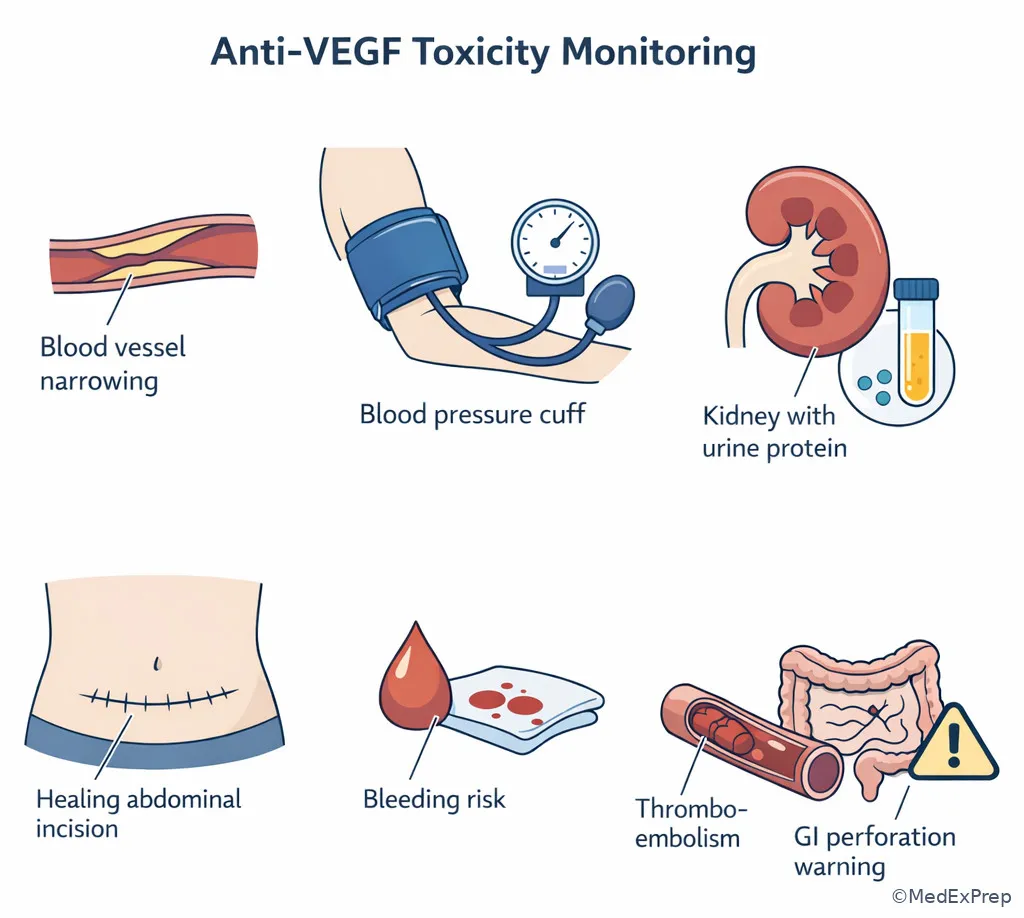
  • VEGF-driven angiogenesis explains both tumor perfusion biology and classic anti-VEGF toxicities such as hypertension, bleeding, and wound-healing problems.
  • Immune checkpoint inhibitors exploit tumor immune evasion biology rather than directly poisoning rapidly dividing cells.
  • Not every mutation is actionable; pharmacists must distinguish biologic relevance from molecular noise.
Concept Core exam cue Why it matters for pharmacists
Initiation DNA injury creates altered clone Frames mutagen exposure, latency, and secondary malignancy logic
Promotion Growth advantage without necessarily new mutation Explains why inflammatory or hormonal environments matter
Progression Invasion, heterogeneity, instability Anticipates resistance, metastasis, and mixed response patterns
Angiogenesis VEGF-dependent vascular support Links mechanism to bevacizumab-class toxicity monitoring
Immune evasion PD-1/PD-L1, CTLA-4 pathway relevance Supports selection and toxicity surveillance of immunotherapy
Genomic instability Repair defects, mutation accumulation Prepares for biomarker-directed therapy and resistance topics

Core content

Fig 1. Carcinogenesis sequence map
Exam takeaway: Use the sequence of initiation, promotion, and progression to identify which biologic step a stem is actually testing.
flowchart LR
A[Normal cell] --> B[Initiation: DNA damage]
B --> C[Promoted clone expands]
C --> D[Progression: more alterations]
D --> E[Invasion and metastasis potential]
B -.repair or death if controlled.-> F[No cancer]
C -.remove promoting signal early.-> G[Reduced expansion]
Fig 2. Hallmarks and drug strategy map
Exam takeaway: Match the dominant hallmark to the mechanism a regimen is trying to interrupt.
flowchart TD
A[Hallmark] --> B[Growth signaling]
A --> C[Angiogenesis]
A --> D[DNA repair failure]
A --> E[Immune evasion]
B --> F[TKIs or targeted antibodies]
C --> G[VEGF pathway inhibitors]
D --> H[PARP-directed strategies in selected settings]
E --> I[Checkpoint inhibitors]
Tumor microenvironment overview
Exam takeaway: Visualize how malignant cells, vessels, stromal cells, and immune cells cooperate to sustain growth and therapy resistance.
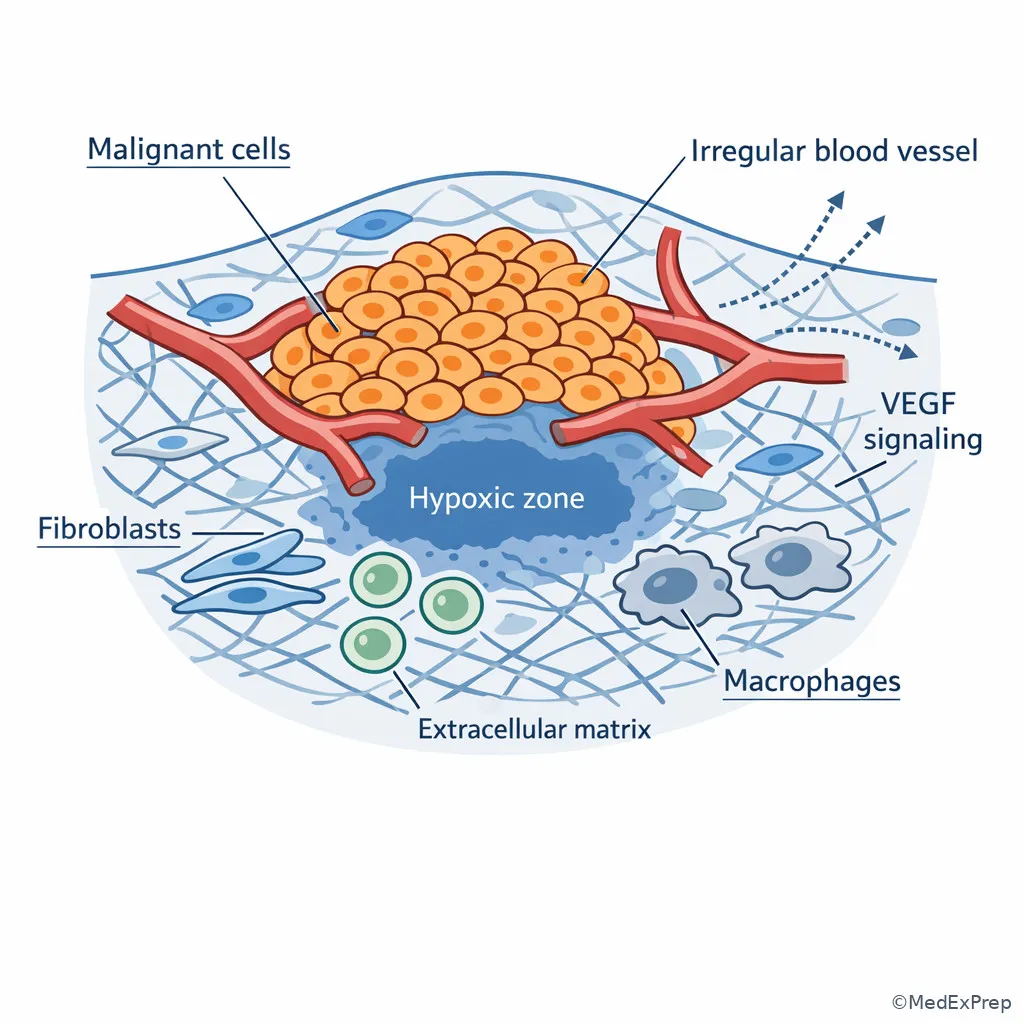
Tumor microenvironment overview
Cell-cycle checkpoint illustration
Exam takeaway: Connect loss of checkpoint control to unchecked proliferation and cytotoxic schedule dependence.
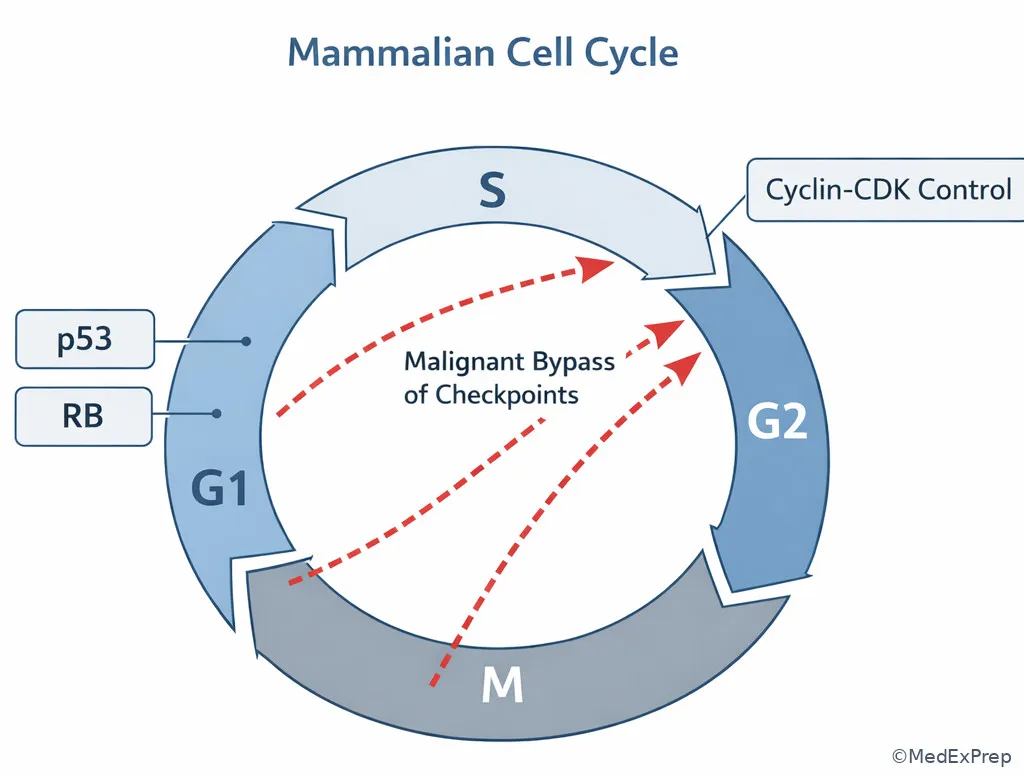
Cell-cycle checkpoint illustration

1.1.1.1 Foundations: multistep carcinogenesis

A. Explanation

The first decision conflict on exams is whether a stem is describing how cancer starts or how an established cancer behaves. The rule that resolves it is simple: if the key clue is initial irreversible genetic injury, think initiation; if the clue is selective expansion under growth pressure, think promotion; if the clue is heterogeneity, invasiveness, or metastatic capacity, think progression. See Fig 1.

WHY THIS IS TESTED: test writers want to know whether you can separate mechanism from stage. A mutagenic exposure causes initiation; a chronic proliferative environment helps promotion; accumulated instability and clonal selection drive progression. Pharmacist relevance is indirect but real: this framework explains latency, secondary malignancy risk, and why a tumor may behave more aggressively after acquiring additional alterations rather than simply because it exists.

Choose initiation when the stem emphasizes DNA adducts, radiation-induced damage, inherited repair defects, or permanent oncogenic mutation. Reject initiation when the stem only describes hormonal stimulation or inflammation without clear new DNA injury. Choose promotion when the stem emphasizes repeated growth stimulation, chronic inflammation, or endocrine drive causing expansion of an altered clone. Reject promotion if the key event is acquisition of invasive capability or marked genetic diversity; that is progression. Choose progression when the stem shifts from localized clone to invasive, therapy-resistant, genomically unstable disease.

Concept flow: Sorting the phase of carcinogenesis
Start with the clue
Look for DNA injury, growth stimulation, or invasive evolution.

Decision
Permanent mutation → initiation; selective expansion → promotion; heterogeneity/invasion → progression.

Apply to therapy logic
Progression cues anticipate resistance and need for closer reassessment.

Memory anchor: I-P-P = Injury, Proliferation, Progression. Injury starts the clone, Proliferation expands it, Progression makes it dangerous.

B. Worked example

A 67-year-old man with COPD, type 2 diabetes, and longstanding tobacco exposure is starting carboplatin plus pemetrexed IV every 21 days for metastatic non-small cell lung cancer. During regimen review, the note mentions years of smoke exposure, chronic bronchitis, and a new biopsy showing multiple genomic alterations. A distracting lab value shows mildly elevated triglycerides, and the stem highlights chronic inflammation as a tempting clue. The question asks which event most likely initiated malignant transformation.

Reasoning chain: Identify task: find the earliest carcinogenic step, not the best treatment or the cause of progression. Extract key facts: tobacco exposure and mutagenic DNA injury are present; chronic inflammation is also present but is a promoter-like clue; multiple genomic alterations suggest later progression, not first event. Apply rule: irreversible DNA damage from carcinogen exposure fits initiation. Eliminate distractors: chronic bronchitis may promote clonal expansion but is not the classic initiating event here; metastatic spread reflects progression; hypertriglyceridemia is noise. Verify: the best explanation is mutagen-induced genetic injury that created the first altered clone.

C. Exam trap

Common wrong answer: chronic inflammation as the initiating event. WHY IT IS TEMPTING: inflammation is clearly linked to cancer, so learners over-apply it to every phase. The SINGLE CLUE that eliminates it: the stem asks for the first irreversible event; inflammation usually promotes expansion and microenvironment support rather than serving as the classic initial permanent mutation.

D. Checkpoint

Question: A pharmacist reviews a case summary for a patient receiving cisplatin 75 mg/m2 IV day 1 and etoposide 100 mg/m2 IV days 1–3. The tumor board note states that a carcinogen caused a permanent DNA alteration, followed years later by hormone-independent growth and metastatic behavior. Which phase is best matched to the permanent DNA alteration?

  1. A. Initiation — Tempting because it is the only phase centered on irreversible first-hit genetic injury; right because that is exactly the discriminating clue.
  2. B. Promotion — Tempting because expansion of an altered clone does matter in carcinogenesis; wrong because promotion is growth selection, not the first permanent mutation.
  3. C. Progression — Tempting because advanced cancers accumulate many mutations; wrong because progression refers to later acquisition of aggressive behavior.
  4. D. Angiogenic switch — Tempting because tumors need blood supply to enlarge; wrong because angiogenesis is a hallmark capability, not the earliest phase described.
If you missed this: Review 1.1.1.1 Foundations: multistep carcinogenesis — focus on the rule that irreversible first-hit DNA injury = initiation.
Pharmacist Action: NOTICE mutagen exposure history, prior radiation, or therapy-related leukemia risk in the profile. SAY to the team when a stem is testing phase-of-carcinogenesis logic rather than regimen choice. MONITOR long-term survivors for secondary malignancy risks per disease-specific follow-up plans. HOLD/CLARIFY/ESCALATE when an order rationale confuses prevention, treatment, and surveillance terminology in a way that could affect care planning.

1.1.1.2 Foundational hallmarks: growth, death avoidance, immortality, and genomic instability

A. Explanation

The next decision conflict is whether a tumor is primarily being described as pushing the accelerator or cutting the brakes. Sustained proliferative signaling means growth pathways remain on. Evasion of growth suppressors means restraints such as RB or p53-related checkpoint control are disabled. Resisting cell death means apoptosis should occur but does not. Enabling replicative immortality means the clone avoids senescence, commonly through telomere maintenance. Genomic instability accelerates all of these by increasing mutation acquisition. See Fig 2.

WHY THIS IS TESTED: stems rarely ask for the entire hallmark list. Instead, they force you to choose between related biologic functions. If a question describes ligand-independent receptor signaling or constitutively active kinase pathways, choose sustained proliferative signaling. If it describes defective checkpoint-mediated arrest after DNA damage, choose evasion of growth suppressors. If it emphasizes failure of apoptosis after chemotherapy-induced damage, choose resistance to cell death. If it emphasizes progressive mutation burden or chromosomal instability, choose genomic instability as the enabling feature.

For pharmacists, this distinction clarifies drug rationale. Cytotoxic agents often exploit DNA damage and checkpoint stress. Targeted inhibitors often interrupt proliferative signaling. Some therapies derive special logic from repair deficiency, which becomes especially relevant in later biomarker lessons and resistance topics. Forward reference: the upcoming lesson on Tumor Resistance Mechanisms builds directly on this section because tumors that survive one pathway blockade often activate bypass signaling or repair pathways.

Concept flow: Separate accelerator from brake failure
Read the stem verb
Look for signaling on, checkpoint loss, apoptosis failure, or repair instability.

Decision
Signal on = proliferation; brake off = growth suppressor loss; death blocked = apoptosis resistance.

Link to therapy
Match pathway language to targeted drug purpose and monitoring plan.

High-Yield Connection: This concept is tested alongside Cancer Types and Kinetics. Know both hallmark biology and cell-cycle behavior for exam day — they are frequently paired in stems that ask why a rapidly proliferating tumor responds to schedule-dependent cytotoxic therapy.

B. Worked example

A 59-year-old woman with metastatic HR-positive, HER2-negative breast cancer, hypertension, and osteopenia is prescribed palbociclib 125 mg orally daily for 21 days on/7 days off plus letrozole 2.5 mg orally daily. Her ANC is 2,400/mm3, AST is mildly elevated from fatty liver disease, and she takes diltiazem for rate control. The stem asks which hallmark is most directly targeted by adding a CDK4/6 inhibitor. A tempting wrong clue is the mention of apoptosis because cytotoxic drugs often kill cells by DNA damage.

Reasoning chain: Identify task: what biologic capability is being interrupted by this targeted therapy? Extract key facts: CDK4/6 inhibition acts on cell-cycle progression downstream of proliferative signals and checkpoint control; diltiazem is a drug interaction issue but does not answer the biology question. Apply rule: this therapy most directly addresses sustained proliferative signaling and checkpoint progression through G1/S control. Eliminate distractors: angiogenesis is not the target; immune evasion is not the target; apoptosis resistance is not the primary direct mechanism tested here. Verify by mechanism: blocking cyclin-CDK signaling restrains inappropriate cell-cycle entry.

C. Exam trap

Common wrong answer: resistance to cell death. WHY IT IS TEMPTING: learners generalize that all anticancer therapy works by inducing cell death. The SINGLE CLUE that eliminates it: CDK4/6 inhibitors are chosen for checkpoint and proliferation control, not because they are classic apoptosis-inducing DNA-damaging agents.

D. Checkpoint

Question: A patient with metastatic colorectal cancer is discussed before cetuximab-based therapy, but the order review notes constitutive downstream signaling despite receptor blockade. Which hallmark-related mechanism best explains why receptor inhibition may fail?

  1. A. Sustained proliferative signaling via downstream pathway activation — Tempting because pathway activation can bypass receptor control; right because constitutive downstream signaling preserves growth despite upstream blockade.
  2. B. Angiogenesis through VEGF excess — Tempting because colorectal cancer treatment often includes anti-VEGF options; wrong because the clue specifically concerns receptor-independent growth signaling.
  3. C. Replicative immortality from telomerase activation — Tempting because immortality is a hallmark; wrong because telomere maintenance does not explain failure of receptor blockade in this stem.
  4. D. Immune evasion through PD-L1 expression — Tempting because immune escape matters in many cancers; wrong because the stem is about growth pathway bypass, not checkpoint suppression.
If you missed this: Review 1.1.1.2 Foundational hallmarks: growth, death avoidance, immortality, and genomic instability — focus on the rule that downstream constitutive signaling defeats upstream receptor inhibition.
Pharmacist Action: NOTICE when the ordered targeted agent and the documented tumor biology do not logically match. SAY that mechanism-pathway alignment should be verified before dispensing. MONITOR for hallmark-linked toxicities such as cytopenias with cell-cycle inhibitors and interaction-driven exposure changes. HOLD/CLARIFY/ESCALATE if a drug-interaction trap, missing biomarker, or contradictory pathway note suggests the regimen may be inappropriate.
Quick Recall:

  • The hallmark most directly tied to telomere maintenance is replicative immortality.
  • True or False: Loss of growth suppressors is the same as activated growth signaling. False.
  • Name the enabling feature that speeds accumulation of many other cancer traits: genomic instability.
Recall: This is the first topic in the course, so there is no prior in-course concept to retrieve yet. In the next topic, we build on these hallmarks by asking how proliferative rate and cell-cycle kinetics change regimen schedule logic.
Fig 3. Hallmark discrimination decision tree
Exam takeaway: When options look similar, use the single dominant biologic clue to separate signaling, checkpoint loss, apoptosis escape, and genomic instability.
flowchart TD
A[Stem clue] --> B{What is emphasized?}
B -->|Kinase on, growth factor independent| C[Proliferative signaling]
B -->|Checkpoint or brake removed| D[Growth suppressor evasion]
B -->|Fails to die after damage| E[Apoptosis resistance]
B -->|Many mutations or repair defect| F[Genomic instability]
DNA damage and repair pathway image
Exam takeaway: Repair defects are best remembered as enablers of mutation accumulation and later therapeutic vulnerability.
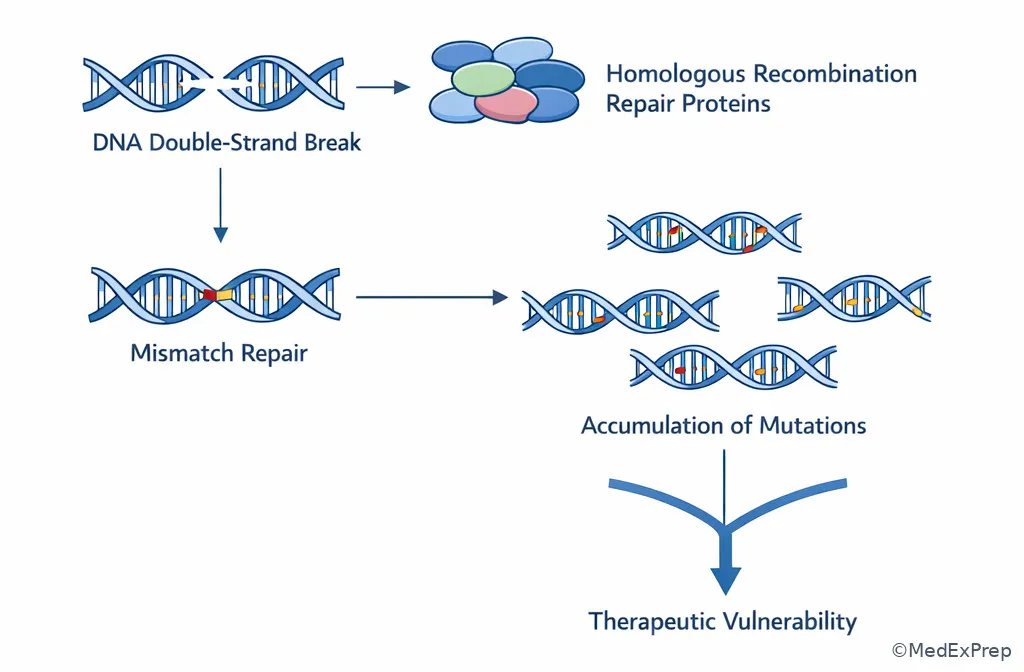
DNA damage and repair pathway image

1.1.1.3 Applied hallmark recognition: angiogenesis, metabolism, inflammation, and immune evasion

A. Explanation

Now the decision conflict becomes more clinical: when a stem mentions hypoxia, vessel growth, VEGF, or wound-healing risk, should you think tumor growth or drug toxicity? The single rule is to identify whether the stem is testing the hallmark itself or the consequence of targeting it. Tumors induce angiogenesis to maintain nutrient delivery and support expansion. They also reprogram energy metabolism, operate within inflammatory microenvironments, and evade immune destruction. These are not abstract ideas; they directly explain why certain therapies work and why their toxicities look the way they do.

WHY THIS IS TESTED: oncology pharmacists are expected to connect biology to verification and monitoring. Anti-VEGF therapy links to hypertension, proteinuria, bleeding, thromboembolism, gastrointestinal perforation risk, and impaired wound healing because the mechanism disrupts physiologic vascular signaling as well as tumor angiogenesis. Immune checkpoint therapy fits tumors that exploit immune inhibitory pathways, but the resulting immune-related adverse events are the price of disinhibiting T-cell activity. Metabolic reprogramming is tested less often as a stand-alone therapy choice in BCOP-style questions, but it helps explain lactate-rich, hypoxic, fast-growing tumors and the adaptive stresses driving survival.

Choose angiogenesis when the stem centers on VEGF, new vessel formation, hypoxic signaling, or anti-VEGF adverse effect profiles. Choose immune evasion when the key feature is suppressed T-cell activity, PD-1/PD-L1 biology, or response to checkpoint blockade. Choose tumor-promoting inflammation when chronic inflammatory mediators support proliferation, angiogenesis, and mutation-inducing oxidative injury. Reject angiogenesis if the stem is actually about cell-cycle pace or DNA repair. See Fig 3.

Concept flow: From hallmark to monitoring plan
Find the biologic target
VEGF, checkpoint signaling, hypoxia, or inflammatory support.

Decision
If mechanism is vascular, monitor vascular toxicity; if immune, monitor autoimmune toxicity.

Verify safety
Check comorbidities, surgery timing, urine protein, blood pressure, or autoimmune history.

Memory anchor: V-I-P for anti-VEGF monitoring: Vessels, Incision healing, Proteinuria/pressure.
High-Yield Connection: This concept is tested alongside Tumor Resistance Mechanisms. Know both antiangiogenic rationale and the ways tumors bypass single-pathway inhibition through alternative signaling or microenvironment adaptation.

B. Worked example

A 63-year-old woman with metastatic colorectal cancer, poorly controlled hypertension, diabetic nephropathy with baseline urine protein, and recent bowel surgery 3 weeks ago has an order for bevacizumab 5 mg/kg IV every 2 weeks added to FOLFOX. Her serum creatinine is stable, hemoglobin is 10.6 g/dL, and a distracting note mentions KRAS testing results from a prior consult. The pharmacist must determine the most appropriate verification concern based on the hallmark targeted.

Reasoning chain: Identify task: connect biologic target to safety risk. Extract key facts: bevacizumab targets angiogenesis; uncontrolled blood pressure, proteinuria, and recent surgery are high-yield safety flags; KRAS is noise for this specific question because it matters more for EGFR-directed therapy than anti-VEGF. Apply rule: inhibiting vascular signaling can worsen hypertension, cause proteinuria, and impair wound healing. Eliminate distractors: neutropenia prophylaxis is not the key hallmark-linked concern here; immune-related hepatitis fits checkpoint inhibitors, not bevacizumab; infusion-reaction premedication is not the dominant issue. Verify: the order requires clarification regarding surgery timing and careful vascular toxicity assessment.

C. Exam trap

Common wrong answer: focus on KRAS result before verifying bevacizumab. WHY IT IS TEMPTING: colorectal cancer questions often train learners to think immediately about EGFR biomarker selection. The SINGLE CLUE that eliminates it: the drug in the order is bevacizumab, so the highest-yield biologic and safety issue is angiogenesis inhibition, not EGFR pathway eligibility.

D. Checkpoint

Question: A patient receiving pembrolizumab 200 mg IV every 3 weeks for metastatic melanoma develops diarrhea and rising liver enzymes after initial tumor shrinkage. Which hallmark best explains why this class can produce durable responses yet also autoimmune toxicities?

  1. A. Tumor immune evasion — Tempting because checkpoint inhibitors specifically counter inhibitory immune signaling; right because releasing immune suppression can restore antitumor activity and trigger irAEs.
  2. B. Sustained angiogenesis — Tempting because the tumor microenvironment matters; wrong because angiogenesis blockade does not explain checkpoint-mediated colitis and hepatitis.
  3. C. Replicative immortality — Tempting because melanoma cells proliferate persistently; wrong because telomere biology is not the mechanism of pembrolizumab action.
  4. D. Deregulated metabolism — Tempting because tumor metabolism affects immunity; wrong because the direct therapeutic target here is immune checkpoint escape.
If you missed this: Review 1.1.1.3 Applied hallmark recognition: angiogenesis, metabolism, inflammation, and immune evasion — focus on the rule that checkpoint inhibitors exploit immune evasion biology and therefore create immune-related toxicities.
Pharmacist Action: NOTICE hallmark-linked toxicity clusters: anti-VEGF with BP/proteinuria/wound healing; checkpoint therapy with autoimmune toxicities. SAY the mechanism aloud when clarifying an order because it often reveals the right monitoring plan. MONITOR blood pressure and urine protein with anti-VEGF therapy, and organ-specific irAE parameters with checkpoint therapy at each cycle. HOLD/CLARIFY/ESCALATE when recent surgery, active bleeding risk, uncontrolled hypertension, or severe suspected irAEs are present.

1.1.1.4 Integration: linking hallmarks to therapy classes and regimen verification

A. Explanation

The advanced testable step is not naming a hallmark; it is choosing the most appropriate pharmacist action when a regimen targets one. The decision conflict is whether a drug-order problem reflects mechanism mismatch, missing safety monitoring, or likely resistance pressure. The rule is to ask three questions in sequence: What hallmark is being targeted? What prerequisite makes that strategy logical? What predictable toxicity or failure mode follows? See Fig 2 and Fig 3.

WHY THIS IS TESTED: BCOP questions are practical. You are rarely rewarded for reciting biology unless you can apply it to regimen verification. EGFR-directed therapy without the right tumor biology, immune checkpoint therapy in the wrong clinical context, or antiangiogenic therapy with unaddressed surgical risk are pharmacist-scope problems. Likewise, a DNA repair-targeted strategy may be mechanistically appealing, but the profile may contain a more urgent action such as dose clarification, interaction review, or missing baseline labs.

Choose clarify biomarker or biologic rationale when the mechanism depends on target presence or pathway context. Choose clarify monitoring/supportive care when the target is clear but hallmark-linked toxicity precautions are missing. Choose anticipate resistance or sequencing issues when prior exposure, pathway bypass, or mixed response is highlighted. This section also prepares you for the next lesson: growth kinetics explains why some regimens depend on schedule and proliferative fraction, not just hallmark identity.

Concept flow: Pharmacist hallmark verification sequence
Target
Identify the hallmark or pathway the regimen is meant to interrupt.

Fit check
Confirm biomarker, disease context, prior exposure, and comorbidity fit.

Safety
Screen hallmark-linked toxicities and missing monitoring parameters.

Action
Verify, recommend, hold, or escalate within pharmacist scope.

B. Worked example

A 71-year-old man with metastatic renal cell carcinoma, recent dental extraction, atrial fibrillation on apixaban, and CKD stage 3 is prescribed axitinib orally twice daily plus pembrolizumab IV every 3 weeks. He also has a history of autoimmune thyroiditis and borderline uncontrolled blood pressure. A distracting clue notes a family history of colon cancer. The pharmacist is asked for the most appropriate verification focus before cycle 1.

Reasoning chain: Identify task: not to choose the physician's cancer diagnosis, but to verify therapy safety and biologic fit. Extract key facts: axitinib targets angiogenesis-related signaling and carries hypertension/bleeding concerns; pembrolizumab targets immune evasion and raises immune toxicity concerns; the patient has anticoagulation, recent procedure, autoimmune history, and hypertension. Apply rule: when multiple hallmark-targeted therapies are combined, the pharmacist should prioritize the mechanism-linked safety screens most likely to change immediate administration. Eliminate distractors: family history of colon cancer does not change current verification; CKD matters but is not the single biggest hallmark-linked issue without a dose rule in question; thyroiditis is relevant because immunotherapy can worsen endocrine irAEs but is not always an absolute exclusion. Verify: the best action is to clarify BP control, bleeding/procedure status, and baseline monitoring for both vascular and immune toxicities.

C. Exam trap

Common wrong answer: reject therapy solely because of autoimmune thyroiditis. WHY IT IS TEMPTING: learners remember that checkpoint inhibitors can worsen autoimmune conditions and convert that into a blanket contraindication. The SINGLE CLUE that eliminates it: stable preexisting autoimmune disease is not an automatic absolute stop; the immediate pharmacist action is targeted risk clarification and monitoring, especially with concurrent vascular-risk therapy.

D. Checkpoint

Question: A pharmacist verifies bevacizumab 15 mg/kg IV every 3 weeks with carboplatin and paclitaxel for a patient with ovarian cancer who had major abdominal surgery 10 days ago and has persistent uncontrolled BP despite two agents. What is the most appropriate next step?

  1. A. Clarify and recommend holding bevacizumab pending wound-healing and BP reassessment — Tempting because it directly matches hallmark-linked vascular toxicity logic; right because antiangiogenic therapy increases wound-healing and hypertension risk.
  2. B. Proceed and only add urine protein monitoring — Tempting because proteinuria monitoring is appropriate with bevacizumab; wrong because it misses the more immediate surgical and BP contraindication concerns.
  3. C. Substitute pembrolizumab to avoid vascular toxicity — Tempting because it targets a different hallmark; wrong because this is outside pharmacist authority and not a mechanism-driven automatic substitution.
  4. D. Delay all chemotherapy until germline testing returns — Tempting because biomarkers matter in ovarian cancer; wrong because the urgent issue is specific safety clarification for bevacizumab, not universal treatment delay.
If you missed this: Review 1.1.1.4 Integration: linking hallmarks to therapy classes and regimen verification — focus on the rule that hallmark-targeted agents carry predictable mechanism-linked safety screens that can require hold or clarification.
Pharmacist Action: NOTICE whether the ordered therapy targets signaling, angiogenesis, DNA repair, or immune escape. SAY which baseline condition or missing parameter could make the order unsafe today. MONITOR mechanism-specific parameters at cycle start and throughout therapy. HOLD/CLARIFY/ESCALATE when the hallmark-targeted toxicity risk is immediate, such as uncontrolled BP before anti-VEGF therapy or suspected grade 3+ irAE before checkpoint re-dosing.
Quick Recall:

  • The hallmark most directly linked to bevacizumab use is angiogenesis.
  • True or False: Stable preexisting autoimmune disease is always an absolute contraindication to checkpoint inhibitors. False.
  • Name the three pharmacist verification questions: What target? What prerequisite? What toxicity/failure mode?
Fig 4. Hallmark-to-therapy verification algorithm
Exam takeaway: Verify target fit first, then screen the predictable toxicity cluster linked to that mechanism.
flowchart TD
A[Ordered antineoplastic] --> B{Mechanism class?}
B -->|VEGF/angiogenesis| C[Check BP, proteinuria, bleeding, surgery]
B -->|Checkpoint inhibitor| D[Check autoimmune history, organ baseline, irAE history]
B -->|Targeted signaling inhibitor| E[Check biomarker, interactions, QT or organ issues]
B -->|DNA repair strategy| F[Check biomarker context, marrow reserve, prior exposure]
C --> G[Verify or clarify]
D --> G
E --> G
F --> G
Anti-VEGF toxicity monitoring image
Exam takeaway: Remember the vascular toxicity cluster because it is a common verification and exam trap.
Anti-VEGF toxicity monitoring image
Fig 5. Immune evasion and checkpoint blockade illustration
Exam takeaway: Link PD-1 or PD-L1 blockade to restored T-cell function and the risk of immune-related toxicities.
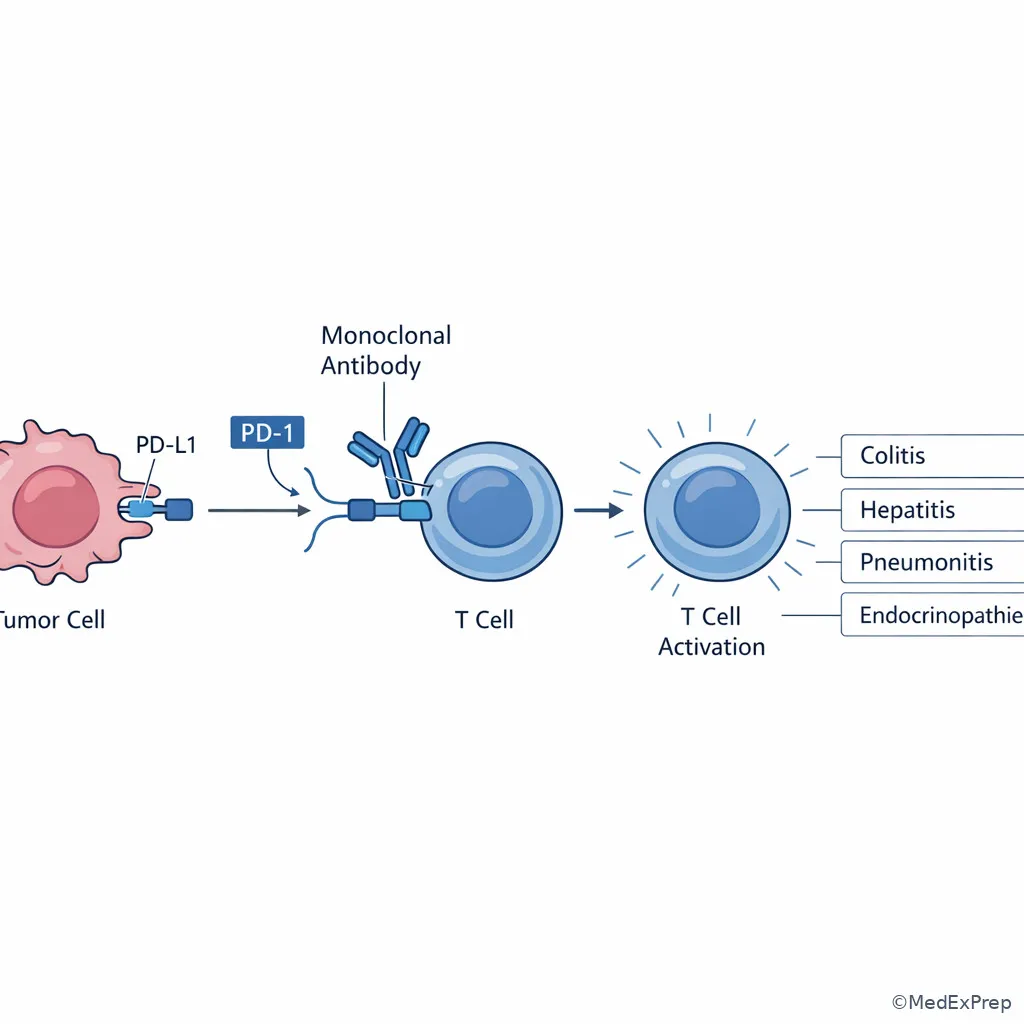
Fig 5. Immune evasion and checkpoint blockade illustration
Fig 6. Clonal evolution toward progression
Exam takeaway: Progressive cancer reflects selection of fitter subclones, which sets up resistance and mixed-response stems.
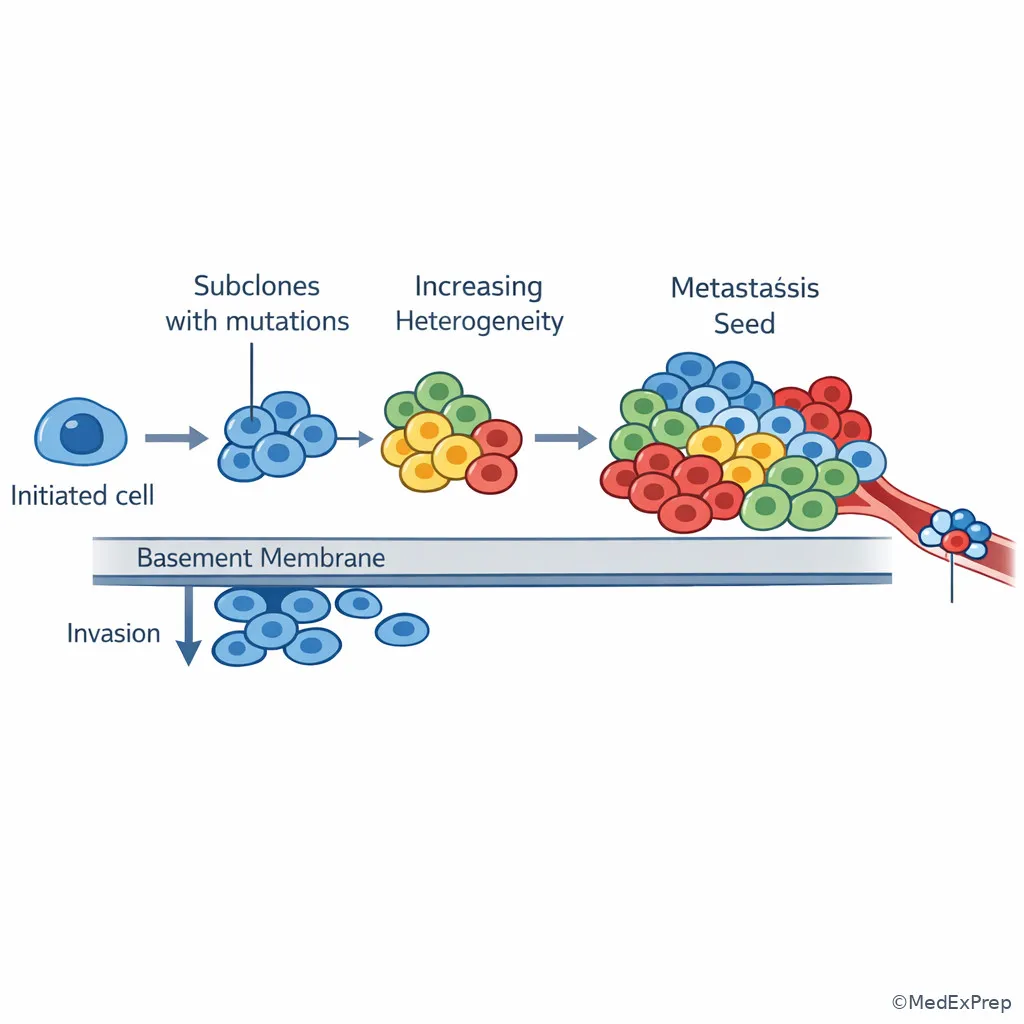
Fig 6. Clonal evolution toward progression
Hallmark / feature Key stem wording Therapy classes commonly linked High-yield pharmacist monitoring angle
Sustained proliferative signaling Constitutive kinase signaling, receptor activation, growth-factor independence TKIs, pathway antibodies, CDK4/6 inhibitors Biomarker fit, interactions, organ-specific toxicity
Evasion of growth suppressors Checkpoint loss, p53 or RB dysfunction Indirectly relevant to cytotoxic and cell-cycle therapies Myelosuppression risk, schedule logic, treatment selection context
Resistance to cell death Survival despite damage, antiapoptotic signaling Cytotoxics, some targeted combinations Response interpretation, failure patterns
Replicative immortality Senescence bypass, telomere maintenance Usually conceptual rather than direct first-line drug cue Distinguish from simple rapid growth
Angiogenesis VEGF, hypoxia-driven neovascularization Bevacizumab, VEGFR TKIs BP, proteinuria, bleeding, surgery timing, perforation risk
Immune evasion PD-1/PD-L1, CTLA-4, T-cell suppression Checkpoint inhibitors Baseline organ function, irAE history, autoimmune context
Genomic instability Repair defect, mutation burden, chromosomal instability Biomarker-directed strategies in selected settings Biomarker interpretation, resistance anticipation
Often-confused pair What they share Single discriminator
Proliferative signaling vs growth suppressor evasion Both increase cell-cycle entry Signal stuck on versus brake removed
Promotion vs progression Both occur after initiation Expansion without major aggressive transformation versus acquisition of invasive/heterogeneous behavior
Angiogenesis vs immune evasion Both rely on microenvironment interactions Vascular support clues versus immune checkpoint suppression clues
Genomic instability vs resistance mechanism Both involve adaptation Instability is broad mutation-enabling tendency; resistance is a therapy-context survival mechanism
Rapid growth vs malignancy initiation Both can appear in carcinogenesis stems Growth rate is behavior; initiation is first irreversible mutation event
Therapy class Hallmark rationale Tempting but wrong shortcut Correct pharmacist response
Bevacizumab Blocks tumor angiogenesis support Only think “proteinuria” Screen BP, urine protein, bleeding, thrombosis, wound-healing timing
Pembrolizumab Reverses immune evasion Only think “works if PD-L1 positive” Check disease context plus irAE baseline and monitoring plan
CDK4/6 inhibitor Restrains proliferative cell-cycle drive Assume primary effect is angiogenesis or apoptosis induction Check CBC, interactions, dosing schedule, disease setting
EGFR-directed therapy Interrupts growth signaling Assume receptor expression alone guarantees benefit Verify pathway context and relevant biomarker exclusions
DNA repair-directed strategy Exploits repair vulnerability Use solely because mutation list is long Confirm actionable repair context, prior exposure, marrow tolerance

Exam Traps & Differentiators

Most common wrong answer and why: choosing a general hallmark that is true of cancer but not the one actually tested. Learners often see “cancer” and choose proliferation, even when the stem is really about angiogenesis-linked toxicity, immune evasion, or progression-related heterogeneity.

Common traps & distractors:

  • Initiation vs promotion: tobacco or radiation points to irreversible first-hit mutation; chronic inflammation or endocrine stimulation points to selective expansion.
  • Promotion vs progression: if the new clue is invasion, metastasis, or marked heterogeneity, move to progression.
  • Growth signaling vs growth suppressor loss: “kinase on” is not the same as “checkpoint off.”
  • Angiogenesis vs EGFR biomarker logic in colorectal cancer: if the ordered drug is bevacizumab, prioritize vascular-risk monitoring before chasing EGFR-specific biomarker traps.
  • Immune evasion vs cytotoxic killing: checkpoint inhibitors work by reactivating immunity; they do not behave like standard DNA-damaging agents.
Looks similar but isn’t If the stem says... Think...
First cancer-causing event vs later aggressive behavior Irreversible carcinogen-induced DNA injury Initiation
Clonal expansion vs invasive transformation Selective growth of altered cells under inflammatory/hormonal pressure Promotion
General cancer growth vs vascular hallmark VEGF, wound-healing risk, proteinuria, severe hypertension Angiogenesis
Immunotherapy response vs biomarker-only stem Restored T-cell attack with autoimmune toxicity Immune evasion
Resistance topic vs hallmark topic Bypass signaling after targeted therapy exposure Resistance mechanism, not just baseline hallmark
  • If the stem says “constitutively active downstream pathway,” think receptor blockade may fail despite target expression.
  • If the stem says “recent surgery plus bevacizumab order,” think clarify wound-healing risk before dispensing.
  • If the stem says “checkpoint inhibitor plus colitis/hepatitis,” think immune evasion biology and irAE management pathway.
  • If the stem says “repair defect with mutation accumulation,” think genomic instability enabling other hallmarks.
  • If the stem says “heterogeneous subclones and mixed response,” think progression and clonal evolution. See Fig 6.

Related upcoming confusable pair: the next lesson on Cancer Types and Kinetics will test whether you confuse fast-growing with aggressive biology. Those overlap, but they are not identical. Likewise, the lesson on Tumor Resistance Mechanisms will test whether a therapy failure reflects baseline biology or acquired pathway escape.

Review connection: The traps above test hallmark discrimination under realistic order-verification noise. If any felt unfamiliar, revisit 1.1.1.2 Foundational hallmarks: growth, death avoidance, immortality, and genomic instability and 1.1.1.4 Integration: linking hallmarks to therapy classes and regimen verification before attempting the Self-check quiz.

Algorithm / Approach

Concept flow: Pharmacist approach to hallmark-based stems
Identify the task
Is the question asking phase of carcinogenesis, hallmark recognition, therapy fit, or safety monitoring?

Choose the biologic rule
Irreversible mutation = initiation; vascular clue = angiogenesis; checkpoint clue = immune evasion; downstream bypass = proliferative signaling.

Map to therapy or risk
Ask which drug class fits the target and which toxicity cluster should be screened first.

Act within scope
Verify, recommend monitoring, clarify missing prerequisites, or escalate urgent safety concerns.

Use this algorithm under exam pressure: first classify the biologic clue, then tie it to a therapy mechanism, and only then choose the pharmacist action. If you skip the biologic step, distractors become much harder to eliminate. See Fig 4 and Fig 5.

Rapid Review

  • Initiation → first irreversible mutational hit, not mere inflammation
  • Promotion → selective expansion pressure, often without being the original mutation
  • Progression → invasion, metastasis, heterogeneity, instability
  • Proliferative signaling → accelerator stuck on
  • Growth suppressor evasion → brake removed
  • Apoptosis resistance → damage occurs but death program fails
  • Replicative immortality → senescence bypass via telomere maintenance
  • Genomic instability → enabling feature that accelerates other hallmarks
  • Angiogenesis → think VEGF plus BP/proteinuria/wound-healing monitoring
  • Immune evasion → think checkpoint blockade plus irAE surveillance
  • Inflammation → promoter and microenvironment amplifier, not always the initiating event
  • Downstream constitutive signaling → explains failure of upstream receptor inhibition
  • Recent surgery + anti-VEGF order → clarify before dispense
  • Mixed tumor subclones → think progression and future resistance risk
Memory anchor: HALLMARK shortcut for test day: Hypoxia vessels, Apoptosis escape, Ligand-independent signaling, Loss of brakes, Mutation instability, Autoimmune checkpoint relevance, Replicative immortality, Klones evolving.

Self-check quiz

1. A pharmacist reviews erlotinib 150 mg orally daily for a patient with metastatic lung cancer. The chart note describes ligand-independent signaling through a growth pathway. Which hallmark is most directly being targeted?

  1. A. Sustained proliferative signaling
  2. B. Angiogenesis
  3. C. Immune evasion
  4. D. Replicative immortality

2. A patient starting carboplatin AUC 5 IV every 21 days has a history of radiation exposure years before developing malignancy. The team asks which carcinogenesis phase best matches the original irreversible DNA damage. Which is the most appropriate answer?

  1. A. Initiation
  2. B. Promotion
  3. C. Progression
  4. D. Angiogenic switch

3. A 65-year-old man with metastatic colorectal cancer, hypertension, CKD stage 2, and recent colectomy 2 weeks ago is ordered FOLFIRI plus bevacizumab 5 mg/kg IV every 2 weeks. His urine protein is 2+, BP is 168/96 mmHg, and a distracting note highlights KRAS wild-type status. What is the most appropriate pharmacist action?

  1. A. Proceed because KRAS wild-type status supports biologic therapy use
  2. B. Clarify and recommend holding bevacizumab pending surgical recovery and BP reassessment
  3. C. Substitute cetuximab immediately because KRAS wild-type status is more relevant
  4. D. Proceed but increase irinotecan monitoring only

4. A 58-year-old woman with metastatic melanoma, hypothyroidism, and well-controlled rheumatoid arthritis receives nivolumab 240 mg IV every 2 weeks. After two cycles, she has new diarrhea and AST/ALT elevation, while CBC remains stable. Which hallmark best explains the drug mechanism underlying both benefit and toxicity?

  1. A. Tumor immune evasion
  2. B. Sustained angiogenesis
  3. C. Replicative immortality
  4. D. Growth suppressor evasion

5. A 72-year-old woman with HR-positive metastatic breast cancer, atrial fibrillation on diltiazem, and baseline neutropenia is prescribed palbociclib 125 mg orally daily for 21 days on/7 days off plus letrozole 2.5 mg orally daily. The question asks which hallmark-linked process palbociclib most directly restrains. Which is the best answer?

  1. A. Sustained proliferative signaling through cell-cycle progression
  2. B. Angiogenesis via VEGF blockade
  3. C. Immune evasion via PD-1 inhibition
  4. D. Apoptosis induction through DNA cross-linking

6. A 69-year-old man with metastatic renal cell carcinoma, uncontrolled hypertension, recent dental extraction, coronary artery disease, and rivaroxaban use is prescribed axitinib 5 mg orally twice daily plus pembrolizumab 200 mg IV every 3 weeks. Creatinine is 1.4 mg/dL, TSH is normal, and a family history of lymphoma is noted. Which issue most requires immediate clarification before therapy proceeds?

  1. A. Recent dental extraction and uncontrolled hypertension with axitinib-based vascular toxicity risk
  2. B. Family history of lymphoma because checkpoint inhibitors worsen hematologic malignancy risk
  3. C. Mildly elevated creatinine because pembrolizumab is contraindicated in CKD stage 3
  4. D. Normal TSH because baseline endocrine function must be abnormal to receive immunotherapy

7. A 61-year-old man with metastatic colorectal cancer previously benefited from EGFR-directed therapy but now progresses on panitumumab 6 mg/kg IV every 14 days. The updated molecular report notes a newly acquired downstream signaling alteration. He also has diabetes and a magnesium of 1.5 mg/dL. Which biologic interpretation best explains the likely treatment failure?

  1. A. Sustained proliferative signaling via bypass downstream activation
  2. B. Angiogenesis-driven resistance because all refractory colorectal tumors become VEGF dependent
  3. C. Replicative immortality due to telomerase activation as the main cause of anti-EGFR failure
  4. D. Immune evasion because prior antibody therapy suppresses T-cell function

8. A 66-year-old woman with ovarian cancer, diabetes, obesity, and recent bowel resection 12 days ago is ordered paclitaxel 175 mg/m2 IV plus carboplatin AUC 6 IV every 21 days with bevacizumab 15 mg/kg IV every 3 weeks. BP is 162/94 mmHg and urine protein is 1+. Which pharmacist recommendation is most appropriate?

  1. A. Clarify and recommend delaying bevacizumab while allowing evaluation of chemotherapy timing per surgical recovery and BP control
  2. B. Hold all systemic therapy because any recent surgery contraindicates cytotoxic therapy
  3. C. Proceed with full regimen because urine protein is only 1+
  4. D. Replace bevacizumab with nivolumab because it avoids wound-healing risk

Answer key

1. Correct answer: A. Sustained proliferative signaling

  • A. Tempting because erlotinib is a classic growth-pathway inhibitor; correct because ligand-independent signaling describes a constitutively active proliferative pathway. The single stem clue is “ligand-independent signaling.” Authoritative support: FDA labeling for erlotinib; DiPiro discusses receptor tyrosine kinase signaling as growth pathway biology.
  • B. Tempting because targeted therapies often affect tumor growth broadly; incorrect because angiogenesis would involve VEGF/vascular clues rather than EGFR-type signaling. The discriminator is absence of vessel or wound-healing language. Support: AHFS Drug Information; DiPiro.
  • C. Tempting because modern oncology often emphasizes immunotherapy; incorrect because immune evasion would require checkpoint-pathway clues such as PD-1/PD-L1, not receptor growth signaling. Support: NCCN principles of immunotherapy; AHFS.
  • D. Tempting because immortality is a hallmark of many cancers; incorrect because telomere/senescence biology is not the direct mechanism implied by an EGFR inhibitor order. Support: DiPiro; standard cancer biology texts.
If you missed this: Review 1.1.1.2 Foundational hallmarks: growth, death avoidance, immortality, and genomic instability — focus on the discriminator that constitutive kinase signaling = sustained proliferative signaling.

2. Correct answer: A. Initiation

  • A. Tempting because it directly names the first irreversible event; correct because radiation-induced permanent DNA damage fits initiation. The clue is “original irreversible DNA damage.” Support: DiPiro oncology foundations; standard carcinogenesis framework.
  • B. Tempting because expansion occurs later in cancer development; incorrect because promotion refers to growth advantage after the altered cell already exists. The discriminator is that no expansion-only language is present. Support: cancer biology texts.
  • C. Tempting because progression includes accumulated abnormalities; incorrect because progression is later aggressive evolution, not the first hit. Support: DiPiro.
  • D. Tempting because vascular change is part of tumor development; incorrect because an angiogenic switch is a later hallmark capability rather than the first mutational event. Support: standard hallmark framework.
If you missed this: Review 1.1.1.1 Foundations: multistep carcinogenesis — focus on the discriminator that initiation is the first irreversible mutational hit.

3. Correct answer: B. Clarify and recommend holding bevacizumab pending surgical recovery and BP reassessment

  • A. Tempting because KRAS wild-type status matters in metastatic colorectal cancer biologic selection; incorrect because the immediate order-specific safety problem is anti-VEGF use after recent surgery with uncontrolled hypertension and proteinuria. The discriminator is the bevacizumab order plus surgery/BP clues. Support: bevacizumab FDA labeling; NCCN Colon Cancer guidelines.
  • B. Tempting because it directly applies antiangiogenic toxicity logic; correct because bevacizumab is associated with impaired wound healing and hypertension, requiring clarification before proceeding. The single key clue is colectomy 2 weeks ago with BP 168/96 mmHg. Support: bevacizumab FDA labeling; AHFS Drug Information.
  • C. Tempting because KRAS wild-type status can support cetuximab in appropriate settings; incorrect because pharmacists should not independently substitute regimens, and this choice ignores the immediate mechanism-linked safety issue. The discriminator is scope plus immediate safety concern. Support: NCCN; pharmacist-scope guardrails.
  • D. Tempting because irinotecan toxicity monitoring is always relevant in FOLFIRI; incorrect because it fails to address the more urgent anti-VEGF safety concern. The discriminator is recent surgery and uncontrolled BP. Support: NCCN; FDA labeling.
If you missed this: Review 1.1.1.3 Applied hallmark recognition: angiogenesis, metabolism, inflammation, and immune evasion — focus on the anti-VEGF rule that recent surgery and uncontrolled hypertension require clarification.

4. Correct answer: A. Tumor immune evasion

  • A. Tempting because nivolumab is a PD-1 inhibitor; correct because it counteracts tumor immune evasion, producing antitumor activity and immune-mediated diarrhea/hepatitis. The discriminator is checkpoint inhibitor plus autoimmune-type toxicity. Support: nivolumab FDA labeling; NCCN Management of Immunotherapy-Related Toxicities.
  • B. Tempting because melanoma care can include antiangiogenic concepts indirectly; incorrect because VEGF biology does not explain PD-1 inhibitor colitis and hepatitis. The key clue is nivolumab, not bevacizumab. Support: NCCN.
  • C. Tempting because immortal cells characterize cancer broadly; incorrect because telomere maintenance is not the therapeutic target here. Support: DiPiro.
  • D. Tempting because checkpoint control sounds similar to growth suppression; incorrect because the question is about immune checkpoint biology, not tumor cell-cycle brake failure. The discriminator is immune toxicity pattern. Support: NCCN irAE guidance.
If you missed this: Review 1.1.1.3 Applied hallmark recognition: angiogenesis, metabolism, inflammation, and immune evasion — focus on the discriminator that checkpoint inhibitors exploit immune evasion biology and therefore cause irAEs.

5. Correct answer: A. Sustained proliferative signaling through cell-cycle progression

  • A. Tempting because CDK4/6 inhibitors are built around cell-cycle control; correct because palbociclib restrains inappropriate proliferative drive through G1/S regulation. The discriminator is the CDK4/6 mechanism. Support: palbociclib FDA labeling; NCCN Breast Cancer guidelines.
  • B. Tempting because oral targeted agents can affect growth broadly; incorrect because VEGF blockade is not the mechanism of palbociclib. The clue excluding it is the breast cancer endocrine/CDK4/6 regimen. Support: FDA labeling.
  • C. Tempting because immunotherapy is widely used in oncology; incorrect because PD-1 inhibition is unrelated to palbociclib. Support: AHFS.
  • D. Tempting because many anticancer drugs kill dividing cells; incorrect because DNA cross-linking describes platinum-like cytotoxic drugs, not CDK4/6 inhibition. The discriminator is specific drug mechanism. Support: DiPiro; FDA label.
If you missed this: Review 1.1.1.2 Foundational hallmarks: growth, death avoidance, immortality, and genomic instability — focus on the rule that CDK4/6 inhibition restrains proliferative signaling and checkpoint progression, not angiogenesis or direct DNA cross-linking.

6. Correct answer: A. Recent dental extraction and uncontrolled hypertension with axitinib-based vascular toxicity risk

  • A. Tempting because axitinib is a VEGFR TKI and these are strongly linked to vascular toxicity; correct because recent procedure-related healing concerns and uncontrolled hypertension are immediate pre-treatment issues. The single discriminator is the VEGFR inhibitor plus extraction/BP clues. Support: axitinib FDA labeling; NCCN Kidney Cancer guidelines.
  • B. Tempting because family cancer history can matter in oncology workup; incorrect because it does not determine immediate safety of axitinib plus pembrolizumab. The discriminator is that family history is unrelated noise here. Support: NCCN kidney cancer management principles.
  • C. Tempting because renal function often affects dosing; incorrect because mild CKD does not make pembrolizumab contraindicated. The discriminator is no label-based contraindication for this creatinine alone. Support: pembrolizumab FDA labeling.
  • D. Tempting because endocrine monitoring matters with immunotherapy; incorrect because baseline thyroid function need not be abnormal to use immunotherapy, and normal TSH is actually reassuring. The discriminator is that thyroid abnormality is a monitoring parameter, not a prerequisite for abnormality. Support: NCCN irAE guidance.
If you missed this: Review 1.1.1.4 Integration: linking hallmarks to therapy classes and regimen verification — focus on the hallmark-targeted verification rule that VEGF/VEGFR therapies require immediate screening for BP and wound-healing risk.

7. Correct answer: A. Sustained proliferative signaling via bypass downstream activation

  • A. Tempting because acquired downstream alterations are a classic reason targeted receptor blockade stops working; correct because bypass activation preserves growth despite upstream panitumumab inhibition. The discriminator is “newly acquired downstream signaling alteration.” Support: NCCN Colon Cancer guidelines; DiPiro targeted therapy principles.
  • B. Tempting because anti-VEGF therapy is another colorectal cancer strategy; incorrect because refractory disease after EGFR therapy is not automatically due to VEGF dependence. The discriminator is specific downstream growth pathway escape. Support: NCCN.
  • C. Tempting because immortality contributes to malignant persistence; incorrect because telomerase activation does not specifically explain acquired anti-EGFR resistance in this stem. Support: standard oncology pharmacology texts.
  • D. Tempting because monoclonal antibodies interact with immune effectors; incorrect because the question points to pathway bypass, not T-cell suppression. The discriminator is molecular report showing downstream alteration. Support: NCCN Colon Cancer guidelines.
If you missed this: Review 1.1.1.2 Foundational hallmarks: growth, death avoidance, immortality, and genomic instability — focus on the discriminator that downstream constitutive signaling defeats upstream receptor inhibition; then preview the upcoming Tumor Resistance Mechanisms topic.

8. Correct answer: A. Clarify and recommend delaying bevacizumab while allowing evaluation of chemotherapy timing per surgical recovery and BP control

  • A. Tempting because it separates the hallmark-targeted safety issue from the rest of the regimen; correct because bevacizumab specifically raises wound-healing and hypertension concerns, while the chemotherapy components may require separate postoperative timing judgment. The discriminator is bevacizumab with surgery 12 days ago and BP 162/94 mmHg. Support: bevacizumab FDA labeling; NCCN Ovarian Cancer guidelines.
  • B. Tempting because recent surgery can delay therapy broadly; incorrect because the strongest mechanism-linked contraindication here is to bevacizumab specifically, not an automatic universal hold of all cytotoxic therapy in every postoperative scenario. The discriminator is class-specific vascular toxicity. Support: FDA labeling; NCCN.
  • C. Tempting because urine protein is only 1+ and may seem mild; incorrect because it ignores the more immediate surgery and BP clues. Support: bevacizumab label.
  • D. Tempting because it avoids vascular toxicity; incorrect because independent regimen substitution is outside pharmacist authority and immunotherapy is not an automatic swap for ovarian cancer in this context. The discriminator is scope and disease-specific appropriateness. Support: pharmacist scope guardrails; NCCN.
If you missed this: Review 1.1.1.4 Integration: linking hallmarks to therapy classes and regimen verification — focus on the discriminator that antiangiogenic therapy requires class-specific hold/clarify logic for postoperative wound-healing risk and uncontrolled BP.

References

  • National Comprehensive Cancer Network. NCCN Clinical Practice Guidelines in Oncology. Various disease and supportive care guidelines. Current versions.
  • DiPiro, Joseph T., et al. Pharmacotherapy: A Pathophysiologic Approach. McGraw-Hill, current edition.
  • American Society of Health-System Pharmacists. AHFS Drug Information. Current edition.
  • U.S. Food and Drug Administration. Prescribing Information for bevacizumab, pembrolizumab, nivolumab, palbociclib, axitinib, erlotinib, and other relevant antineoplastic agents.
  • Lexicomp Online. Wolters Kluwer Health. Drug monographs and oncology-specific monitoring content.

Last reviewed: March 15, 2026

Lesson 2

Cancer Types And Kinetics

What you'll learn

  • DOMAIN: Foundations - Cancer Biology and Treatment Principles: Distinguish solid tumors from hematologic malignancies by growth pattern, distribution, and treatment logic.
  • DOMAIN: Foundations - Cancer Biology and Treatment Principles: Explain how cell-cycle kinetics and proliferative behavior influence the scheduling logic of cytotoxic therapy.
  • DOMAIN: Foundations - Cancer Biology and Treatment Principles: Connect tumor burden and proliferative rate with treatment urgency, monitoring intensity, and supportive-care needs.
  • DOMAIN: Calculations - Dose and Schedule Verification: Use kinetic information to verify whether timing and schedule are clinically coherent rather than evaluating dose in isolation.
  • DOMAIN: Practice - Medication Safety and Pharmacist Action: Identify when biologic behavior should trigger clarification, escalation, or additional supportive-care verification.

Blueprint mapping

Oncology Diagnosis and Testing - Oncology Diagnosis: cancer etiology, pathophysiology, and types of cancer.

Therapeutic Implementation: pharmacotherapy and drug administration principles as they relate to schedule.

Cancer Outcomes and Treatment Monitoring: complications, toxicity prevention, and clinically meaningful monitoring.

No topic-specific percentage beyond the supplied public blueprint is assigned here.

Lesson logistics

Estimated time: 35-50 minutes

Prereqs: Carcinogenesis And Hallmarks

Key outputs: You should be able to choose solid-tumor versus hematologic-malignancy reasoning, identify when proliferation changes schedule logic, and recognize when burden plus growth rate should intensify pharmacist verification and supportive-care planning.

Why it matters

  • BCOP questions often provide the diagnosis and then test what the pharmacist does with the biologic behavior: verify a regimen, judge the importance of timing, anticipate supportive-care intensity, or recognize an unsafe delay.
  • A large tumor burden is not synonymous with rapid proliferation, and rapid proliferation is not synonymous with large burden. These variables answer different questions.
  • Solid tumors and hematologic malignancies may require different mental models because localized mass behavior and system-wide circulating or marrow-based disease do not present the same treatment-planning problem.
  • Schedule can be a pharmacologic variable. A correct dose delivered on a biologically incoherent schedule may still represent a verification concern.
Exam orientation: The testable pharmacist question is usually not "What microscopic diagnosis is this?" but "Given the stated cancer type and kinetic behavior, what should I verify, prioritize, or escalate?"

Key Terms & Must-Know Facts

Term Exam-ready meaning Why it matters
Solid tumor Malignancy organized predominantly as a tissue mass or masses. Prompts attention to anatomic burden, local effects, metastatic distribution, and systemic-treatment context.
Hematologic malignancy Malignancy arising in blood-forming or lymphoid systems and often distributed through marrow, blood, lymphoid tissue, or multiple sites. Prompts system-wide disease reasoning rather than assuming a single dominant mass.
Tumor burden Overall quantity or extent of malignant disease present. Can increase treatment complexity, monitoring needs, and supportive-care demands.
Proliferative rate Relative pace at which malignant cells are entering growth and division. Helps frame urgency, kinetic sensitivity, and schedule logic.
Cell cycle Ordered process through which proliferating cells progress toward division. Provides the conceptual basis for schedule dependence of some cytotoxic strategies.
Growth fraction Conceptual proportion of malignant cells actively participating in proliferation. Explains why tumors of similar size may respond differently to timing-dependent therapy.
Schedule dependence Clinical importance of when and how often therapy is delivered, not only the total dose. Turns timing into a regimen-verification parameter.
Cycle Repeated treatment interval defined by a protocol or regimen. Pharmacists verify both dose and planned timing.
Local effect Clinical consequence caused by tumor presence in a specific anatomic site. May alter urgency even when proliferation is not especially rapid.
Systemic disease behavior Clinical behavior reflecting widespread blood, marrow, lymphatic, or metastatic involvement. Supports broader monitoring and treatment-planning logic.
Urgency Need for timely evaluation or treatment based on biologic behavior and clinical consequences. Should be separated from stage, burden, and proliferation rather than inferred from one variable alone.
Supportive-care intensity Degree of prevention, monitoring, and symptom-management support needed around treatment. Can rise when burden, proliferative activity, treatment intensity, or patient risk increases.

Must-know facts

  • Solid tumors and hematologic malignancies differ in growth patterns and therefore may differ in treatment-planning logic.
  • Tumor size or total burden and proliferative rate are related concepts but are not interchangeable.
  • Cell-cycle kinetics can make treatment timing clinically meaningful for cytotoxic therapy.
  • A regimen must be verified as a dose-plus-schedule plan, not as an isolated dose calculation.
  • High disease burden may increase monitoring and supportive-care requirements even if the stem does not describe especially rapid proliferation.
  • Rapid proliferation can increase urgency even when the absolute burden described in the stem is not massive.
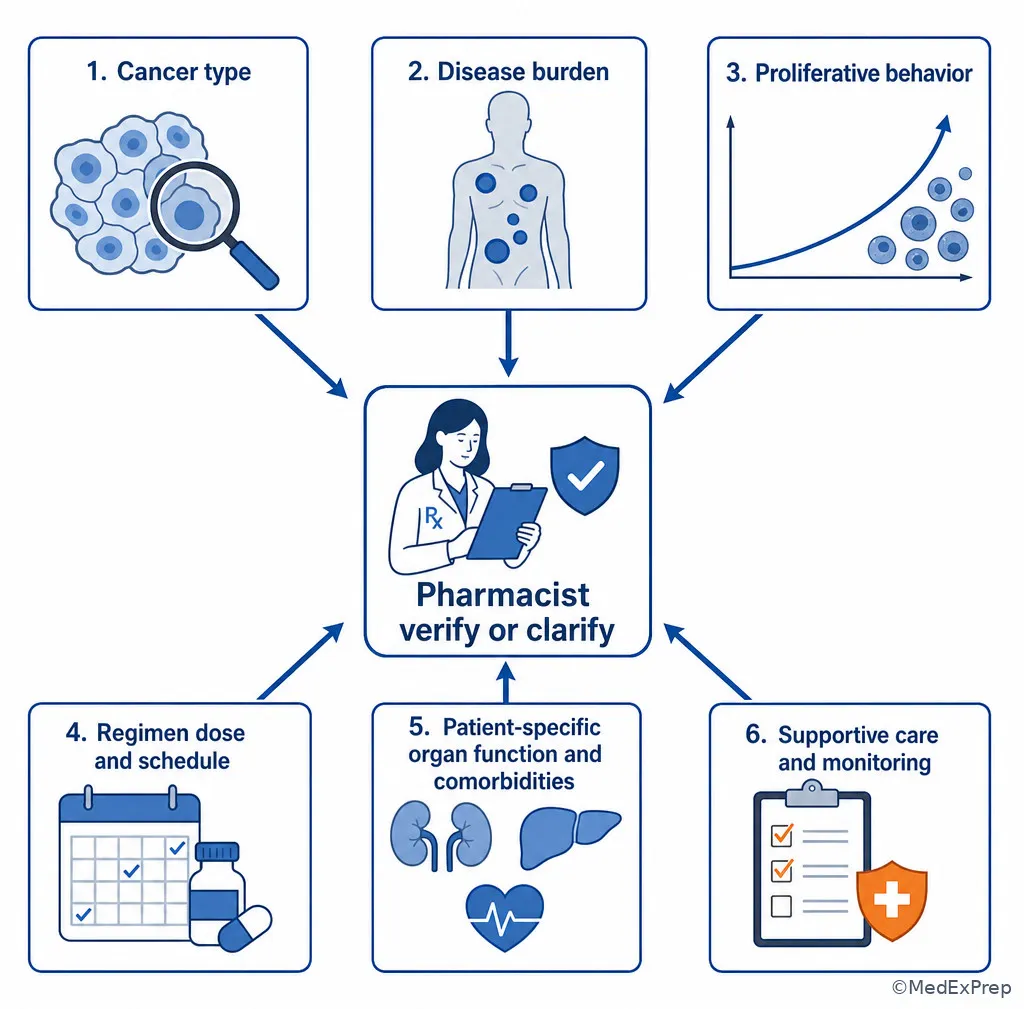
  • Pharmacist reasoning should incorporate diagnosis, distribution, burden, proliferation, organ function, prior therapy, and treatment timing without exceeding diagnostic scope.
  • When kinetic implications are unclear or protocol-dependent, the safe pharmacist action is to verify the regimen and local protocol rather than invent a universal schedule.

Core content

1. Solid tumors versus hematologic malignancies: choose the right disease model

A. Explanation

Decision conflict: Should the pharmacist interpret the case mainly as an anatomic mass problem or as a system-wide malignant-cell problem? The distinction matters because the same words - "burden," "response," and "progression" - can imply different verification priorities depending on cancer type.

WHY THIS IS TESTED: BCOP candidates are expected to support treatment planning from the supplied diagnosis without independently re-diagnosing the patient. The exam can therefore test whether you use the correct biologic framework once the disease type is already given.

For a solid tumor, anatomic extent and consequences of disease at specific sites may dominate the immediate clinical picture. For a hematologic malignancy, disease can be distributed through marrow, blood, lymphoid tissue, or multiple compartments, so a single lesion does not necessarily represent the entire malignant burden. The pharmacist's task is to interpret the provided disease description in the context of regimen selection support, administration, toxicity prevention, and monitoring.

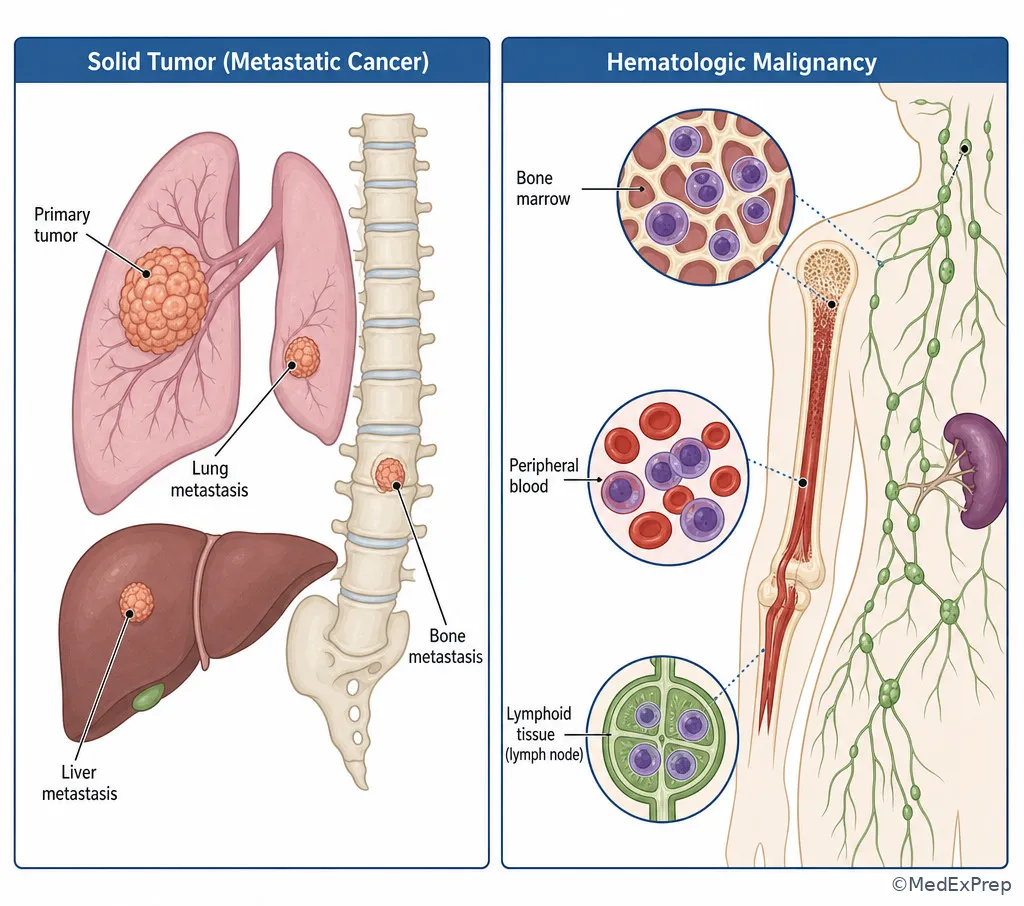
See Fig 1 for the side-by-side disease model.

1. Read the supplied diagnosis.
2. Classify the working model as predominantly solid-tissue or hematologic/systemic.
3. Identify whether the stem emphasizes anatomic burden, circulating/marrow disease, or both.
4. Translate that model into regimen-verification and monitoring priorities.
Fig 1. Solid-tumor and hematologic-disease mental models
Exam takeaway: Use the stated disease type to select the correct biologic framework before interpreting burden, response, or urgency.
Fig 1. Solid-tumor and hematologic-disease mental models
Disease-model selection map
Exam takeaway: The diagnosis determines which pattern of burden and monitoring should organize your reasoning.
flowchart LR
A[Stated cancer type] --> B{Predominant pattern}
B -->|Solid tissue| C[Assess anatomic extent and local effects]
B -->|Hematologic| D[Assess marrow blood lymphoid distribution]
C --> E[Verify systemic therapy and monitoring context]
D --> E

B. Worked example

A 63-year-old patient with hypertension, type 2 diabetes, and chronic osteoarthritis is receiving evaluation for therapy after a documented metastatic solid malignancy. The medication list includes lisinopril, metformin, and intermittent naproxen. Hemoglobin is mildly reduced, serum sodium is normal, and the patient reports chronic knee pain that is unchanged. Imaging information supplied in the case describes multiple discrete lesions. A distractor answer proposes interpreting the case primarily through marrow involvement because the hemoglobin is low.

  1. Identify the task: Determine the most appropriate disease model for medication-planning and monitoring reasoning.
  2. Extract key facts: The diagnosis is explicitly a metastatic solid malignancy with discrete lesions. Mild anemia is present but is not stated to represent marrow disease.
  3. Apply the rule: Use the supplied solid-tumor framework; do not transform a nonspecific laboratory abnormality into a new hematologic diagnosis.
  4. Eliminate: Reject the marrow-dominant model because the stem does not establish hematologic malignancy or marrow infiltration.
  5. Verify: Focus pharmacist review on the ordered systemic regimen, treatment timing, patient factors, supportive care, and monitoring appropriate to the documented disease.

C. Exam trap

Common wrong answer: Reclassify a patient with a solid malignancy as having a hematologic pattern because of anemia or another nonspecific laboratory abnormality. Why it is tempting: oncology patients frequently have blood-count abnormalities. Single clue that eliminates it: the stem already gives the cancer type and does not state marrow involvement or a hematologic diagnosis.

D. Checkpoint MCQ

A patient has a documented hematologic malignancy with disease described in marrow and peripheral blood. Which pharmacist reasoning approach is most appropriate?

  1. A. Treat the largest visible lesion as the sole measure of disease burden.
  2. B. Use a system-wide disease model that incorporates marrow and circulating disease.
  3. C. Infer a new solid-tumor diagnosis from any enlarged lymph node.
  4. D. Ignore disease distribution because only drug dose matters.

Answer: B. A is tempting because measurable lesions are concrete, but the stem specifies marrow and blood involvement. B is correct because hematologic disease can span compartments. C is tempting because lymph nodes can be anatomically discrete, but a node does not convert the stated disease into a solid malignancy. D is tempting in a dose-calculation mindset, but regimen appropriateness and monitoring require disease context.

If you missed this: Review Solid tumors versus hematologic malignancies: choose the right disease model - focus on using the stated diagnosis and distribution rather than inventing a different disease category.

2. Cell-cycle kinetics: decide when timing is part of the pharmacology

A. Explanation

Decision conflict: Is a treatment order safe to verify by checking dose alone, or does the schedule itself carry essential biologic meaning? For cytotoxic therapy, cell-cycle kinetics can make timing and repeated exposure clinically relevant.

WHY THIS IS TESTED: The supplied blueprint explicitly includes drug administration, pharmacotherapy, toxicity monitoring, and dose/schedule verification. A pharmacist who confirms the arithmetic but overlooks an erroneous interval has not completed regimen verification.

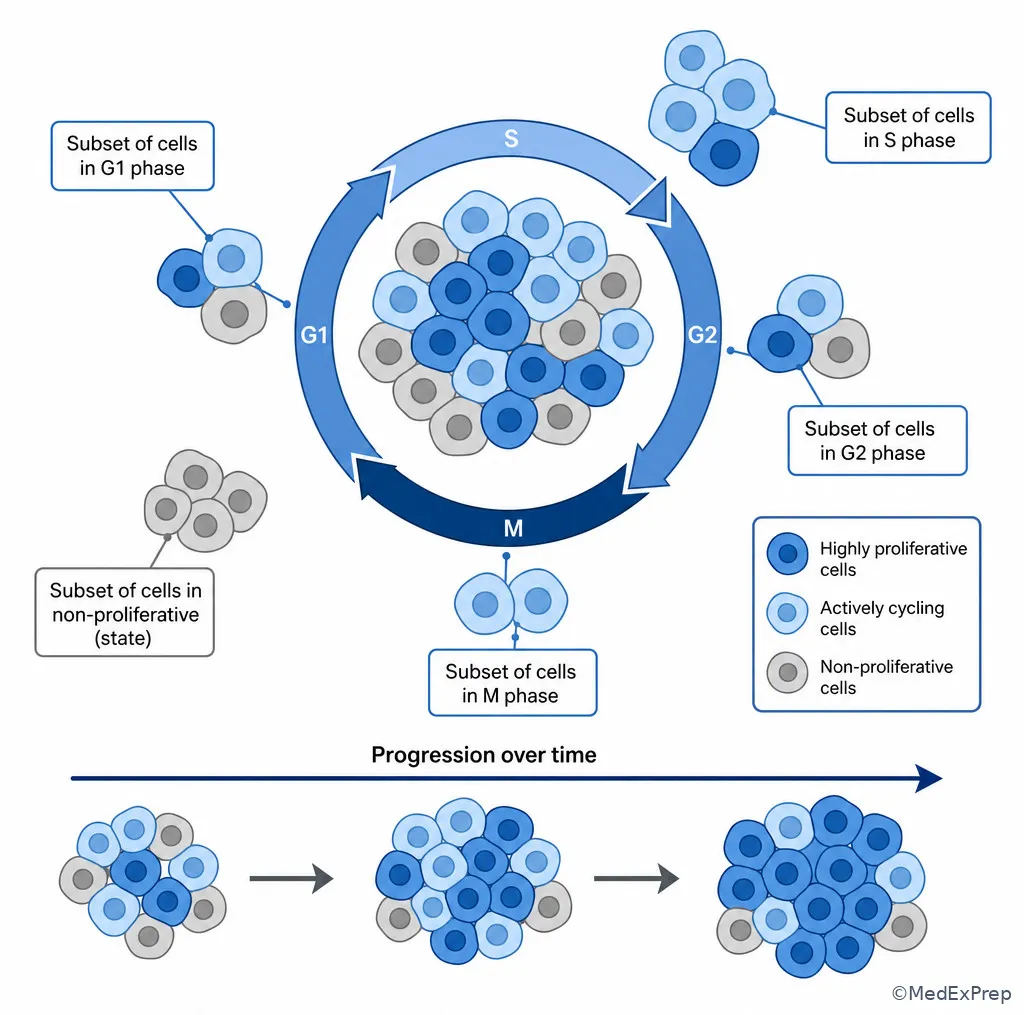
Malignant populations are not uniformly synchronized. At any given time, some cells may be actively proliferating while others are not. Therefore, repeated or specifically timed cytotoxic exposure may be designed to encounter susceptible cells as the population progresses through proliferative states. The key board-level principle is not memorization of an unsupported universal schedule; it is recognition that schedule can be mechanistically important and must match the protocol.

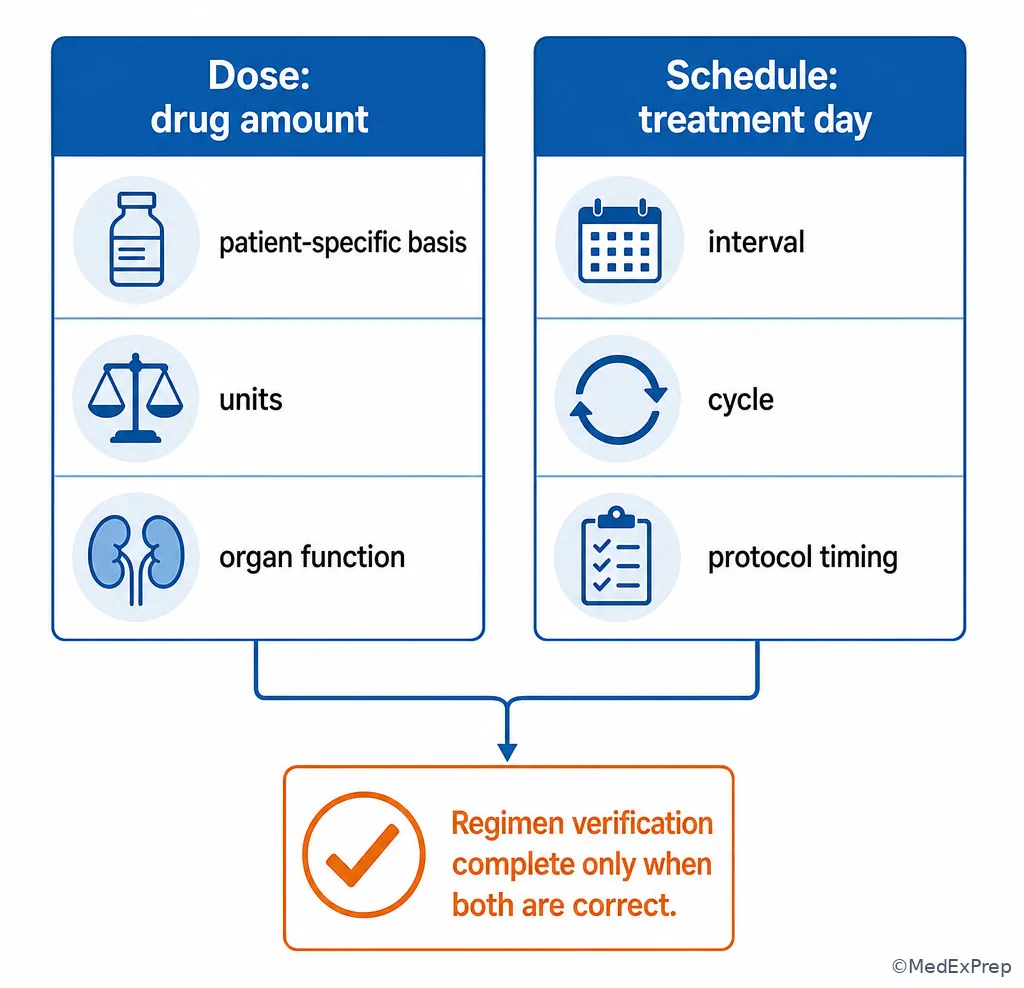
See Fig 2 for the schedule-verification model and Fig 4 for the dose-versus-timing comparison.

1. Confirm the regimen identity.
2. Verify intended dose and units.
3. Verify treatment day, interval, and cycle position.
4. Ask whether the timing is coherent with the stated protocol and kinetic rationale.
5. Clarify any unexplained schedule deviation before release.
Fig 2. Schedule dependence in regimen verification
Exam takeaway: A numerically correct dose can still be unsafe if treatment timing does not match the intended regimen.
flowchart TD
A[Chemotherapy order] --> B[Verify drug and dose]
B --> C[Verify treatment day and interval]
C --> D{Matches intended protocol?}
D -->|Yes| E[Continue safety checks]
D -->|No or unclear| F[Clarify before verification]
Fig 4. Dose versus schedule as separate verification axes
Exam takeaway: Treat dose accuracy and timing accuracy as two independent safety checks.
Fig 4. Dose versus schedule as separate verification axes
Fig 6. Cell-population timing concept
Exam takeaway: Tumor cells may occupy different proliferative states, supporting the concept that repeated exposure can matter.
Cell-population timing concept

B. Worked example

A 51-year-old patient with controlled asthma, gastroesophageal reflux disease, and a remote history of nephrolithiasis is receiving a protocol-defined cytotoxic regimen. The calculated dose on today's order matches the protocol and the patient's current body-size parameter. Creatinine and hepatic tests are unchanged, and the patient reports mild seasonal allergies. However, the order is dated for a treatment day that does not match the protocol calendar. A tempting response is to approve the order because the milligram dose is correct.

  1. Identify the task: Determine the best regimen-verification action.
  2. Extract key facts: Dose arithmetic is correct; organ function is stable; the treatment day conflicts with the protocol.
  3. Apply the rule: Cytotoxic regimen verification includes schedule, not dose alone.
  4. Eliminate: Do not release solely because the numeric dose is correct. The allergy history and remote nephrolithiasis are non-decisive noise here.
  5. Verify: Clarify the intended treatment day and protocol before completing verification.

C. Exam trap

Common wrong answer: Approve a chemotherapy order after confirming only the dose calculation. Why it is tempting: calculation errors are highly salient pharmacist safety problems. Single clue that eliminates it: the treatment day or interval does not match the stated protocol.

D. Checkpoint MCQ

Which finding most directly requires clarification before verifying an otherwise correctly calculated cytotoxic regimen?

  1. A. The patient has controlled hypertension on stable therapy.
  2. B. The calculated dose matches the protocol, but the treatment interval differs from the protocol without explanation.
  3. C. The patient reports stable chronic back pain.
  4. D. A non-decisive laboratory value remains within the stated reference range.

Answer: B. A is tempting because comorbidities can modify therapy, but the stem gives no treatment-relevant conflict. B is correct because timing is part of regimen verification. C is tempting because symptoms can reflect cancer, but the stem labels the pain as stable and does not link it to therapy. D is tempting because labs matter, but a normal non-decisive value does not supersede an unexplained schedule mismatch.

If you missed this: Review Cell-cycle kinetics: decide when timing is part of the pharmacology - focus on verifying treatment day and interval independently from dose.
Quick Recall:

  • True or false: A correct chemotherapy dose guarantees a correct regimen. False.
  • Fill in the blank: Cytotoxic regimen verification requires checking dose and schedule.
  • One-liner: Why can repeated exposure matter? Because malignant cells are not necessarily synchronized in the same proliferative state at one moment.

3. Tumor burden versus proliferative rate: separate size from speed

A. Explanation

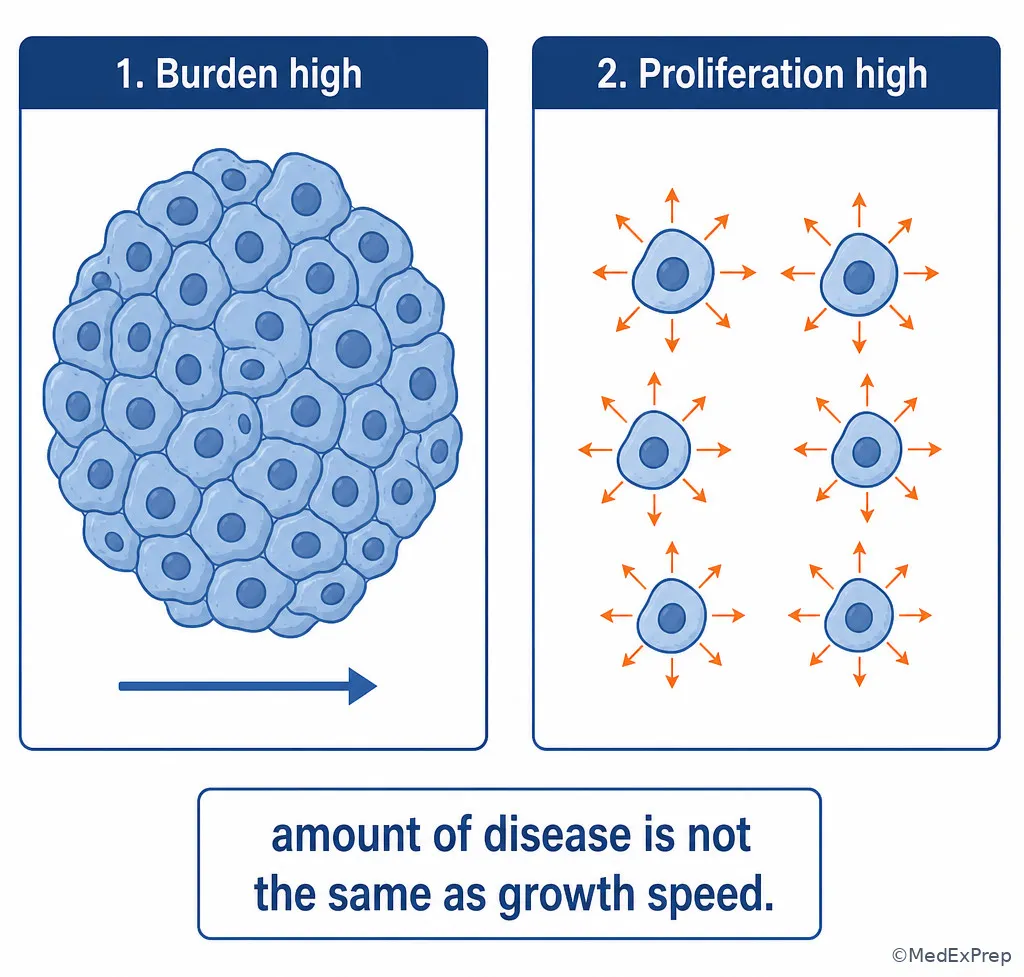
Decision conflict: Does a large amount of disease automatically mean rapidly dividing disease, or does rapid proliferation automatically mean a massive burden? Neither inference is safe. Burden describes how much disease is present; proliferative rate describes how quickly the malignant population is growing.

WHY THIS IS TESTED: The distinction affects urgency, monitoring, supportive-care planning, and interpretation of treatment risk. Board questions can deliberately provide one variable and tempt you to assume the other.

A patient can have substantial burden with comparatively slower growth, creating major anatomic or physiologic consequences despite less dramatic kinetics. Another patient can have a smaller measured burden but very rapid proliferation, making delay clinically consequential. The pharmacist should integrate both variables with the stated diagnosis, symptoms, laboratory abnormalities, organ function, and planned therapy.

See Fig 3 for the two-axis model.

1. Identify the stated disease burden.
2. Independently identify any clue about proliferation or growth pace.
3. Do not infer one variable solely from the other.
4. Combine burden and growth pace to judge urgency, monitoring, and supportive-care intensity.
Fig 3. Burden and proliferation are separate axes
Exam takeaway: High burden and rapid growth can coexist, but either may occur without the other and each changes clinical priorities differently.
flowchart LR
A[Tumor burden: how much disease?] --> C[Integrated clinical risk]
B[Proliferative rate: how fast is disease growing?] --> C
C --> D[Urgency]
C --> E[Monitoring intensity]
C --> F[Supportive-care planning]
High-burden versus high-growth comparison
Exam takeaway: A visually larger disease burden and a faster-growing disease process are not interchangeable concepts.
High-burden versus high-growth comparison
Burden-rate decision matrix
Exam takeaway: Integrate both variables before deciding how urgently to verify treatment and supportive-care plans.
flowchart TD
A[Assess burden] --> B[Assess proliferation]
B --> C{Either clinically concerning?}
C -->|Yes| D[Increase attention to urgency monitoring and supportive care]
C -->|No| E[Continue protocol-based evaluation]
D --> F[Verify patient-specific treatment plan]
E --> F

B. Worked example

A 46-year-old patient with migraine, hypothyroidism, and mild hyperlipidemia has a documented malignancy described as rapidly proliferative but currently limited in measured disease volume. Platelet count is normal, creatinine is stable, and the patient reports a long-standing benign skin lesion. One proposed answer states that treatment planning can be delayed because the measured burden is not large.

  1. Identify the task: Determine whether low measured burden alone justifies de-emphasizing urgency.
  2. Extract key facts: The stem explicitly describes rapid proliferation. The benign skin lesion and stable creatinine are distractions.
  3. Apply the rule: Burden and proliferation answer different questions; low burden does not erase rapid-growth biology.
  4. Eliminate: Reject the assumption that smaller burden means lower urgency.
  5. Verify: Prioritize timely regimen review, treatment readiness, and appropriate supportive-care assessment consistent with the stated disease and protocol.

C. Exam trap

Common wrong answer: Equate low disease volume with low urgency. Why it is tempting: burden is tangible and easy to visualize. Single clue that eliminates it: the stem explicitly states rapid proliferation.

D. Checkpoint MCQ

Which statement best distinguishes tumor burden from proliferative rate?

  1. A. Tumor burden and proliferative rate are interchangeable measures of severity.
  2. B. Tumor burden describes disease extent, whereas proliferative rate describes growth pace.
  3. C. Proliferative rate is relevant only to hematologic malignancies.
  4. D. Tumor burden matters only when a patient has symptoms.

Answer: B. A is tempting because both can correlate with clinical risk, but they represent different dimensions. B is correct and preserves the key distinction. C is tempting because rapidly proliferative hematologic disease is memorable, but kinetics also matter in solid-tumor biology. D is tempting because symptomatic burden often drives urgency, but clinically meaningful burden can exist before a particular symptom dominates the case.

If you missed this: Review Tumor burden versus proliferative rate: separate size from speed - focus on burden equals amount, proliferation equals pace.

4. Integrating kinetics into pharmacist verification and supportive care

A. Explanation

Decision conflict: When a stem supplies cancer type, burden, proliferative behavior, laboratory data, comorbidities, and an ordered regimen, which details should change the pharmacist's next action? The goal is to convert biologic information into a medication-safety decision without assuming the role of the diagnosing oncologist.

WHY THIS IS TESTED: BCOP practice is integrative. The candidate must combine disease state, regimen timing, patient-specific safety factors, supportive care, toxicity prevention, and monitoring rather than treating each fact as an isolated flash card.

A practical sequence is: confirm the stated cancer model; assess burden and growth pace separately; verify the regimen and schedule; identify patient-specific risks; check supportive-care completeness; and escalate unexplained discrepancies. Local protocols and formulary pathways may vary, so the pharmacist should anchor action to the current protocol and interdisciplinary plan.

See Fig 5 for the integrated verification pathway.

1. Start with the stated cancer type and treatment intent.
2. Extract burden, proliferation, symptoms, organ function, and prior therapy.
3. Verify drug, dose, route, timing, and cycle position.
4. Assess whether supportive care and monitoring match the patient's kinetic and treatment risk.
5. Clarify or escalate any safety-relevant mismatch.
Fig 5. Integrated oncology pharmacist verification pathway
Exam takeaway: Cancer biology becomes actionable when it changes regimen verification, monitoring, supportive care, or escalation.
flowchart TD
A[Stated diagnosis] --> B[Burden and proliferation]
B --> C[Regimen dose route schedule]
C --> D[Patient factors and organ function]
D --> E[Supportive care and monitoring]
E --> F{Any mismatch?}
F -->|Yes| G[Clarify or escalate]
F -->|No| H[Complete verification]
Pharmacist safety-screen checklist
Exam takeaway: Kinetics should be translated into concrete verification questions rather than treated as abstract biology.
Pharmacist safety-screen checklist
Supportive-care intensity concept
Exam takeaway: Increasing disease and treatment complexity can increase the need for deliberate prevention, monitoring, and follow-up.
Supportive-care intensity concept
Protocol-centered pharmacist collaboration
Exam takeaway: When timing or supportive-care expectations are unclear, verify against the protocol and collaborate rather than independently redesigning treatment.
Protocol-centered pharmacist collaboration

B. Worked example

A 70-year-old patient with a documented rapidly proliferative malignancy has stage information already supplied by the oncology team. Medical history includes chronic kidney disease, atrial fibrillation, and osteoarthritis. Current medications include an anticoagulant, an antihypertensive, and acetaminophen. The order contains an antineoplastic regimen with protocol-defined timing. Today's renal function is worse than the prior cycle, and the proposed treatment date is also one day earlier than the protocol calendar. The patient mentions mild chronic insomnia, and a normal serum calcium value is provided as additional noise.

  1. Identify the task: Choose the most appropriate pharmacist next step.
  2. Extract key facts: Rapid proliferation increases the importance of timely therapy, but the regimen has two safety concerns: altered organ function and an unexplained schedule deviation.
  3. Apply the rule: Urgency does not override regimen safety. Verify dose appropriateness in the context of organ function and clarify timing against the protocol.
  4. Eliminate: Do not automatically release because the malignancy is rapidly proliferative; do not independently redesign therapy; do not focus on chronic insomnia or normal calcium.
  5. Verify: Hold final verification pending protocol and patient-specific clarification with the oncology team, then ensure supportive-care and monitoring plans remain appropriate.

C. Exam trap

Common wrong answer: Allow disease urgency to override a clear medication-safety discrepancy. Why it is tempting: rapidly proliferative disease makes delay feel dangerous. Single clue that eliminates it: the order contains an unresolved safety-relevant mismatch in organ function and/or protocol timing.

D. Checkpoint MCQ

A rapidly proliferative malignancy is being treated on a protocol-defined schedule, but today's order has an unexplained timing discrepancy. What is the most appropriate pharmacist action?

  1. A. Release the regimen immediately because rapid proliferation makes any delay unacceptable.
  2. B. Independently select a different regimen with a more convenient schedule.
  3. C. Clarify the timing discrepancy against the protocol while maintaining attention to treatment urgency.
  4. D. Ignore the timing discrepancy if the total cycle dose is unchanged.

Answer: C. A is tempting because rapid growth raises urgency, but urgency does not justify bypassing a safety discrepancy. B is tempting because changing schedules could appear efficient, but independent regimen redesign exceeds the described pharmacist role. C is correct because it balances timely care with protocol-based verification. D is tempting because cumulative dose seems unchanged, but schedule itself may be pharmacologically meaningful.

If you missed this: Review Integrating kinetics into pharmacist verification and supportive care - focus on balancing urgency with protocol-based safety verification.
Quick Recall:

  • True or false: Rapid proliferation permits bypassing a protocol discrepancy. False.
  • One-liner: What should kinetic information change? Verification, urgency assessment, monitoring, and supportive-care planning.
  • Fill in the blank: If timing is unclear, the pharmacist should clarify against the protocol and interdisciplinary plan.

Exam Traps & Differentiators

Most common wrong answer: Collapse burden, proliferation, stage, and urgency into a single concept. Why it is tempting: all four can correlate with clinical seriousness. Single clue that eliminates it: the stem usually gives at least one of these dimensions explicitly, so answer the dimension actually tested.
Looks similar But is not Discriminator Pharmacist implication
High tumor burden Rapid proliferation Amount versus pace Assess both before judging urgency and monitoring intensity.
Correct dose Correct regimen Regimen also includes route, timing, cycle, and protocol context. Do not complete verification on arithmetic alone.
Hematologic abnormality Hematologic malignancy A laboratory abnormality does not establish a new cancer diagnosis. Use the cancer diagnosis provided in the stem.
Urgent disease Permission to bypass safety checks Urgency and safe verification are simultaneous obligations. Clarify discrepancies rapidly rather than ignoring them.
Protocol variation Medication error Variation may be intentional but must be documented or clarified. Confirm before assuming either correctness or error.

If the stem says..., think...

  • "Large disease burden" - think amount of disease and increased potential monitoring/supportive-care complexity, not automatically rapid proliferation.
  • "Rapidly proliferative" - think pace, urgency, and kinetic relevance, not automatically enormous measurable burden.
  • "Correct calculated dose, wrong treatment day" - think regimen-verification failure until clarified.
  • "Marrow and peripheral blood involvement" - think system-wide hematologic disease model.
  • "Discrete tissue lesions" - think solid-tumor anatomic burden while preserving the possibility of systemic metastatic disease.
  • "Protocol-defined schedule" - think timing is an explicit safety parameter.
REVIEW CONNECTION: Return to Tumor burden versus proliferative rate: separate size from speed whenever an answer choice tries to substitute disease amount for growth pace.

Algorithm / Approach

Use this six-step framework whenever a BCOP stem combines cancer type, kinetics, burden, and a treatment order.

1. Classify: Use the stated solid-tumor or hematologic disease model.
2. Separate: Identify burden and proliferative rate as distinct variables.
3. Verify: Check drug, dose, route, treatment day, interval, and cycle.
4. Personalize: Incorporate organ function, comorbidities, prior therapy, and clinically relevant interactions.
5. Support: Confirm that monitoring and supportive care are proportionate to disease and treatment risk.
6. Escalate: Clarify unexplained discrepancies rather than independently diagnosing or redesigning therapy.
Verification question If yes If no or unclear
Is the stated cancer model clear? Proceed using that disease framework. Clarify the documented diagnosis; do not invent one.
Are burden and proliferation separately understood? Integrate both into urgency and monitoring. Do not assume one from the other.
Does schedule match the protocol? Continue safety review. Clarify timing before final verification.
Do patient factors support the planned regimen? Confirm supportive care and monitoring. Recommend clarification or modification within pharmacist scope.
Are supportive-care and monitoring plans coherent? Complete verification if all other checks pass. Recommend appropriate additions or clarification.

Self-check quiz

  1. Question 1. A patient with a documented solid malignancy has mild anemia and several discrete metastatic lesions. Which interpretation is most appropriate?

    A. Reclassify the disease as hematologic because anemia is present.
    B. Use the solid-tumor disease model and treat the anemia as a separate finding unless marrow involvement is documented.
    C. Ignore the diagnosis and classify disease solely by laboratory abnormalities.
    D. Assume anemia proves rapid proliferation.

  2. Question 2. Which statement best reflects schedule-dependent verification?

    A. Once a dose is calculated correctly, treatment timing is secondary.
    B. Treatment timing is relevant only when a medication is oral.
    C. Dose and schedule should both be verified against the intended regimen.
    D. Any schedule deviation is automatically an error and never intentional.

  3. Question 3. A case describes low measured burden but explicitly rapid proliferation. Which conclusion is best?

    A. Low burden proves low urgency.
    B. Rapid proliferation remains clinically relevant despite low measured burden.
    C. Burden and proliferation are the same variable.
    D. Proliferation should be ignored unless symptoms are severe.

  4. Question 4. A chemotherapy order is numerically correct but appears one day earlier than the protocol schedule. What is the best initial pharmacist action?

    A. Release because the dose is correct.
    B. Clarify the schedule against the protocol before final verification.
    C. Cancel therapy permanently.
    D. Independently substitute a different regimen.

  5. Question 5. Which action best demonstrates integrated kinetic reasoning in oncology pharmacy?

    A. Use tumor size alone to determine all treatment urgency.
    B. Use proliferation alone and ignore organ function.
    C. Integrate disease type, burden, proliferation, regimen timing, patient factors, supportive care, and monitoring.
    D. Independently establish a new diagnosis before verifying medications.

Answer key & explanations

Question 1 - Answer B

A: Tempting because anemia can occur with marrow disease, but anemia alone does not establish a hematologic malignancy or marrow involvement.

B: Correct. The supplied diagnosis should anchor the disease model unless the stem gives evidence requiring a different interpretation.

C: Tempting because laboratory values are objective, but they do not replace the documented cancer diagnosis.

D: Tempting because rapidly growing malignancies may produce laboratory abnormalities, but anemia is not a direct measure of proliferation.

If you missed this: Review Solid tumors versus hematologic malignancies: choose the right disease model - focus on anchoring interpretation to the stated diagnosis.

Question 2 - Answer C

A: Tempting because dose calculation is a classic pharmacist task, but it is only one component of regimen verification.

B: Tempting because oral therapies often emphasize adherence timing, but schedule is also clinically relevant to infused and other cytotoxic regimens.

C: Correct. The pharmacist verifies both how much drug is given and when it is intended to be given.

D: Tempting because discrepancies can represent errors, but some deviations may be intentional and therefore require clarification rather than automatic labeling.

If you missed this: Review Cell-cycle kinetics: decide when timing is part of the pharmacology - focus on schedule as an independent verification axis.

Question 3 - Answer B

A: Tempting because smaller disease volume may appear reassuring, but burden does not determine growth pace.

B: Correct. Explicitly rapid proliferation remains important for urgency and treatment-planning logic.

C: Tempting because both influence clinical seriousness, but one measures extent while the other describes pace.

D: Tempting because symptoms can indicate severity, but kinetic behavior can be important before severe symptoms emerge.

If you missed this: Review Tumor burden versus proliferative rate: separate size from speed - focus on amount versus pace.

Question 4 - Answer B

A: Tempting because the dose is numerically correct, but a timing discrepancy can make the regimen inappropriate.

B: Correct. Verify the intended treatment day against the protocol and clarify before completing verification.

C: Tempting because safety concerns can justify withholding a dose temporarily, but permanent cancellation is not supported by the stem.

D: Tempting because substitution might seem to solve a logistical problem, but independent regimen selection exceeds the described pharmacist role.

If you missed this: Review Cell-cycle kinetics: decide when timing is part of the pharmacology - focus on clarifying unexplained schedule deviations.

Question 5 - Answer C

A: Tempting because burden is visually intuitive, but urgency cannot be reduced to size alone.

B: Tempting because proliferation is biologically important, but organ function and other patient factors remain essential to medication safety.

C: Correct. This integrates disease biology with pharmacist-specific regimen, safety, supportive-care, and monitoring responsibilities.

D: Tempting because diagnosis determines therapy, but independently diagnosing malignancy falls outside the candidate role defined in this course.

If you missed this: Review Integrating kinetics into pharmacist verification and supportive care - focus on converting biology into medication-safety actions within pharmacist scope.

Rapid review / cheat-sheet

  • Solid versus hematologic disease - use the diagnosis to select an anatomic-mass versus system-wide disease framework.
  • Burden versus proliferation - burden asks how much; proliferation asks how fast.
  • Schedule verification - correct milligrams do not rescue an unexplained wrong treatment day.
  • Rapid growth - increases attention to timeliness but never authorizes bypassing safety checks.
  • High burden - can increase monitoring and supportive-care complexity even without explicit rapid-growth language.
  • Nonspecific cytopenia - does not independently redefine a solid malignancy as hematologic disease.
  • Protocol mismatch - clarify rather than assume the deviation is either harmless or erroneous.
  • Kinetic reasoning - becomes clinically useful only when translated into timing, monitoring, supportive care, or escalation.
  • Pharmacist scope - verify, recommend, clarify, and escalate; do not invent pathology or independently establish a new cancer diagnosis.
  • Exam workflow - classify disease, separate burden from pace, verify schedule, personalize safety, confirm support, escalate discrepancies.
See also: Carcinogenesis And Hallmarks; Tumor Resistance Mechanisms; BSA Weight And AUC Dosing; Renal And Hepatic Adjustments; Exposure Limits And Cumulative Doses; Quality And Error Prevention.

Blueprint anchor recap

This lesson maps primarily to DOMAIN: Foundations - Cancer Biology and Treatment Principles through cancer type, growth behavior, and kinetic reasoning, with direct application to DOMAIN: Calculations - Dose and Schedule Verification and pharmacist medication-safety actions. It supports the supplied BCOP blueprint areas of cancer pathophysiology and types, pharmacotherapy, drug administration, treatment monitoring, toxicity prevention, and clinical decision-making.

References / further study

No external references are added because this source pack specifies blueprint_only_no_external_citations. Continue with the adjacent course topics Carcinogenesis And Hallmarks and Tumor Resistance Mechanisms to connect malignant behavior with treatment response and resistance.

Keep reading, free

Enter your email to read lesson 2 now.

Free. We may also email you about our programs. No spam, and you can ask us to remove your email at any time.

Liked it?

BCOP Prep Course (BCOP) has 81 lessons.

PharmExPrep
Programs
For organizations
ContactLog inGet a free guide