PharmExPrep

Free lesson

Medication Problem Prioritization

The first lesson of BCPS Prep Course (BCPS), free to read.

Medication Problem Prioritization

Topic: 1.1.1

Exam: Board Certified Pharmacotherapy Specialist (BCPS)

Difficulty: Foundational

What you'll learn

  • Rank medication-related problems by immediacy, severity, reversibility, and opportunity for benefit.
  • Choose which issue requires immediate clarification versus same-day optimization versus longitudinal follow-up.
  • Separate high-risk safety problems from lower-priority efficacy and convenience problems in complex adult regimens.
  • Apply a reproducible pharmacist workflow for triaging polypharmacy, monitoring gaps, contraindications, and transitions-of-care discrepancies.
  • Use board-style reasoning to eliminate tempting but lower-priority interventions in noisy clinical stems.

Blueprint mapping

  • Patient Assessment & Clinical Decision-Making → assess medication regimens for indication, efficacy, safety, adherence, and convenience → prioritize medication-related problems.
  • Medication Safety → identify adverse effects, contraindications, interactions, and duplicate therapy → determine urgency of intervention.
  • Therapeutic Planning & Monitoring → recommend initiation, modification, discontinuation, and monitoring → sequence actions by patient-specific risk.
  • Transitions of Care → perform medication reconciliation and identify discrepancies → escalate time-sensitive errors first.

Estimated time: 45–60 minutes

Prereqs: Upcoming continuity links for this section: Functional And Cognitive Assessment, Goals Of Care Alignment. As the first topic in the course, there are no prior lesson prerequisites.

Key outputs: You should be able to choose which medication problem to address first, justify why lower-priority issues can wait, and state what to monitor or escalate immediately.

Why it matters

  • BCPS questions rarely ask whether you can list all problems; they ask which problem is most important to address now.
  • In real practice, the best recommendation is often not the most elegant guideline optimization; it is the safest action that prevents imminent harm.
  • Polypharmacy cases include deliberate noise: abnormal but stable labs, chronic undertreatment, minor adherence issues, and one true red flag that should move to the top.
  • Prioritization is the bridge between assessment and action: without it, pharmacists may recommend correct therapies in the wrong order.

Key rule: When multiple problems are present, rank them in this order unless the stem gives a stronger clue: immediate safety threat, time-sensitive omission, major uncontrolled efficacy issue, monitoring gap, then adherence/convenience optimization.

Key Terms & Must-Know Facts

Key terms

  • Medication-related problem (MRP): any issue involving indication, efficacy, safety, adherence, or convenience that affects therapeutic outcomes.
  • Priority problem: the issue whose correction changes immediate patient risk most.
  • Immediacy: how urgently action is needed to prevent harm.
  • Severity: the magnitude of likely harm if the problem is not addressed.
  • Reversibility: whether prompt action can prevent or limit injury.
  • Time-sensitive omission: a needed therapy not given when delay worsens outcomes.
  • Contraindication: a patient factor that makes a drug unsafe or unacceptable.
  • Monitoring gap: absent or delayed follow-up needed to use a drug safely or effectively.
  • Duplicate therapy: unnecessary overlap of agents with similar pharmacologic effect or toxicity.
  • Transition discrepancy: mismatch between intended and actual medication list across care settings.
  • High-alert medication: a drug with increased risk of significant patient harm when used in error.
  • Deprescribing candidate: a medication whose harms, burden, or lack of benefit outweigh current value.

Must-know facts

  • Safety problems outrank chronic efficacy gaps unless the efficacy gap is itself time-critical.
  • Not every abnormal lab is the top priority; the key is whether it changes today's medication risk.
  • Drug interaction questions often test whether you recognize a severe interaction before suggesting routine optimization.
  • In transitions of care, omission of critical chronic drugs and unintended continuation of acute inpatient drugs are both high-yield.
  • Board stems frequently include a tempting guideline-based improvement that should be deferred until a dangerous medication problem is stabilized.
  • Monitoring gaps become high priority when the medication has a narrow therapeutic index or current signs of toxicity.
  • Adherence matters, but it usually does not outrank active bleeding risk, severe hypoglycemia risk, toxic drug levels, or a contraindicated order.
  • Prioritization depends on the patient in front of you, not the drug class in isolation.
Priority domain Ask yourself Usually ranks Typical examples
Safety Can this cause serious harm soon? Highest Active drug toxicity, contraindicated anticoagulant, duplicate anticoagulation, severe interaction
Indication omission Is a needed therapy missing now? High if time-sensitive No VTE prophylaxis when indicated, missed stress-dose steroid in adrenal insufficiency, no antimicrobial coverage in sepsis
Efficacy Is current therapy failing? Middle to high Persistent severe hypertension, uncontrolled pain, inadequate empiric antimicrobial regimen
Monitoring Is safe use impossible without follow-up? Middle No INR check, absent potassium/SCr after RAAS therapy change, no vancomycin level plan
Adherence/convenience Will regimen complexity reduce success? Lower unless driving harm now Cost barrier, duplicate dosing times, inhaler technique issue

Core content

Fig 1. Medication problem triage map
Exam takeaway: Use urgency plus severity to decide what must be addressed before routine optimization.
flowchart TD
A[Medication list + patient context] --> B{Immediate harm risk?}
B -->|Yes| C[Prioritize safety problem first]
B -->|No| D{Needed therapy missing and time-sensitive?}
D -->|Yes| E[Address omission next]
D -->|No| F{Current therapy ineffective?}
F -->|Yes| G[Optimize efficacy]
F -->|No| H[Close monitoring or adherence gap]
H --> I[Plan follow-up and simplification]

See Fig 1 for the core sequence that organizes most prioritization questions.

1.1.1.1 Foundational triage: what makes one medication problem more urgent than another?

A. Explanation

The decision conflict is usually choose the problem that can hurt the patient soon versus reject the problem that is important but not urgent. The single rule that resolves the conflict is: prioritize by immediate risk of clinically meaningful harm, not by how incomplete the regimen looks. If a patient has uncontrolled chronic disease and also has a dangerous duplicate therapy, the duplicate therapy comes first. If a patient needs long-term optimization but also has an omitted time-sensitive therapy, the omission may become first priority.

WHY THIS IS TESTED: exam writers want to know whether you can avoid “guideline enthusiasm” when a safety issue should interrupt routine optimization. In complex stems, students often chase A1c, LDL-C, or heart failure intensification while missing a toxic dose, contraindication, or unmonitored high-alert drug.

Use four ranking questions: (1) Will harm occur before the next routine follow-up? (2) How severe is that harm? (3) Is harm preventable if I act now? (4) Is the problem active or only theoretical? Active bleeding risk, severe hypoglycemia risk, marked overanticoagulation, or a dangerous interaction outrank a mildly suboptimal chronic regimen. Stable undertreatment usually follows after urgent safety stabilization.

Concept flow: Foundational priority screen
List problems
Sort issues into safety, omission, efficacy, monitoring, and adherence.

Immediate harm?
If yes, stop and prioritize that issue before routine optimization.

Time-sensitive omission?
If no active safety threat, move to missing therapy that changes near-term outcomes.

Then optimize
Address efficacy, monitoring, and convenience in descending impact.

Memory anchor: Think SOME for ranking: Safety first, Omission if time-sensitive, Monitoring gaps with risk, Efficacy/adherence optimization afterward.

Pharmacist Action: NOTICE high-alert drugs, toxicity clues, contraindications, and rapidly changing labs. SAY “My top concern is the issue most likely to cause preventable harm before the next review.” MONITOR the parameter linked to near-term harm now, then set interval follow-up for lower-priority problems. HOLD/CLARIFY/ESCALATE when a medication poses immediate safety risk or the order conflicts with key patient factors.

B. Worked example

A 72-year-old man with atrial fibrillation, stage 3b CKD, type 2 diabetes, and HFrEF is admitted for volume overload. Home medications include apixaban 5 mg twice daily, metformin 1,000 mg twice daily, carvedilol 12.5 mg twice daily, and lisinopril 20 mg daily. The admission team accidentally continues therapeutic enoxaparin 1 mg/kg subcutaneously every 12 hours “for bridge” while apixaban is also continued. His A1c is 8.6%, potassium is 5.0 mEq/L, and SCr is 1.8 mg/dL. The team asks which medication-related problem should be addressed first.

Reasoning chain: Identify task: prioritize the most important problem. Extract key facts: concurrent full-dose apixaban plus therapeutic enoxaparin = duplicate anticoagulation; CKD increases bleeding risk; A1c is elevated but chronic; potassium is only mildly high. Apply rule: immediate safety threat outranks chronic glycemic optimization or future RAAS monitoring. Eliminate distractors: intensifying diabetes therapy is tempting because A1c is abnormal; adjusting lisinopril for potassium is tempting because CKD is present; however, neither poses the same near-term bleed risk as duplicate anticoagulation. Verify: recommend immediate clarification/discontinuation of unintended duplicate therapeutic anticoagulation.

C. Exam trap

Common wrong answer: “Address the elevated A1c by adding another antihyperglycemic agent.” WHY IT IS TEMPTING: uncontrolled diabetes is visible, common, and guideline-driven. The SINGLE CLUE that eliminates it: concurrent therapeutic anticoagulants create a present, preventable bleeding hazard that can cause harm before glycemic changes matter.

D. Checkpoint

Question: A hospitalized patient with CAD, T2DM, and chronic anemia is receiving aspirin 81 mg daily, clopidogrel 75 mg daily, and newly ordered ibuprofen 800 mg three times daily for pain. Hemoglobin is stable at 10.1 g/dL, A1c is 8.1%, and LDL-C is 94 mg/dL. Which medication-related problem is the highest priority for pharmacist clarification?

  1. A. Continue current regimen and recommend outpatient A1c reassessment.
    Tempting because diabetes is not at goal and may require future action, but wrong because it ignores a same-day bleeding-risk interaction.
  2. B. Clarify high-dose ibuprofen use with dual antiplatelet therapy.
    Tempting because NSAIDs plus antiplatelets increase GI and bleeding risk; correct because this is the most immediate preventable safety issue.
  3. C. Recommend high-intensity statin intensification immediately.
    Tempting because LDL-C remains above secondary prevention targets, but wrong because lipid optimization is not the most urgent problem in this stem.
  4. D. Start iron supplementation for chronic anemia first.
    Tempting because anemia is present and may worsen symptoms, but wrong because stable chronic anemia does not outrank an avoidable bleeding-risk drug combination.
If you missed this: Review 1.1.1.1 Foundational triage: what makes one medication problem more urgent than another? — focus on immediate safety threat outranking chronic optimization.
Fig 6. Medication review dashboard with red-flag priority sorting
Exam takeaway: Visualize the first-pass screen as a safety-first dashboard rather than a complete guideline checklist.
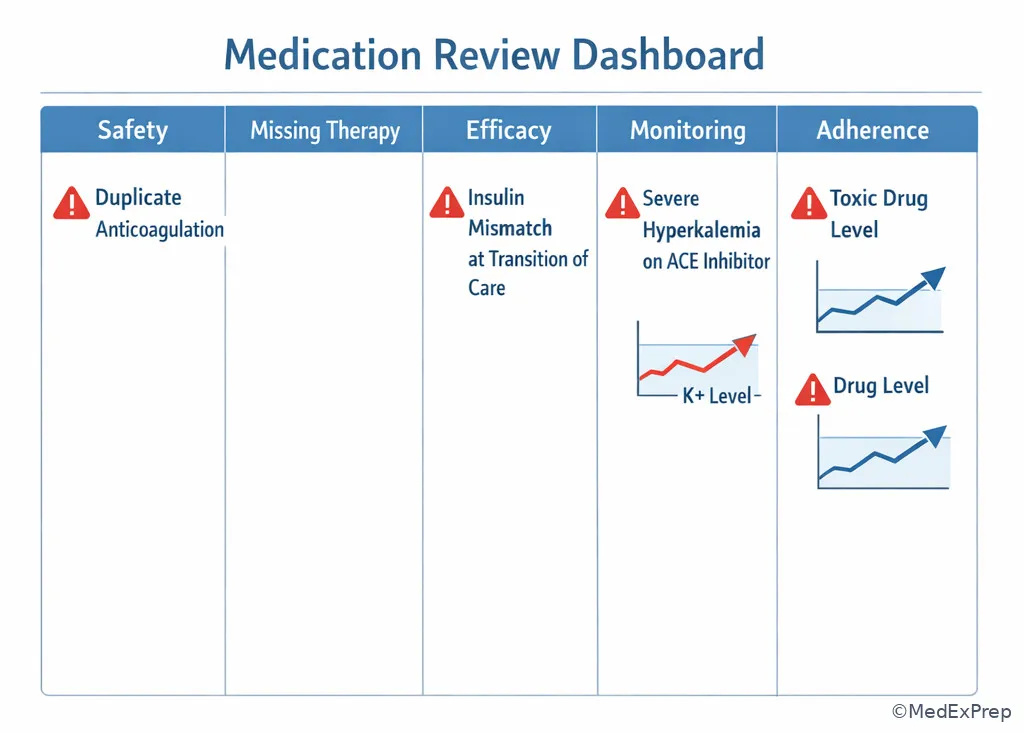
Medication review dashboard with red-flag priority sorting

1.1.1.2 High-risk safety signals: when should toxicity, interactions, and contraindications move to the top?

A. Explanation

Now the conflict becomes choose active harm versus reject “potentially important but currently stable” issues. The single finding that resolves this is evidence of current or imminent toxicity: symptoms, critical labs, dangerous combinations, excessive dose for renal/hepatic function, or high-alert medication misuse. A safety issue rises to the top when delay could lead to bleeding, arrhythmia, respiratory depression, severe hypotension, renal failure, hypoglycemia, or other major harm.

WHY THIS IS TESTED: many BCPS stems feature a medication that is appropriate in general but inappropriate in this patient because of one discriminator: renal function, interacting drug, duplication, active adverse effect, or contraindicating comorbidity. The exam tests whether you spot that single variable before choosing a familiar therapy.

High-yield safety categories include: anticoagulation and antiplatelet overlap, insulin/sulfonylurea-induced hypoglycemia risk, QT-prolonging combinations in susceptible patients, nephrotoxic or renally cleared drugs in acute kidney injury, opioid plus benzodiazepine coexposure with oversedation, and drug-disease mismatches such as nonselective beta-blocker in unstable bronchospasm or NSAID in decompensated heart failure/active GI risk. Monitoring matters because some “stable” drugs become urgent once a lab or symptom turns unsafe.

Do not overcall every interaction. The key is clinical consequence now. A theoretical interaction with no short-term harm usually does not outrank a documented toxic concentration or symptomatic adverse effect. See Fig 2 for a safety screening algorithm that compresses this distinction.

Fig 2. Safety-priority decision flow
Exam takeaway: A current toxicity clue or dangerous interaction makes the safety issue the first action item.
Screen for high-alert drugs
Anticoagulants, insulin, opioids, narrow therapeutic index agents, chemotherapy, concentrated electrolytes.

Is there active harm or a critical lab?
Symptoms, supratherapeutic level, severe interaction, contraindication, or wrong dose for organ function.

Intervene now
Hold, clarify, reduce dose, or escalate monitoring before routine optimization.

Re-rank remaining issues
After safety stabilization, revisit efficacy and adherence needs.

High-Yield Connection: This concept is tested alongside Drug Interaction Management and Adverse Event Assessment. Know both the interaction mechanism and the practical next action; exam stems often pair the two.

Pharmacist Action: NOTICE renal/hepatic mismatch, active adverse-effect symptoms, and dangerous combinations. SAY “This medication may be appropriate in general, but not for this patient at this dose/right now.” MONITOR toxicity markers such as bleeding, glucose, QT risk factors, sedation score, SCr, or drug level at the clinically relevant interval. HOLD/CLARIFY/ESCALATE when a high-alert medication has an unsafe dose, duplication, or contraindication.

B. Worked example

A 66-year-old woman with chronic pain, COPD, CKD stage 4, and insomnia is admitted after a fall. Home medications include oxycodone ER 20 mg twice daily, oxycodone IR 10 mg every 4 hours as needed, gabapentin 600 mg three times daily, and temazepam 30 mg nightly. She is somnolent but arousable, respiratory rate is 10/min, SCr is 2.3 mg/dL, and potassium is 4.4 mEq/L. A distracting clue in the chart notes that her blood pressure remains uncontrolled on amlodipine 5 mg daily.

Reasoning chain: Identify task: highest-priority medication problem. Extract key facts: sedation, low respiratory rate, opioid plus benzodiazepine, renally cleared gabapentin at a likely excessive dose for stage 4 CKD, recent fall. Apply rule: active harm from CNS/respiratory depressants outranks chronic blood pressure optimization. Eliminate distractors: increasing amlodipine is tempting because hypertension is uncontrolled; adjusting insomnia treatment seems secondary but remains part of the same safety cluster. Verify: immediate pharmacist recommendation should focus on oversedation risk—clarify/hold contributing sedatives, assess need for dose reduction and monitoring, and escalate concern promptly.

C. Exam trap

Common wrong answer: “Increase antihypertensive therapy because uncontrolled blood pressure increases long-term stroke risk.” WHY IT IS TEMPTING: hypertension is a familiar chronic target with clear guideline thresholds. The SINGLE CLUE that eliminates it: respiratory rate 10/min with somnolence indicates active sedative toxicity, which is a same-day safety problem.

D. Checkpoint

Question: Which medication-related problem most warrants immediate pharmacist escalation in a patient receiving warfarin 5 mg daily, trimethoprim-sulfamethoxazole DS twice daily started yesterday, and acetaminophen 650 mg every 6 hours as needed, with an INR now 4.8 but no bleeding?

  1. A. Continue the regimen and recheck INR in 1 week.
    Tempting because there is no overt bleeding, but wrong because the interaction has already produced supratherapeutic anticoagulation that needs prompt action.
  2. B. Escalate the warfarin dose because the antibiotic may reduce gut flora vitamin K production unpredictably.
    Tempting only if the interaction is misunderstood; wrong because TMP-SMX typically increases warfarin effect and INR.
  3. C. Clarify the TMP-SMX/warfarin interaction and recommend immediate anticoagulation management adjustment.
    Tempting because it directly addresses mechanism and risk; correct because the elevated INR reflects clinically meaningful interaction-related toxicity risk.
  4. D. Prioritize acetaminophen discontinuation alone because it is the main cause of the INR rise at this dose.
    Tempting because acetaminophen can influence INR in some patients, but wrong because TMP-SMX is the stronger, more immediate interaction clue in this stem.
If you missed this: Review 1.1.1.2 High-risk safety signals: when should toxicity, interactions, and contraindications move to the top? — focus on active harm or critical lab elevating safety to first priority.
Quick Recall:

  • The highest-priority medication problem is usually the one with the greatest risk of preventable near-term harm.
  • True or False: A theoretical interaction without current clinical consequence always outranks symptomatic toxicity. False.
  • Name 3 high-alert medication categories that frequently rise to the top: anticoagulants, insulin, opioids.
Interaction versus optimization comparison map
Exam takeaway: Distinguish active drug harm from chronic disease optimization when both appear in the same stem.
flowchart LR
A[Potential issue found] --> B{Active toxicity or critical lab?}
B -->|Yes| C[Safety issue is first]
B -->|No| D{Short delay changes outcome?}
D -->|Yes| E[Time-sensitive omission or efficacy issue]
D -->|No| F[Routine optimization]
F --> G[Adherence simplification and monitoring plan]

1.1.1.3 Indication and omission: when does a missing therapy outrank other problems?

A. Explanation

The conflict here is choose a missing therapy now versus reject it because another active problem still comes first. The rule is: a medication omission rises near the top when delay worsens near-term outcomes and there is no more urgent active safety problem preventing initiation. Time-sensitive omission differs from routine optimization. Missing VTE prophylaxis in a high-risk hospitalized patient, omitted antimicrobial coverage in severe infection, or interrupted chronic levetiracetam in a patient with seizure history can be urgent. Missing ezetimibe in a stable outpatient with LDL-C above goal usually is not.

WHY THIS IS TESTED: candidates often under-prioritize omissions because there is no “bad drug” to stop. However, the absence of needed therapy can be as dangerous as an inappropriate drug—especially in acute care, transitions of care, and protocol-driven prevention settings.

To rank omission problems, ask: What is the consequence of waiting? Is the indication confirmed or only possible? Is there a contraindication to starting therapy? Is another issue preventing safe initiation? A missing beta-blocker in stable HFrEF may matter, but it does not outrank life-threatening hyperkalemia. A missing prophylactic anticoagulant in an immobilized patient with active bleeding risk, however, may need rejection because safety changes the recommendation.

Recall: This is the first lesson in the course, so there is no prior topic to review. Build this framework now because upcoming lessons on Functional And Cognitive Assessment and Goals Of Care Alignment will change prioritization when self-management limitations or time-to-benefit considerations are present.

See Fig 3 for a choose-versus-reject algorithm that helps decide when omission becomes the top issue.

Fig 3. Missing therapy priority algorithm
Exam takeaway: A missing medication becomes top priority only when the indication is confirmed, time-sensitive, and not blocked by a more urgent safety issue.
Confirm indication
Verify that the patient truly needs the medication now.

Will delay matter soon?
If delayed therapy changes short-term risk, rank it high.

Any blocker?
Check bleeding, allergy, hemodynamics, organ function, or another active safety issue.

Recommend and monitor
Start or restart the therapy with the needed follow-up plan.

Memory anchor: For omissions, use NOW: Need confirmed, Outcome worsens with delay, Without a safety blocker.

Pharmacist Action: NOTICE absent prophylaxis, unintended discontinuation at transition, and missed chronic high-impact therapies. SAY “This patient has a confirmed indication, and delay changes near-term benefit.” MONITOR the outcome marker tied to the omitted therapy, such as clot prevention, seizure recurrence, infection response, or hemodynamic stability. HOLD/CLARIFY/ESCALATE if a contraindication or competing urgent safety issue changes whether initiation is appropriate.

B. Worked example

A 58-year-old man with obesity, prior DVT, and metastatic colon cancer is hospitalized with limited mobility for bowel obstruction managed nonoperatively. Home medications include morphine ER 30 mg twice daily, ondansetron 8 mg every 8 hours as needed, and omeprazole 40 mg daily. Platelets are 210,000/mm3, hemoglobin is 11.4 g/dL, SCr is 0.9 mg/dL, and there is no active bleeding. The team asks you to review the profile because his bowel regimen is incomplete and no pharmacologic VTE prophylaxis has been ordered.

Reasoning chain: Identify task: choose the most important problem. Extract key facts: active cancer, prior DVT, immobility, no prophylaxis, no bleeding contraindication. The missing bowel regimen matters, but constipation prevention is not the most dangerous omission here. Apply rule: confirmed, time-sensitive, high-impact omission without blocker rises above comfort-related optimization. Eliminate distractors: adding senna is reasonable; changing ondansetron to reduce constipation is plausible; yet omission of VTE prophylaxis carries more immediate morbidity. Verify: recommend pharmacologic VTE prophylaxis, assuming no institution-specific contraindication.

C. Exam trap

Common wrong answer: “Prioritize opioid-induced constipation prevention because the patient already has bowel obstruction risk.” WHY IT IS TEMPTING: the stem foregrounds GI symptoms and opioid use. The SINGLE CLUE that eliminates it: cancer plus immobility plus prior DVT creates a time-sensitive thrombosis prevention need with greater near-term harm potential.

D. Checkpoint

Question: A patient with HFrEF, CKD stage 3, and type 2 diabetes is admitted for community-acquired pneumonia. Home empagliflozin and lisinopril were held due to acute illness; ceftriaxone and azithromycin were started appropriately. On day 3, he is hemodynamically stable, eating, and SCr has returned to baseline. Which medication-related problem is now the highest priority?

  1. A. Restart evidence-based chronic therapy that was unintentionally not resumed once the acute barrier resolved.
    Tempting and correct because the omission has become actionable now that the safety blocker has cleared.
  2. B. Increase azithromycin dose to improve atypical coverage.
    Tempting because pneumonia treatment is ongoing, but wrong because the regimen is already appropriate and there is no clue of treatment failure.
  3. C. Add a proton pump inhibitor for stress ulcer prophylaxis.
    Tempting in hospitalized patients, but wrong because routine prophylaxis is not indicated from the information given and does not outrank resuming needed chronic therapy.
  4. D. Permanently discontinue all renally active chronic medications after any AKI episode.
    Tempting because AKI creates caution, but wrong because recovery to baseline changes the risk-benefit balance and blanket discontinuation is not patient-specific.
If you missed this: Review 1.1.1.3 Indication and omission: when does a missing therapy outrank other problems? — focus on confirmed indication plus time-sensitive benefit plus no active blocker.
Hospital transition medication list showing omitted prophylaxis and chronic therapy restart points
Exam takeaway: Missing therapy becomes high priority when the indication is clear and the prior safety barrier has resolved.
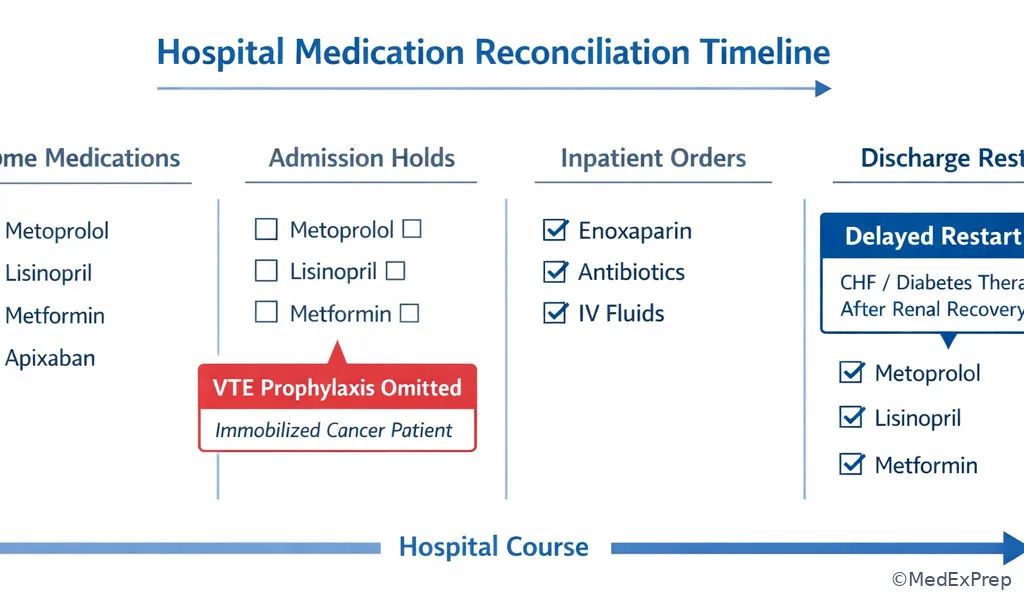
Hospital transition medication list showing omitted prophylaxis and chronic therapy restart points

1.1.1.4 Monitoring gaps and transitions of care: when are missing labs, follow-up, or reconciliation errors the real top problem?

A. Explanation

The conflict is choose a missing monitoring or reconciliation step versus reject it because the regimen itself seems acceptable. The rule is: monitoring gaps become high priority when safe use depends on timely data, and transition discrepancies become high priority when they create active risk of omission, duplication, or unintended continuation. A good medication can be a dangerous plan if follow-up is absent.

WHY THIS IS TESTED: BCPS stems frequently hide the main problem in the process rather than the drug choice itself. The medication may be correct, but there is no INR follow-up, no potassium/SCr plan after RAAS intensification, no tacrolimus trough strategy, or no reconciliation after discharge from the ICU. Candidates who focus only on “what drug would you pick?” miss the operational safety failure.

High-priority monitoring examples include warfarin without INR plan, insulin regimen changes without glucose follow-up, diuretic or RAAS changes without renal/electrolyte monitoring in at-risk patients, and TDM drugs without timing strategy. High-priority reconciliation problems include accidental continuation of inpatient-only agents such as VTE prophylaxis or stress-ulcer prophylaxis at discharge, failure to restart essential chronic medicines, and duplications created by formulary substitutions. See Fig 4 for a reconciliation-centered risk screen.

Fig 4. Transition-of-care reconciliation flow
Exam takeaway: Reconciliation errors move to the top when they cause unintended omission, duplication, or unsafe continuation at care transitions.
Compare lists
Home, inpatient, transfer, and discharge medications side by side.

Mismatch harmful now?
Look for omission of essential chronic drugs, duplicate therapy, or continuation of temporary inpatient agents.

Correct and document
Clarify intent, update orders, and communicate the reason for the change.

Attach monitoring plan
Specify what to monitor, how soon, and who follows up.

High-Yield Connection: This concept overlaps with Medication Reconciliation And Optimization and Therapeutic Drug Monitoring Principles. Know how process errors create pharmacotherapy harm even when the drug selection itself looks reasonable.

Pharmacist Action: NOTICE absent follow-up for narrow therapeutic index drugs and mismatches between home and discharge lists. SAY “The regimen is incomplete until the monitoring or reconciliation step is attached.” MONITOR the relevant parameter at the interval the drug requires, not a generic “outpatient follow-up.” HOLD/CLARIFY/ESCALATE when discharge or transfer creates duplication, omission, or continuation of a temporary medication without indication.

B. Worked example

A 70-year-old woman with mechanical mitral valve, CKD stage 3a, osteoarthritis, and GERD is being discharged after treatment for cellulitis. Her discharge medication list includes warfarin 5 mg nightly, cephalexin 500 mg four times daily for 5 days, pantoprazole 40 mg daily, and enoxaparin 40 mg subcutaneously daily “continue until ambulatory.” The discharge summary does not mention an INR follow-up date. She is ambulatory at baseline and has no current VTE prophylaxis indication beyond hospitalization. A distracting note mentions persistent mild edema on exam.

Reasoning chain: Identify task: highest-priority discharge medication problem. Extract key facts: mechanical valve requires therapeutic anticoagulation management; no INR follow-up; enoxaparin prophylaxis continuation may be unintended and duplicative in context; mild edema is not central. Apply rule: transition discrepancy causing anticoagulation risk plus absent monitoring rises above nonurgent symptom management. Eliminate distractors: addressing edema or GERD therapy is lower value. Verify: clarify anticoagulation plan immediately—both unintended continuation of enoxaparin and absent INR follow-up are major discharge safety issues.

C. Exam trap

Common wrong answer: “Treat the edema by intensifying diuretic therapy before discharge.” WHY IT IS TEMPTING: discharge stems often invite symptom-based optimization. The SINGLE CLUE that eliminates it: anticoagulation management for a mechanical valve without follow-up and with possible duplicate anticoagulant exposure carries greater immediate risk.

D. Checkpoint

Question: Which reconciliation issue is most important to clarify before discharge in a patient whose home regimen included metoprolol succinate 100 mg daily, but the discharge list now includes both metoprolol tartrate 50 mg twice daily and metoprolol succinate 100 mg daily?

  1. A. Delay discharge until lipid panel results are available.
    Tempting because complete data can help future optimization, but wrong because it does not address the active duplication risk.
  2. B. Clarify duplicate beta-blocker therapy created by formulation mismatch.
    Tempting and correct because unintended duplication at transition can immediately cause bradycardia or hypotension.
  3. C. Add a calcium channel blocker because blood pressure may remain elevated.
    Tempting if hypertension control is imperfect, but wrong because further intensification should not precede fixing a duplicate beta-blocker error.
  4. D. Continue both formulations temporarily for “coverage” until outpatient follow-up.
    Tempting because the total daily dose appears familiar, but wrong because two formulations were not intended as combination therapy in this context.
If you missed this: Review 1.1.1.4 Monitoring gaps and transitions of care: when are missing labs, follow-up, or reconciliation errors the real top problem? — focus on harmful mismatch at care transition outranking routine optimization.
Quick Recall:

  • The most dangerous discharge discrepancy is often duplicate therapy or unintended continuation of a temporary inpatient medication.
  • True or False: A correct anticoagulant order without a clear monitoring/follow-up plan can still be a high-priority problem. True.
  • Name 3 reconciliation risks: omission, duplication, wrong formulation/strength.
Reconciliation risk comparison chart
Exam takeaway: Compare home, inpatient, and discharge lists to detect omission, duplication, and temporary-drug carryover.
flowchart TD
A[Home list] --> D[Compare]
B[Inpatient list] --> D
C[Discharge list] --> D
D --> E{Mismatch type}
E --> F[Omission of essential chronic drug]
E --> G[Duplication or formulation mix-up]
E --> H[Continuation of temporary inpatient drug]
F --> I[Correct before discharge]
G --> I
H --> I

1.1.1.5 Integration: a complete ranking framework for polypharmacy and board-style cases

A. Explanation

The final conflict is choose the single best next medication-related action in a patient with many legitimate problems. The resolving rule is to combine urgency with expected impact and feasibility: first address what is dangerous now, then what loses benefit if delayed, then what improves long-term outcomes, then what improves execution. This is not just classification; it is sequencing.

WHY THIS IS TESTED: board-style questions are built so that several answers are good ideas. The best answer is the one the pharmacist should act on first, given the current facts. That requires you to resist “comprehensive care mode” and make a single prioritized recommendation.

A useful sequence is: 1) active safety threat; 2) time-sensitive omission; 3) uncontrolled high-impact efficacy problem; 4) monitoring failure with foreseeable harm; 5) adherence/cost/convenience improvements; 6) lower-value preventive fine-tuning. But the stem can invert middle steps. For example, severe uncontrolled pain in a palliative context may outrank long-term statin intensification. Upcoming lessons on Goals Of Care Alignment will modify your ranking when prognosis and burden change the net value of treatment.

When stuck, ask what would make you call the team now rather than leave a note for routine follow-up. That operational instinct often identifies the correct priority. See Fig 5 for the integrated algorithm.

Fig 5. Integrated medication problem prioritization approach
Exam takeaway: In multi-problem cases, choose the recommendation you would escalate now because delay changes harm most.
Scan for danger
Toxicity, contraindication, interaction, duplicate therapy, wrong dose, critical lab.

Find missing essentials
Time-sensitive indicated therapy not started or unintentionally stopped.

Assess effectiveness
Uncontrolled disease where current therapy is failing or too weak.

Attach monitoring
Ensure labs, follow-up timing, and accountability are specified.

Simplify execution
Address adherence, cost, administration burden, and education after urgent issues.

Common distractor pattern: if one answer would improve long-term guideline concordance and another would prevent imminent harm, the imminent-harm answer is usually correct.

Pharmacist Action: NOTICE which recommendation requires same-day communication versus routine documentation. SAY “I recommend addressing issue X first because it carries the highest near-term risk/benefit impact.” MONITOR the parameter that confirms the first intervention worked, then queue lower-priority optimizations in sequence. HOLD/CLARIFY/ESCALATE whenever the top-ranked issue cannot be safely managed by routine follow-up.

B. Worked example

A 76-year-old woman with HFrEF, atrial fibrillation, CKD stage 3, osteoporosis, and mild cognitive impairment is seen after hospital discharge. Medications include furosemide 40 mg daily, sacubitril/valsartan 49/51 mg twice daily, spironolactone 25 mg daily, apixaban 5 mg twice daily, empagliflozin 10 mg daily, amiodarone 200 mg daily, omeprazole 40 mg daily, and zolpidem 10 mg nightly. She also continued clonazepam 0.5 mg twice daily from a prior prescription. BP is 102/64 mm Hg, HR 58 bpm, potassium is 5.6 mEq/L, SCr rose from 1.2 to 1.7 mg/dL, and she reports two recent falls. LDL-C is 84 mg/dL, and her vaccines are not up to date.

Reasoning chain: Identify task: top medication problem. Extract key facts: hyperkalemia and renal worsening on RAAS/MRA therapy; falls with concurrent sedatives; amiodarone plus apixaban creates interaction considerations but not the strongest immediate clue here; vaccines and LDL-C are distractors. Apply rule: active safety threats come first. Between hyperkalemia/AKI risk and sedative-related falls, the stem's objective data point to urgent medication safety review of potassium-raising regimen and renal decline, while also recognizing sedative deprescribing as high priority. Eliminate distractors: vaccine and lipid optimization are valid but lower. Verify: recommend immediate clarification of hyperkalemia/renal deterioration in the heart failure regimen, with rapid follow-up and reassessment of concurrent fall-promoting sedatives.

C. Exam trap

Common wrong answer: “Update preventive care first because vaccines are overdue and LDL-C remains above ideal secondary-prevention targets.” WHY IT IS TEMPTING: preventive care gaps are visible and guideline-based. The SINGLE CLUE that eliminates it: potassium 5.6 mEq/L with rising SCr indicates an active safety concern in a high-risk regimen.

D. Checkpoint

Question: In a patient with multiple identified MRPs, which principle best selects the first recommendation?

  1. A. Always address the condition with the most guideline-directed therapies first.
    Tempting because guideline intensity feels comprehensive, but wrong because urgency and safety override regimen completeness.
  2. B. Always fix the oldest chronic problem first because it has existed the longest.
    Tempting because longstanding problems seem important, but wrong because duration does not equal current risk.
  3. C. Address the problem most likely to cause preventable clinically meaningful harm before the next routine review.
    Tempting and correct because it captures urgency, severity, and opportunity for benefit.
  4. D. Start with cost and adherence because these underlie most long-term treatment failure.
    Tempting because adherence is foundational, but wrong because it usually follows urgent safety and time-sensitive treatment issues.
If you missed this: Review 1.1.1.5 Integration: a complete ranking framework for polypharmacy and board-style cases — focus on “what would you escalate now?” as the prioritization discriminator.
Polypharmacy ranking board with safety, omission, efficacy, and monitoring lanes
Exam takeaway: In complex regimens, the best recommendation is the first justified action, not the longest problem list.
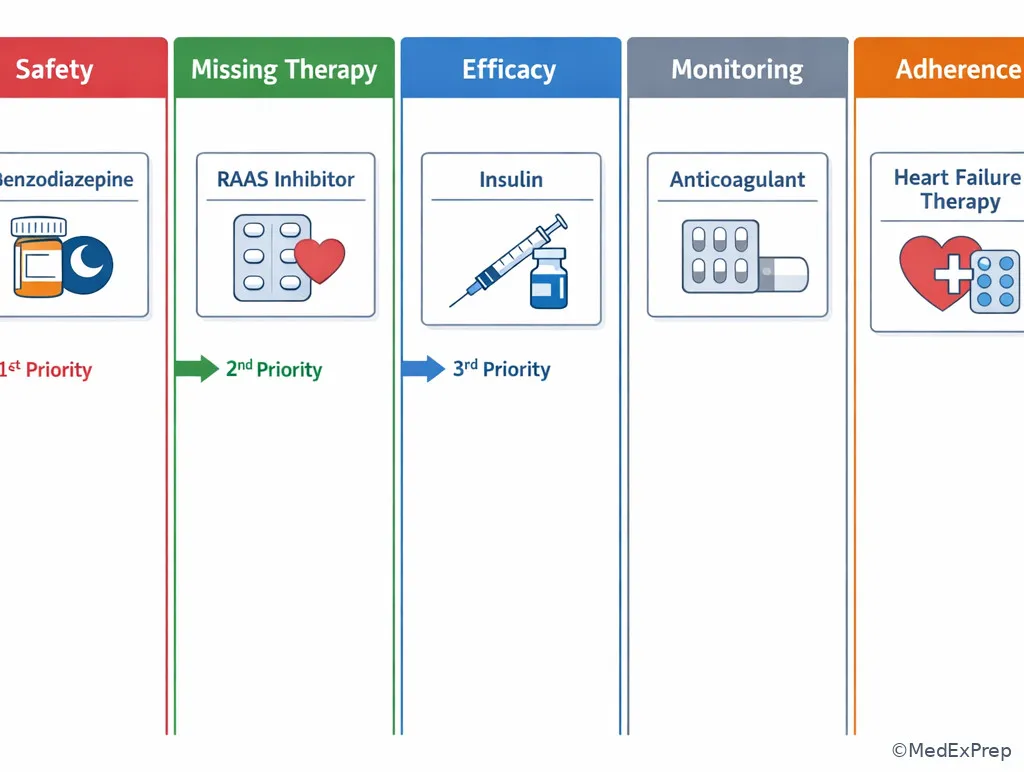
Polypharmacy ranking board with safety, omission, efficacy, and monitoring lanes
Labeled anticoagulation safety comparison image
Exam takeaway: Duplicate anticoagulation is a classic immediate-priority problem even when chronic disease targets remain unmet.
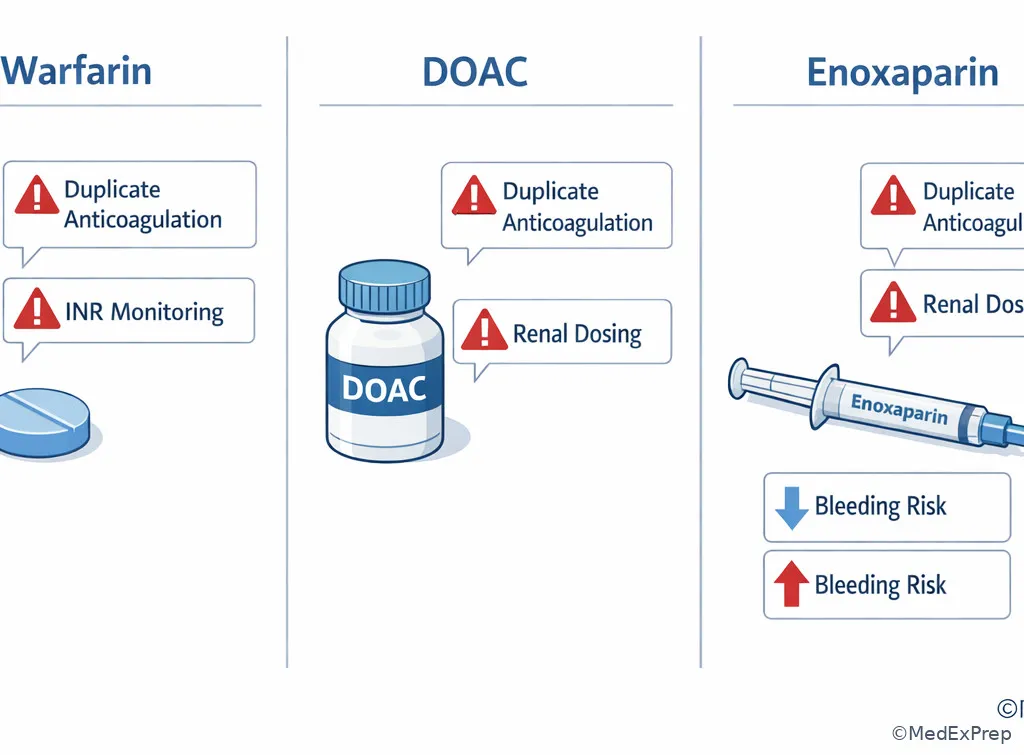
Labeled anticoagulation safety comparison image
Renal function and dose mismatch illustration for pharmacist review
Exam takeaway: Dose appropriateness depends on patient-specific renal function, and the mismatch may outrank routine efficacy optimization.
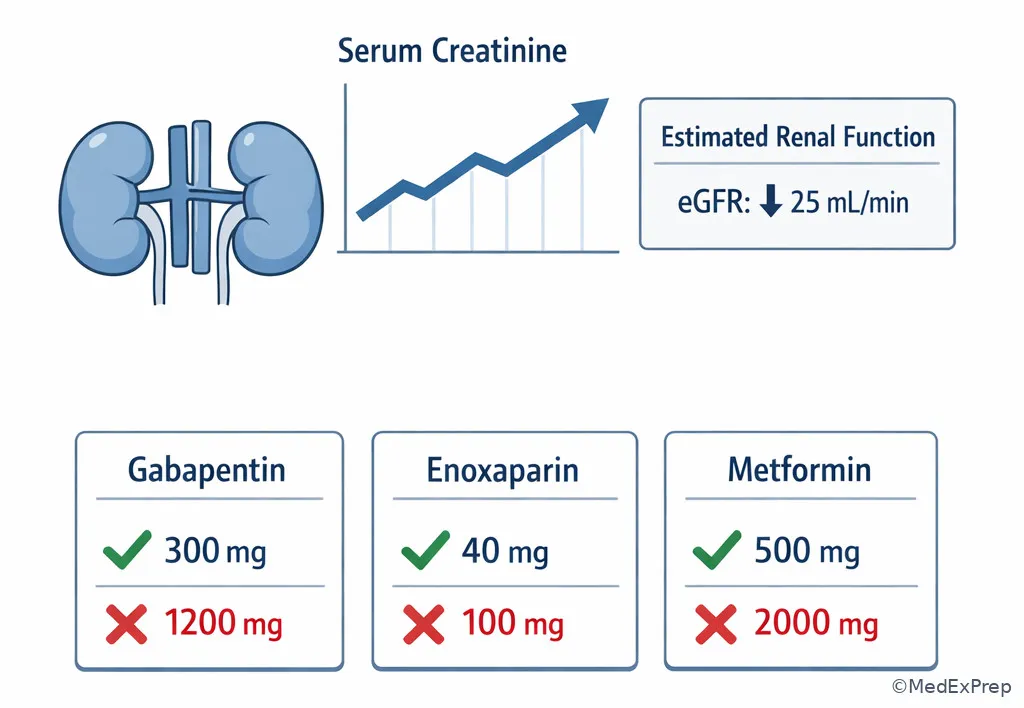
Renal function and dose mismatch illustration for pharmacist review

Exam Traps & Differentiators

Most common wrong answer and why: choosing the chronic disease target that is “not at goal” rather than the active safety issue. This is tempting because guideline targets are easy to recognize; it is wrong because prioritization asks what matters first, not what matters eventually.

Looks similar But prioritize this when... Do not prioritize first when...
Uncontrolled A1c vs hypoglycemia risk Hypoglycemia risk or recurrent lows are present A1c is above goal but there is no acute harm
Heart failure optimization vs hyperkalemia on therapy Potassium/SCr changes create safety concern now Need for GDMT intensification is chronic and labs are stable
Pain control vs oversedation Respiratory depression, falls, or somnolence is present Pain remains undertreated but sedative toxicity is absent
Preventive therapy gap vs duplicate anticoagulation Bleeding hazard from overlap exists Prevention is important but not time-sensitive today
Medication cost issue vs omitted VTE prophylaxis Missed prophylaxis changes inpatient near-term risk Cost barrier affects outpatient persistence but no same-day danger exists

If the stem says “somnolent,” “recent falls,” “INR now elevated,” “on both home and bridge anticoagulation,” “no follow-up arranged for warfarin/tacrolimus/vancomycin,” or “drug was held during acute illness and never resumed,” think safety or time-sensitive omission before routine optimization.

  • If the stem says duplicate formulations or duplicate class entries, think reconciliation error first.
  • If the stem says critical lab after a medication change, think active medication safety problem, not maintenance gap.
  • If the stem says indication confirmed + no contraindication + delay worsens outcome, think missing therapy may outrank chronic fine-tuning.
  • If the stem says discharge medication list, think omission, duplication, inpatient carryover, and missing monitoring plan.
  • If the stem says mildly abnormal chronic value alongside one dangerous interaction, think the interaction is the tested priority.

Recall: In upcoming Functional And Cognitive Assessment, cognitive impairment, caregiver support, and regimen complexity will explain why some adherence problems become higher priority than they first appear. In upcoming Goals Of Care Alignment, prognosis and treatment burden will alter what “best next step” means in frail or palliative patients.

Review connection: The traps above test prioritization under competing valid options. If any felt unfamiliar, revisit 1.1.1.2 High-risk safety signals and 1.1.1.4 Monitoring gaps and transitions of care before attempting the Self-check quiz.
Stem clue Tempting wrong move Single discriminator Best first focus
INR 4.8 after TMP-SMX Wait because no bleeding yet Supratherapeutic INR after major interaction Immediate anticoagulation safety management
A1c 8.5% plus active duplicate anticoagulation Add diabetes drug Present bleed risk beats chronic glycemic gap Stop/clarify duplicate anticoagulation
Discharge list contains both metoprolol formulations Address BP goal first Transition duplication can cause acute bradycardia Fix reconciliation mismatch
No VTE prophylaxis in immobile cancer patient Prioritize bowel regimen Confirmed high-risk omission without blocker Recommend prophylaxis
Somnolence on opioid plus benzodiazepine Increase antihypertensive for high BP Respiratory/CNS depression is active harm Address sedative toxicity risk
Discharge reconciliation risk image with duplicate therapy and omitted therapy flags
Exam takeaway: Transition stems commonly hide the priority problem in list mismatch rather than disease-state management.
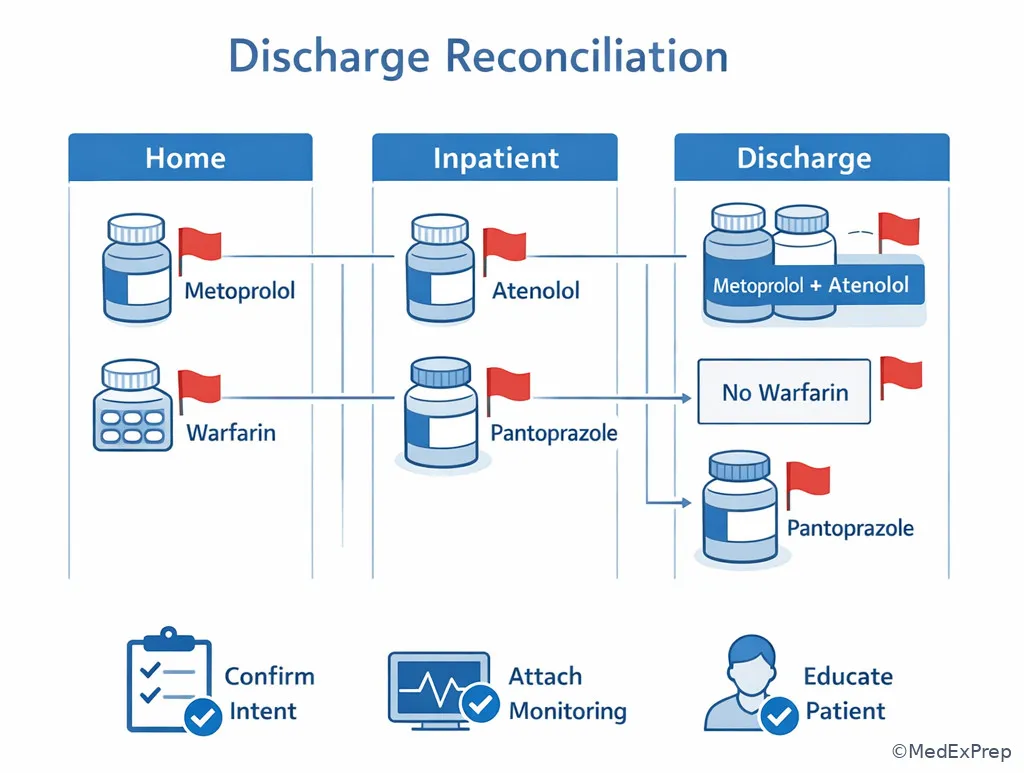
Discharge reconciliation risk image with duplicate therapy and omitted therapy flags

Algorithm / Approach

Concept flow: Stepwise approach to medication problem prioritization
Start with the full profile
Medication list, doses, routes, comorbidities, vitals, labs, symptoms, and transition context.

Immediate safety threat?
If toxicity, duplication, contraindication, severe interaction, or wrong dose for organ function is present → address first.

Time-sensitive therapy missing?
If a confirmed indicated therapy is omitted and delay changes near-term outcomes → prioritize next.

Evaluate efficacy failure
Choose the uncontrolled condition with the highest clinical impact after urgent issues are stabilized.

Close monitoring/reconciliation gaps
Specify labs, timing, and transitions-of-care corrections needed for safe continuation.

Then simplify the regimen
Address adherence, affordability, formulation burden, and education after the urgent items.

Clinical algorithm for choosing the first pharmacist recommendation
Exam takeaway: Ask what requires same-day communication; that answer is often the highest-priority recommendation.
flowchart TD
A[Review medication profile] --> B{Need to call now?}
B -->|Yes| C[Safety issue or critical omission]
B -->|No| D{Will waiting worsen outcomes soon?}
D -->|Yes| E[Address high-impact efficacy or monitoring gap]
D -->|No| F[Adherence/cost/convenience optimization]
C --> G[Recommend change + monitoring]
E --> G
F --> G

Rapid Review

  • Duplicate anticoagulation → immediate bleed-risk clarification beats chronic disease optimization.
  • Critical lab after medication change → active safety signal, not routine monitoring trivia.
  • Omitted VTE prophylaxis in high-risk immobile adult → time-sensitive missing therapy.
  • Discharge list with home and inpatient versions of same class → think reconciliation duplication.
  • Somnolence + opioid/benzodiazepine + low respiratory rate → toxicity first, hypertension later.
  • Missing INR plan with warfarin → regimen incomplete and unsafe despite correct drug choice.
  • Mildly abnormal A1c beside severe interaction → chronic efficacy issue is a distractor.
  • Held chronic therapy after AKI that has resolved → omission may become next priority once blocker clears.
  • Temporary inpatient drug on discharge list → continuation error until proven intentional.
  • Long-term preventive gap → important, but rarely first if a near-term harm signal is present.
  • Priority question → ask what would make you contact the team now.
  • Monitoring gap on narrow therapeutic index drug → may outrank efficacy fine-tuning.

Memory anchor: CALL NOW = the correct first priority is often the issue that would make you call now, not the one you would document for routine follow-up.

Self-check quiz

Question 1

A 69-year-old man with atrial fibrillation, CKD stage 3, and type 2 diabetes is admitted on apixaban 5 mg by mouth twice daily. Admission orders also include enoxaparin 80 mg subcutaneously every 12 hours. His A1c is 8.4%, BP is 146/84 mm Hg, and SCr is 1.7 mg/dL. Which pharmacist recommendation is most appropriate first?

  1. A. Increase metformin to improve glycemic control
  2. B. Clarify unintended duplicate therapeutic anticoagulation
  3. C. Add amlodipine 5 mg daily for blood pressure control
  4. D. Start high-intensity statin therapy immediately

Question 2

A 64-year-old woman taking warfarin 5 mg by mouth nightly for a mechanical valve is prescribed trimethoprim-sulfamethoxazole DS by mouth twice daily for cystitis. Her INR today is 4.9, hemoglobin is stable, and she has no bleeding. Which medication-related problem should be prioritized?

  1. A. Supratherapeutic anticoagulation from a major interaction
  2. B. Need for stronger GERD therapy while on antibiotics
  3. C. Need to intensify blood pressure treatment because stroke risk is high
  4. D. Need for chronic osteoporosis therapy review

Question 3

A 58-year-old man with obesity, metastatic cancer, prior DVT, and normal renal function is hospitalized with limited mobility. He receives morphine ER 30 mg by mouth twice daily, pantoprazole 40 mg daily, and ondansetron 8 mg IV every 8 hours as needed. Platelets are 220,000/mm3, hemoglobin is 11.2 g/dL, and no pharmacologic VTE prophylaxis has been ordered. Which is the most appropriate pharmacist recommendation?

  1. A. Prioritize a bowel regimen because opioid constipation is predictable
  2. B. Recommend pharmacologic VTE prophylaxis if no contraindication exists
  3. C. Add a second antiemetic because ondansetron may be insufficient
  4. D. Convert pantoprazole to famotidine for cost savings

Question 4

A 73-year-old woman with COPD, chronic pain, insomnia, and CKD stage 4 takes oxycodone ER 20 mg by mouth twice daily, gabapentin 600 mg by mouth three times daily, and temazepam 30 mg by mouth nightly. She is somnolent, had a fall overnight, respiratory rate is 10/min, and BP is 158/88 mm Hg. Which medication problem is highest priority?

  1. A. Uncontrolled blood pressure requiring antihypertensive intensification
  2. B. Sedative burden with active oversedation risk
  3. C. Need for sleep optimization because insomnia remains undertreated
  4. D. Need to add bowel prophylaxis for chronic opioid use

Question 5

A 62-year-old man with HFrEF, diabetes, and recent AKI had lisinopril and empagliflozin held on admission. He now completes antibiotic therapy for pneumonia, is eating, BP is stable, potassium is 4.4 mEq/L, and SCr returned to baseline. Current medications are metoprolol succinate 50 mg by mouth daily and furosemide 40 mg by mouth daily. Which issue is now most important?

  1. A. Restart needed chronic therapies once the acute safety barrier has resolved
  2. B. Intensify loop diuretic therapy because all HFrEF patients should diurese more
  3. C. Add a proton pump inhibitor for stress ulcer prophylaxis
  4. D. Continue holding all renally active drugs indefinitely after any AKI

Question 6

A 77-year-old woman with HFrEF, CKD stage 3, atrial fibrillation, and osteoporosis is seen 5 days after discharge. Medications are sacubitril/valsartan 49/51 mg by mouth twice daily, spironolactone 25 mg by mouth daily, furosemide 40 mg by mouth daily, apixaban 5 mg by mouth twice daily, amiodarone 200 mg by mouth daily, zolpidem 10 mg by mouth nightly, and clonazepam 0.5 mg by mouth twice daily. Potassium is 5.7 mEq/L, SCr increased from 1.1 to 1.8 mg/dL, BP is 104/66 mm Hg, and she reports two falls. Which pharmacist concern should be prioritized first?

  1. A. Hyperkalemia and renal deterioration on the current heart failure regimen
  2. B. LDL-C remains above ideal secondary prevention targets
  3. C. Vaccinations are not up to date
  4. D. Calcium/vitamin D counseling is incomplete

Question 7

A 71-year-old man with a mechanical mitral valve, GERD, CKD stage 3a, and osteoarthritis is preparing for discharge. Medications include warfarin 5 mg by mouth nightly, cephalexin 500 mg by mouth four times daily, pantoprazole 40 mg by mouth daily, and enoxaparin 40 mg subcutaneously daily continued from admission. He is ambulatory, has no active bleeding, and no INR follow-up is documented. Which pharmacist action is most appropriate?

  1. A. Focus first on adding a bowel regimen because antibiotics and immobility increase constipation risk
  2. B. Clarify the discharge anticoagulation plan and arrange timely INR follow-up
  3. C. Increase pantoprazole because warfarin increases GI risk
  4. D. Delay action until the outpatient clinic receives the discharge summary

Question 8

A 68-year-old man with CAD, atrial fibrillation, CKD stage 3, and type 2 diabetes is discharged after NSTEMI management. His list includes aspirin 81 mg by mouth daily, clopidogrel 75 mg by mouth daily, apixaban 5 mg by mouth twice daily, ibuprofen 800 mg by mouth three times daily as needed, metoprolol succinate 100 mg by mouth daily, and omeprazole 20 mg by mouth daily. Hemoglobin is 10.4 g/dL and stable, A1c is 8.2%, and BP is 142/86 mm Hg. Which problem most requires immediate clarification?

  1. A. Persistent hyperglycemia requiring outpatient diabetes intensification
  2. B. High bleeding-risk analgesic choice in the setting of multiple antithrombotics
  3. C. Need to intensify antihypertensive therapy before discharge
  4. D. Need to replace omeprazole with an H2 blocker for convenience

Answer key

Question 1: B. Clarify unintended duplicate therapeutic anticoagulation

A. Tempting because A1c 8.4% signals uncontrolled diabetes and chronic optimization is usually appropriate. Incorrect for this scenario because metformin titration does not outrank active duplicate anticoagulation. Single stem clue: apixaban plus treatment-dose enoxaparin. Source: Lexicomp; DiPiro; antithrombotic safety guidance supports avoiding unintended concurrent therapeutic anticoagulants.

B. Tempting because both agents are common in thromboembolic prevention and “bridging” language can sound appropriate. Correct because concurrent full-dose anticoagulants create immediate bleeding risk, especially with CKD. Single stem clue: enoxaparin 80 mg every 12 hours while apixaban continues. Source: Lexicomp; AHFS Drug Information.

C. Tempting because BP 146/84 mm Hg is above goal and amlodipine is a plausible same-class hypertension option. Incorrect because chronic BP management is not the first action when a same-day safety issue is present. Single stem clue: duplicate anticoagulation outranks mildly elevated BP. Source: ACC/AHA hypertension guidance; DiPiro.

D. Tempting because CAD risk reduction commonly includes statin intensification. Incorrect because preventive therapy improvement does not supersede an active medication safety hazard. Single stem clue: immediate bleed risk. Source: cholesterol guidelines; DiPiro.

If you missed this: Review 1.1.1.1 Foundational triage: what makes one medication problem more urgent than another? — focus on duplicate high-alert therapy as an immediate safety priority.

Question 2: A. Supratherapeutic anticoagulation from a major interaction

A. Tempting because INR elevation without bleeding can feel less urgent than visible symptoms. Correct because TMP-SMX markedly potentiates warfarin, and INR 4.9 signals current excess anticoagulation risk needing prompt management. Single stem clue: TMP-SMX started with INR now 4.9. Source: Lexicomp interaction monograph; warfarin management references.

B. Tempting because antibiotics may worsen GI symptoms and PPIs are common. Incorrect because GERD optimization does not affect the main near-term danger. Single stem clue: elevated INR after major interaction. Source: Lexicomp; AHFS.

C. Tempting because valve patients are high-risk for stroke and blood pressure matters long term. Incorrect because hypertension management is lower urgency than interaction-driven overanticoagulation. Single stem clue: current INR toxicity signal. Source: guideline-based chronic risk management principles; DiPiro.

D. Tempting because older adults often need fracture prevention review. Incorrect because this is a longitudinal issue, not the first safety problem. Single stem clue: same-day anticoagulation interaction. Source: osteoporosis guidance; Lexicomp.

If you missed this: Review 1.1.1.2 High-risk safety signals: when should toxicity, interactions, and contraindications move to the top? — focus on elevated INR after a known warfarin interaction.

Question 3: B. Recommend pharmacologic VTE prophylaxis if no contraindication exists

A. Tempting because opioid constipation is predictable and preventable. Incorrect because the omission of VTE prophylaxis in an immobile cancer patient with prior DVT has greater near-term consequence. Single stem clue: cancer + immobility + prior DVT + no prophylaxis. Source: ASH/ACCP thromboprophylaxis guidance; DiPiro.

B. Tempting because prevention questions may be underestimated when no current event has occurred. Correct because this is a confirmed, time-sensitive missing therapy without an evident contraindication. Single stem clue: high-risk inpatient profile and absent prophylaxis. Source: VTE prophylaxis guidelines; AHFS.

C. Tempting because nausea can worsen quality of care and antiemetic escalation is plausible. Incorrect because there is no evidence of uncontrolled emesis, and the omission problem is more consequential. Single stem clue: no prophylactic anticoagulant ordered. Source: supportive care references; DiPiro.

D. Tempting because cost-conscious substitutions are part of pharmacist practice. Incorrect because formulary or cost issues are low priority in this stem. Single stem clue: active prevention gap with high morbidity potential. Source: medication-use systems principles; DiPiro.

If you missed this: Review 1.1.1.3 Indication and omission: when does a missing therapy outrank other problems? — focus on confirmed indication plus short-delay harm.

Question 4: B. Sedative burden with active oversedation risk

A. Tempting because BP 158/88 mm Hg is elevated and antihypertensive intensification seems straightforward. Incorrect because active oversedation with respiratory depression risk is more urgent. Single stem clue: respiratory rate 10/min with somnolence and recent fall. Source: Lexicomp opioid and benzodiazepine warnings; Beers-related geriatric safety principles.

B. Tempting because several agents contribute and the pattern fits a high-risk medication syndrome. Correct because opioid plus benzodiazepine plus likely renally excessive gabapentin in CKD creates immediate CNS/respiratory harm risk. Single stem clue: somnolence, fall, low respiratory rate. Source: FDA boxed warning on opioid/benzodiazepine combination; Lexicomp renal dosing.

C. Tempting because insomnia treatment is part of the regimen. Incorrect because the issue is not undertreated insomnia; it is excessive sedation from treatment. Single stem clue: oversedation, not insomnia. Source: Lexicomp; AHFS.

D. Tempting because opioid bowel prophylaxis is often appropriate. Incorrect because it does not address the problem most likely to cause immediate harm. Single stem clue: low respiratory rate. Source: supportive care references; DiPiro.

If you missed this: Review 1.1.1.2 High-risk safety signals: when should toxicity, interactions, and contraindications move to the top? — focus on symptomatic toxicity outranking chronic vital-sign optimization.

Question 5: A. Restart needed chronic therapies once the acute safety barrier has resolved

A. Tempting because restart decisions after AKI can feel risky. Correct because the original reason for holding therapy has resolved: hemodynamics stable, eating, potassium acceptable, and SCr back to baseline. Single stem clue: the prior safety barrier is gone. Source: heart failure and diabetes guidance; DiPiro; Clinical Pharmacology/Lexicomp disease-state dosing considerations.

B. Tempting because HFrEF management often includes diuretic assessment. Incorrect because no signs of congestion or diuretic failure are provided, and the more important issue is unintentional persistence of held chronic therapy. Single stem clue: meds held for AKI were never resumed despite recovery. Source: HFrEF guidelines; DiPiro.

C. Tempting because hospitalized patients often accumulate acid suppression. Incorrect because stress ulcer prophylaxis is not the key unmet need here and may itself become unnecessary continuation. Single stem clue: resolved acute illness with missing evidence-based chronic therapy. Source: ASHP stress ulcer prophylaxis principles; DiPiro.

D. Tempting because clinicians fear recurrent kidney injury. Incorrect because indefinite discontinuation of all renally active drugs is not patient-specific and sacrifices benefit once the acute issue resolves. Single stem clue: creatinine returned to baseline. Source: HF/CKD medication optimization principles; DiPiro.

If you missed this: Review 1.1.1.3 Indication and omission: when does a missing therapy outrank other problems? — focus on restarting needed therapy after the blocker resolves.

Question 6: A. Hyperkalemia and renal deterioration on the current heart failure regimen

A. Tempting because multiple safety concerns exist and this one has objective lab evidence. Correct because potassium 5.7 mEq/L plus creatinine rise on RAAS/MRA therapy represents an active safety issue that may require immediate adjustment and monitoring. Single stem clue: hyperkalemia with worsening renal function. Source: heart failure guideline monitoring recommendations; Lexicomp drug-specific monitoring.

B. Tempting because secondary prevention lipid goals matter in CAD/HFrEF populations. Incorrect because LDL optimization is preventive and not the issue most likely to cause harm before the next routine review. Single stem clue: critical potassium/SCr changes. Source: cholesterol guidelines; DiPiro.

C. Tempting because vaccines reduce morbidity and are often forgotten after discharge. Incorrect because immunization catch-up is not more urgent than lab-defined medication safety risk. Single stem clue: potassium 5.7 mEq/L. Source: immunization guidance; DiPiro.

D. Tempting because osteoporosis prevention is appropriate in an older patient with falls. Incorrect because counseling gaps do not outrank active medication-related hyperkalemia and renal deterioration. Single stem clue: objective current lab abnormality caused or worsened by the regimen. Source: osteoporosis guidance; DiPiro.

If you missed this: Review 1.1.1.5 Integration: a complete ranking framework for polypharmacy and board-style cases — focus on active safety threat outranking preventive care gaps.

Question 7: B. Clarify the discharge anticoagulation plan and arrange timely INR follow-up

A. Tempting because discharge bowel regimens are commonly needed. Incorrect because constipation prevention does not outrank anticoagulation errors in a mechanical-valve patient. Single stem clue: enoxaparin continuation plus no INR follow-up. Source: warfarin monitoring references; Lexicomp.

B. Tempting because several smaller discharge issues are present, but this option targets the highest-risk one. Correct because the patient may have unintended ongoing anticoagulant overlap and lacks essential INR follow-up for a narrow therapeutic index drug. Single stem clue: mechanical valve + warfarin + continued enoxaparin + absent INR plan. Source: warfarin management guidance; AHFS; Lexicomp.

C. Tempting because GI protection can matter in anticoagulated patients. Incorrect because acid suppression changes do not address the central discharge safety problem. Single stem clue: anticoagulation process failure, not uncontrolled reflux. Source: GI prophylaxis references; DiPiro.

D. Tempting because some tasks can be handed off to outpatient care. Incorrect because a harmful reconciliation or monitoring error should be corrected before discharge, not deferred. Single stem clue: immediate transition-of-care risk. Source: transitions-of-care medication safety principles; ASHP resources.

If you missed this: Review 1.1.1.4 Monitoring gaps and transitions of care: when are missing labs, follow-up, or reconciliation errors the real top problem? — focus on harmful discharge mismatches and absent follow-up for high-risk drugs.

Question 8: B. High bleeding-risk analgesic choice in the setting of multiple antithrombotics

A. Tempting because A1c 8.2% suggests outpatient diabetes intensification may be appropriate. Incorrect because chronic glycemic optimization does not outrank a same-day high bleeding-risk medication choice. Single stem clue: aspirin + clopidogrel + apixaban + ibuprofen. Source: Lexicomp interaction data; antithrombotic safety principles.

B. Tempting because NSAID prescribing frequently appears in pain management, yet here it is the major safety trap. Correct because ibuprofen adds GI and bleeding risk in a patient already on multiple antithrombotic agents. Single stem clue: concurrent triple antithrombotic exposure with NSAID. Source: Lexicomp; ACC antithrombotic consensus principles; DiPiro.

C. Tempting because BP remains above ideal and post-ACS secondary prevention often requires aggressive risk factor control. Incorrect because hypertension adjustment is not the most urgent issue. Single stem clue: dangerous analgesic/antithrombotic combination. Source: hypertension and ACS secondary prevention guidance.

D. Tempting because PPI selection may matter with antiplatelet therapy. Incorrect because convenience-oriented acid suppression changes do not compare with the immediate bleeding hazard from NSAID use. Single stem clue: ibuprofen on top of multiple antithrombotics. Source: Lexicomp; DiPiro.
If you missed this: Review 1.1.1.2 High-risk safety signals: when should toxicity, interactions, and contraindications move to the top? — focus on interaction-driven bleeding risk outranking chronic goal attainment.

References

  • DiPiro, Joseph T., et al. Pharmacotherapy: A Pathophysiologic Approach. 12th ed., McGraw-Hill, 2023.
  • Lexicomp Online. Wolters Kluwer Clinical Drug Information, current access.
  • AHFS Drug Information. American Society of Health-System Pharmacists, current edition.
  • Joint Commission of Pharmacy Practitioners. “Pharmacists’ Patient Care Process.” JCPP, current version.
  • January, Craig T., et al. Relevant ACC/AHA and multisociety cardiovascular guidance for anticoagulation and risk management, current public guideline set.
  • ASHP Guidelines and Statements on medication reconciliation, transitions of care, and medication safety, current public documents.

Last reviewed: March 12, 2026

Lesson 2

Functional And Cognitive Assessment

Functional And Cognitive Assessment

Topic: 1.1.2

Audience: BCPS candidates applying pharmacist-level patient assessment to medication decisions in adult care.

What you'll learn

  • Differentiate functional status domains that directly change medication selection, dosing practicality, and monitoring intensity.
  • Recognize cognitive findings that require clarification of adherence, decision-making support, and medication safety plans.
  • Identify when a medication-related problem is driven by impairment rather than by the drug choice alone.
  • Apply quick screening frameworks for activities of daily living, instrumental activities of daily living, delirium, dementia clues, and fall risk.
  • Recommend pharmacist-scope actions: optimize regimen simplicity, flag unsafe drugs, involve caregivers, and escalate when urgent cognitive change suggests delirium.

Blueprint mapping

  • Patient Assessment Foundations → Clinical Assessment Principles → DOMAIN: Patient-centered pharmacotherapy assessment -> Functional status review for medication feasibility
  • Patient Assessment Foundations → Clinical Assessment Principles → DOMAIN: Patient-centered pharmacotherapy assessment -> Cognitive status evaluation for adherence and safety
  • Implementation And Monitoring → Monitoring And Safety Signals → DOMAIN: Medication safety -> Falls, confusion, and high-risk medication identification
  • Implementation And Monitoring → Adherence Counseling And SDOH → DOMAIN: Transitions/adherence -> Caregiver involvement and regimen simplification

Estimated time: 45-60 minutes

Prereqs: Medication Problem Prioritization

Key outputs: You should be able to decide when a medication issue should trigger functional or cognitive screening, choose medication changes that reduce harm in impaired adults, and identify when acute confusion requires urgent escalation rather than routine regimen adjustment.

Why it matters

  • A technically correct drug choice can still fail if the patient cannot open the bottle, remember the schedule, use the device, or safely self-monitor.
  • BCPS stems often hide the real answer inside functional clues such as falls, missed refills, inability to manage insulin, or caregiver confusion.
  • Acute cognitive change is a safety emergency because it changes adherence reliability, adverse-effect risk, and the urgency of medication review.
  • Functional and cognitive findings frequently determine whether the best pharmacist recommendation is simplification, deprescribing, caregiver support, or urgent clarification of a new medication-related insult.

Key Terms & Must-Know Facts

Key terms

  • ADLs: Basic self-care tasks such as bathing, dressing, toileting, transferring, continence, and feeding.
  • IADLs: Higher-order tasks such as medication management, shopping, cooking, finances, transportation, and phone use.
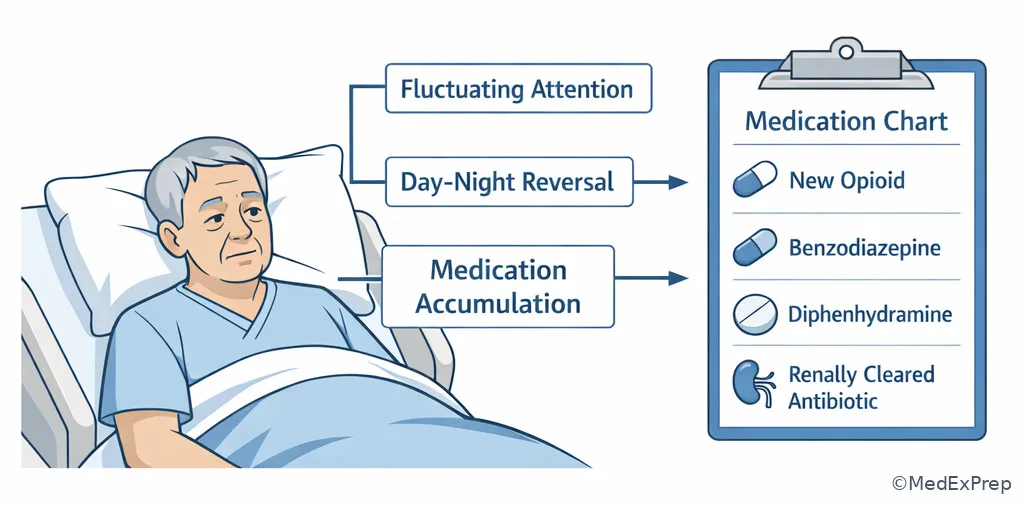
  • Delirium: Acute, fluctuating disturbance in attention and awareness; think urgent reversible cause.
  • Dementia: Progressive cognitive decline interfering with independence; not typically abrupt.
  • Mild cognitive impairment: Cognitive decline without full loss of independence; still high-risk for medication errors.
  • Health literacy: Ability to obtain, process, and use health information.
  • Medication self-management capacity: Ability to obtain, understand, organize, administer, and monitor medications correctly.
  • Executive dysfunction: Impaired planning/organization; strongly linked to complex regimen failure.
  • Beers Criteria: Framework identifying potentially inappropriate medications in older adults.
  • Anticholinergic burden: Cumulative cognitive and functional adverse effects from anticholinergic drugs.
  • Orthostatic hypotension: BP drop with standing that raises fall and syncope risk.
  • Frailty: Reduced physiologic reserve; often increases sensitivity to adverse drug effects.
  • Falls risk: Composite risk influenced by sedatives, BP lowering, neuropathy, gait impairment, and cognition.

Must-know facts

  • Acute confusion plus fluctuating attention favors delirium, not chronic dementia.
  • Medication management is an IADL; inability here may appear before loss of basic ADLs.
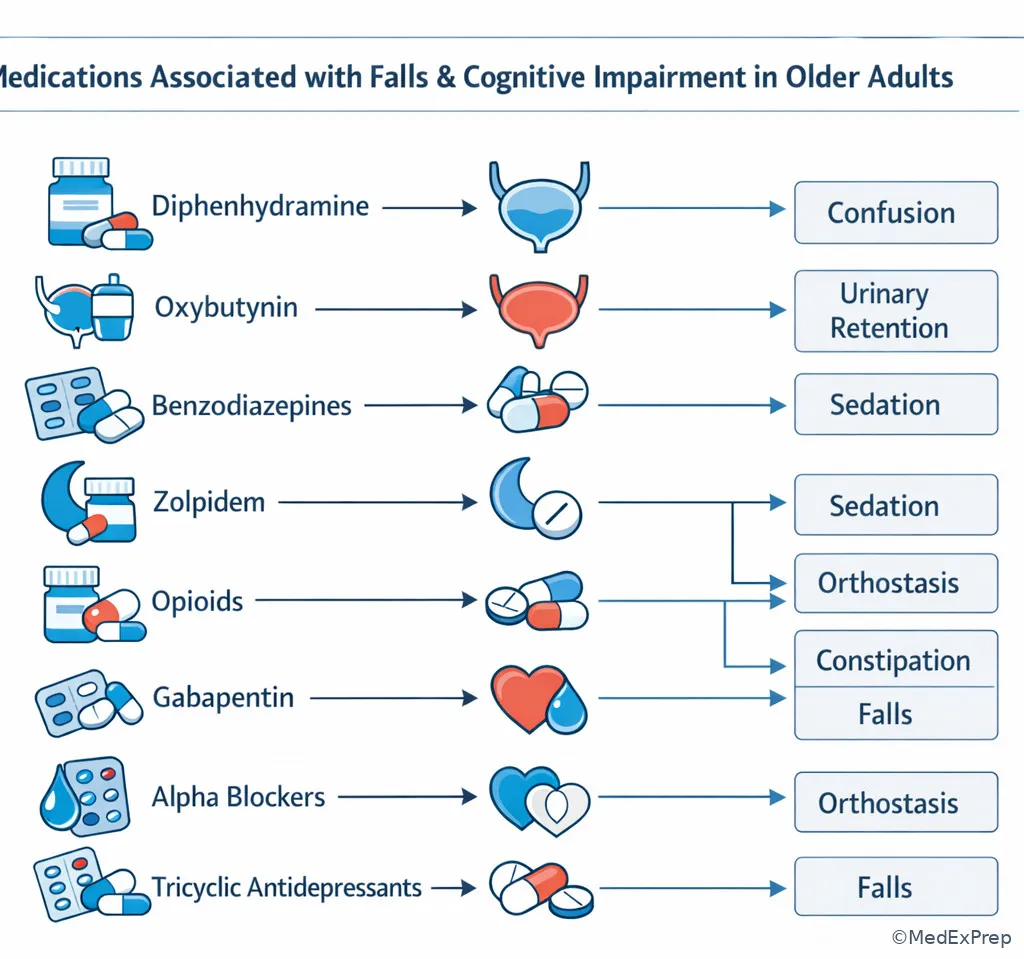
  • Benzodiazepines, sedative hypnotics, strong anticholinergics, opioids, and some antihypertensives commonly worsen cognition or falls.
  • A new functional decline after a medication change should be treated as a possible adverse drug effect until proven otherwise.
  • For BCPS questions, the best answer is often regimen simplification rather than adding another drug.
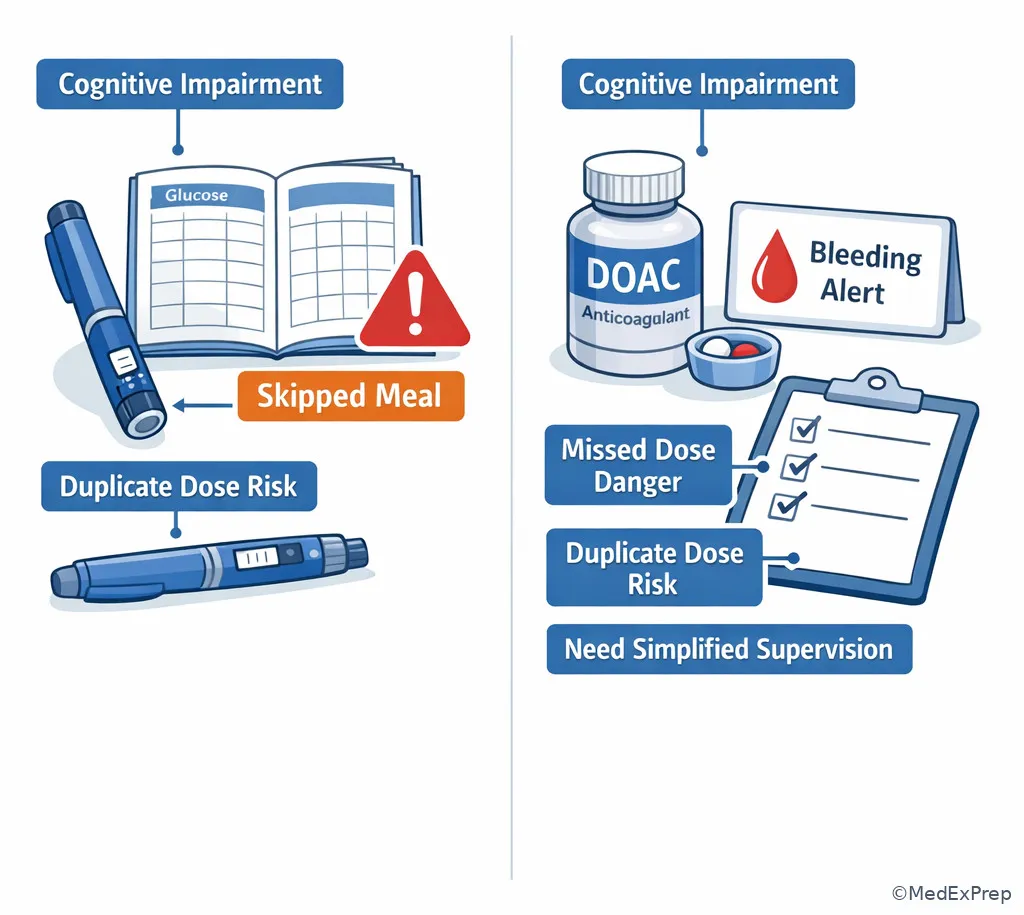
  • Insulin, anticoagulants, opioids, and sulfonylureas become higher-risk when cognition or dexterity is impaired.
  • Caregiver reliability matters as much as patient reliability when assessing medication feasibility.
  • Delirium workup and escalation come before nonurgent chronic optimization.
  • Falls plus urinary urgency treatment often point to anticholinergic harm or overtreatment, not undertreatment.
Assessment domain What the pharmacist should ask Medication consequence
ADLs Can the patient transfer, toilet, bathe, and feed without help? Determines need for assistance, facility support, and feasibility of self-administered therapies.
IADLs Who fills pillboxes, handles refills, and pays for medications? Identifies adherence barriers and whether regimen complexity is unsafe.
Cognition Is the change acute or chronic? Is attention fluctuating? Acute change suggests delirium and urgent clarification; chronic decline suggests support needs.
Mobility/falls Any recent falls, dizziness, or gait instability? Raises concern for sedatives, hypotension, neuropathy, or overintensive therapy.
Vision/hearing Can the patient read labels and hear counseling? Impacts label size, teach-back, device use, and risk of administration error.
Dexterity Can the patient open bottles, use inhalers, or measure liquids? May require device change, packaging change, or caregiver administration.
Swallowing Any difficulty swallowing tablets or capsules? Alters formulation choice and administration plan.
Social support Who supervises medications at home? Determines whether complex regimens remain reasonable.
Fig 1. Functional versus cognitive medication risk map
Exam takeaway: Use the first split to decide whether the medication problem is mainly execution failure, safety toxicity, or an acute change requiring escalation.
flowchart TD
A[Medication problem noticed] --> B{Primary clue?}
B -->|Missed doses or device errors| C[Functional or IADL barrier]
B -->|Confusion, sedation, falls| D[Drug-related cognitive or safety effect]
B -->|Acute fluctuating attention| E[Possible delirium]
C --> F[Simplify regimen and assess caregiver support]
D --> G[Review high-risk drugs and recent changes]
E --> H[Urgent clarification and escalation]

See Fig 1 for the high-yield first-pass sort used in many exam stems.

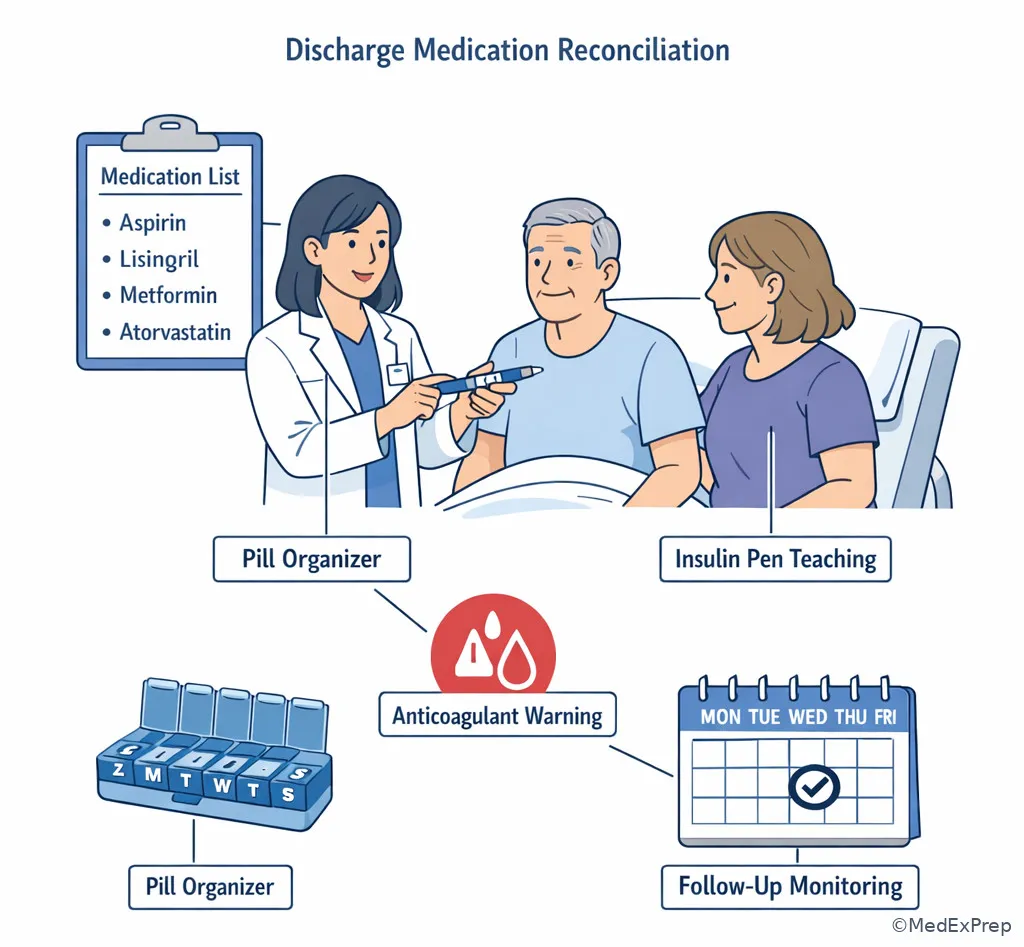
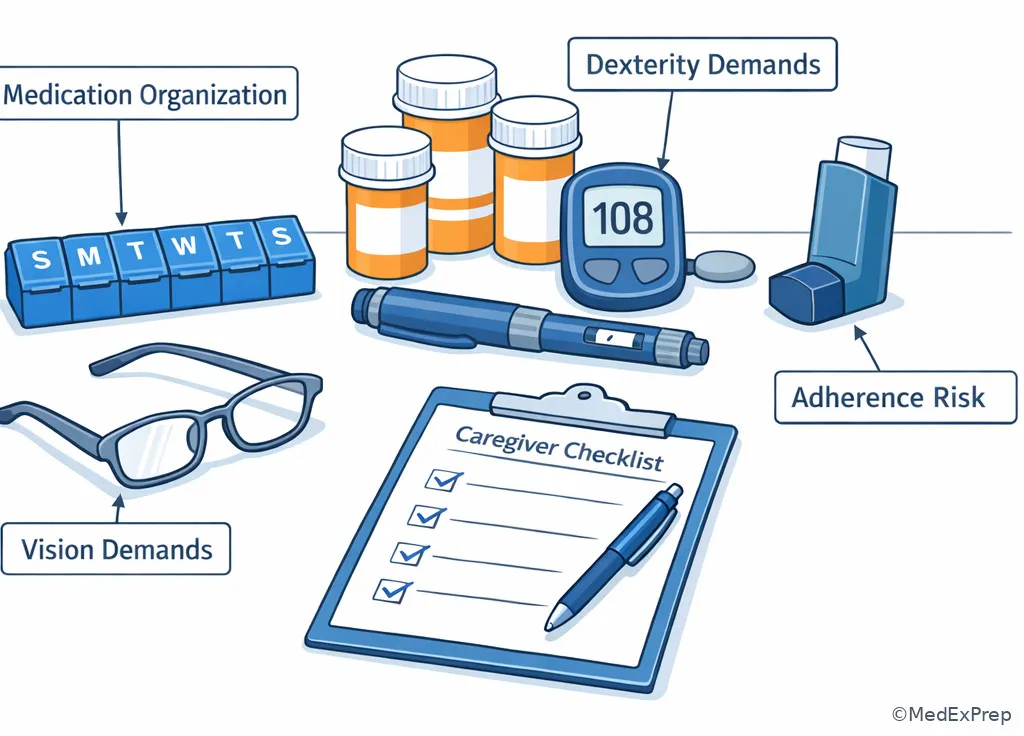
Labeled pillbox and medication self-management scene
Exam takeaway: Visual medication organization clues often identify IADL impairment before the stem explicitly says the patient has cognitive decline.
Labeled pillbox and medication self-management scene

Core content

1.1.2.1 Foundational framework: what to screen first when a regimen is failing

A. Explanation

The decision conflict is usually nonadherence versus inability versus toxicity. Students often overfocus on the drug name and miss the operational question: can this patient safely carry out the regimen as written? The single rule that resolves many stems is this: if the patient cannot perform medication-related IADLs or has an acute change in attention, the medication plan is not feasible until that barrier is addressed. WHY THIS IS TESTED: exam writers want to see whether you identify the true limiting factor before choosing a “better” drug.

Start with function because it converts abstract medication optimization into realistic execution. ADLs tell you how dependent the patient is overall; IADLs tell you whether the patient can manage medications. For pharmacists, the highest-yield IADLs are refill acquisition, pill organization, dose timing, glucose testing, injection technique, inhaler technique, and response to missed doses. Cognitive screening then asks whether the issue is chronic decline or acute delirium. Acute, fluctuating inattention changes the priority: you should recommend urgent clarification of causes and review recent drug exposures rather than simply counseling harder.

Choose functional assessment when the stem gives clues like unopened bottles, duplicate fills, inability to use an inhaler, or “forgets evening doses.” Reject the assumption that all missed doses equal motivation problems. Choose cognitive assessment when there is confusion, disorientation, fluctuating alertness, or caregiver concern. Reject routine outpatient simplification as the only answer if the mental status change is abrupt or dangerous.

Recall: In Medication Problem Prioritization, we separated urgent safety threats from chronic optimization needs. Here, we build on that by identifying whether the medication problem is caused by a functional bottleneck or by acute cognitive instability.
Fig 2. First-pass assessment flow for regimen failure
Exam takeaway: The best next pharmacist step is often to identify whether execution, cognition, or toxicity is the governing problem before changing therapy.
Notice the failure pattern
Missed doses, falls, confusion, or technique problems each point to different causes.

Decision
Acute fluctuating attention → treat as delirium risk. Stable difficulty managing tasks → assess function/IADLs.

Link to regimen
Match impairment to the drug task: timing, device use, monitoring, or adverse-effect sensitivity.

Act
Simplify, deprescribe risky drugs, involve caregivers, or urgently escalate acute change.

See Fig 2 for the practical sequence: pattern first, then cause, then medication action.

Memory anchor: Think “CAN the patient?” — Cognition, ADLs/IADLs, New drug changes. If any part fails, reassess regimen feasibility before intensifying therapy.

B. Worked example

A 79-year-old woman with heart failure, type 2 diabetes, osteoarthritis, and macular degeneration is referred because her A1c increased from 7.4% to 9.1% while taking insulin glargine 24 units subcutaneously nightly, metformin ER 1000 mg orally twice daily, and empagliflozin 10 mg orally daily. She also takes furosemide, lisinopril, and diphenhydramine 50 mg nightly for sleep. Her serum creatinine is 1.0 mg/dL, BP 128/72 mm Hg, and she proudly reports never missing clinic visits. Her daughter mentions several half-full insulin pens in the refrigerator and that the patient “sometimes cannot read the pen numbers.”

Identify task: determine the most appropriate pharmacist focus before intensifying diabetes therapy. Extract key facts: rising A1c, vision impairment, duplicate unused pens, possible administration error, sedating anticholinergic exposure. Apply rule: when medication-related IADLs or device use are impaired, fix execution before escalating therapy. Eliminate distractors: adding prandial insulin is tempting because A1c is high, but it increases complexity and hypoglycemia risk. Increasing glargine may be reasonable only after confirming actual administration. Blaming motivation is unsupported; she attends visits and stores medications. Verify: the best action is to assess insulin administration technique and vision-related feasibility, simplify support, and review diphenhydramine because it can worsen cognition and nighttime safety.

C. Exam trap

Common wrong answer: Intensify the regimen immediately by adding mealtime insulin. Why it is tempting: the A1c is uncontrolled, so a stronger regimen looks guideline-concordant on the surface. Single clue that eliminates it: multiple half-used insulin pens plus inability to read the device shows execution failure, so more complexity worsens the real problem.

D. Checkpoint

Question: A 76-year-old man with COPD, atrial fibrillation, and neuropathy uses tiotropium inhaler 2 inhalations daily, apixaban 5 mg orally twice daily, and gabapentin 300 mg orally three times daily. He reports “the inhaler never seems to help,” and his wife says he cannot remember whether he already took his evening apixaban. Which pharmacist assessment is most likely to clarify the governing problem?

  1. A. Detailed dietary sodium review
    Tempting because COPD symptoms may be misattributed to fluid issues, but it does not address inhaler technique or dose duplication risk; wrong.
  2. B. Evaluation of IADLs and medication self-management capacity
    Tempting because it feels broad, and it is correct because inhaler ineffectiveness plus uncertainty about anticoagulant dosing points to execution and organization barriers; right.
  3. C. Immediate increase of tiotropium dose
    Tempting because persistent symptoms suggest undertreatment, but tiotropium failure may reflect device misuse rather than inadequate potency; wrong.
  4. D. Change from apixaban to warfarin with INR monitoring
    Tempting because monitoring gives external oversight, but warfarin is more complex and does not solve the underlying self-management deficit; wrong.
If you missed this: Review 1.1.2.1 Foundational framework: what to screen first when a regimen is failing — focus on the rule that medication-management difficulty is an IADL problem until shown otherwise.
Pharmacist Action: Notice: missed doses, duplicate doses, device misuse, or mismatched refill patterns. SAY: “Show me exactly how you take and organize each medication.” MONITOR: refill history, technique demonstration, caregiver reliability, and near-miss events at each transition and follow-up. HOLD/CLARIFY/ESCALATE: urgent escalation if confusion is acute, fluctuating, or paired with sedation, falls, or unsafe high-risk medication use.

1.1.2.2 Functional assessment in medication use: ADLs, IADLs, mobility, and dexterity

A. Explanation

The decision conflict here is keep the drug and adapt the delivery versus change the regimen because the task itself is unrealistic. The resolving rule is: when the patient cannot physically execute the required medication task, the best intervention is usually to reduce task burden, change formulation/device, or arrange support rather than choosing a pharmacologically “stronger” option. WHY THIS IS TESTED: many stems present poor control that is actually caused by inability to administer, measure, open, or coordinate a regimen.

ADLs indicate broad dependence, but IADLs are more tightly tied to outpatient medication safety. A patient may still bathe and feed independently yet be unable to manage insulin timing, inhaler assembly, or anticoagulant adherence. Functional medication red flags include arthritis preventing bottle opening, tremor interfering with syringe use, poor inspiratory force or coordination limiting inhaler technique, difficulty standing causing orthostasis-related falls after antihypertensive intensification, and swallowing problems that make the prescribed dosage form inappropriate.

Choose regimen simplification when once-daily alternatives, blister packaging, long-acting formulations, or caregiver-administered schedules reduce failure points. Reject medications that depend on precise timing, complex titration, difficult devices, or high-consequence self-monitoring if function is inadequate. For BCPS, the practical question is not “Can the patient understand this?” alone. It is “Can the patient physically and organizationally do this every day with acceptable risk?”

Concept flow: Matching impairment to medication task
Find the task
Injection, inhalation, bottle opening, tablet swallowing, or timing complexity.

Decision
If dexterity/vision/mobility prevents safe use, change delivery or support rather than intensify.

Simplify
Prefer fewer doses, easier devices, clear packaging, and caregiver reinforcement.

Fig 3. Functional barriers to medication administration
Exam takeaway: Physical barriers such as poor vision, tremor, arthritis, and inhaler coordination often explain treatment failure better than assuming nonadherence alone.
Fig 3. Functional barriers to medication administration

See Fig 3 when you need to translate a vague “nonadherence” stem into a specific physical barrier.

Functional finding Medication task at risk High-yield pharmacist response
Arthritis/weak grip Opening bottles, splitting tablets Easy-open packaging if safe, avoid unnecessary split tablets, consider caregiver fill support.
Tremor Measuring liquids, syringe use Use unit-dose packaging, pens instead of syringes when feasible, simplify frequency.
Poor vision Reading labels, dialing pens Large-print labels, color/shape reinforcement, supervised administration if high-risk drug.
Dysphagia Swallowing tablets/capsules Switch formulation only if safe to crush/open; verify product-specific restrictions.
Limited mobility Timed access to bathroom or BP changes Review diuretic timing and orthostasis risk; reduce fall-provoking regimens.
Poor inhaler technique Drug delivery to lungs Teach-back, spacer if appropriate, device class change if coordination remains poor.

B. Worked example

A 73-year-old man with Parkinson disease, hypertension, BPH, and chronic kidney disease receives carbidopa/levodopa 25/100 mg orally four times daily, tamsulosin 0.4 mg orally nightly, amlodipine 10 mg orally daily, and oxybutynin ER 10 mg orally daily. His wife reports two falls in the last month after standing to urinate at night. He also has bothersome urgency. Clinic BP is 118/64 mm Hg seated; no serum abnormalities are notable today. A tempting clue is that the urgency makes escalation of bladder therapy look attractive.

Identify task: decide whether urinary symptom treatment should be intensified or reevaluated through function and fall risk. Extract key facts: nocturia, orthostasis-prone context, Parkinson mobility issues, falls, anticholinergic bladder drug, alpha-blocker at night. Apply rule: functional impairment plus fall history makes medications that worsen cognition, orthostasis, or mobility less acceptable. Eliminate distractors: increasing oxybutynin is tempting because urgency persists, but it may worsen cognition, constipation, and falls. Adding another antihypertensive is unsupported. Verify: the best pharmacist recommendation is to reassess the bladder regimen and fall-provoking drugs, not intensify the anticholinergic burden.

C. Exam trap

Common wrong answer: Treat the symptom in isolation by increasing the bladder anticholinergic. Why it is tempting: urgency remains uncontrolled, and the patient clearly has urinary complaints. Single clue that eliminates it: recent falls in a patient with Parkinson disease shift the priority to safety and medication-induced functional harm.

D. Checkpoint

Question: A 68-year-old woman with rheumatoid arthritis, diabetes, and asthma uses metformin ER 1000 mg orally twice daily, semaglutide 0.5 mg subcutaneously weekly, and budesonide/formoterol metered-dose inhaler 2 puffs twice daily. She reports worsening wheeze despite refill adherence. She cannot depress the inhaler canister reliably because of hand pain. Which recommendation is most appropriate?

  1. A. Add tiotropium before assessing device-related barriers
    Tempting because symptoms remain uncontrolled, but escalation before fixing delivery may add cost without improving actual drug delivery; wrong.
  2. B. Switch to a device or aid that better matches dexterity and reassess technique
    Tempting because it may seem less aggressive than adding medication, and it is correct because the key barrier is physical execution, not necessarily undertreatment; right.
  3. C. Double the budesonide/formoterol dose immediately
    Tempting because inhaled corticosteroid step-up is familiar, but dose increase will not help if the patient cannot actuate the inhaler; wrong.
  4. D. Discontinue semaglutide because nausea may worsen asthma control
    Tempting only if overreading unrelated adverse effects; it does not address the respiratory delivery problem; wrong.
If you missed this: Review 1.1.2.2 Functional assessment in medication use: ADLs, IADLs, mobility, and dexterity — focus on matching the medication task to the patient’s physical capacity.
Quick Recall:

  • Medication management belongs to which domain: ADLs or IADLs?
  • True or False: Poor disease control always means the medication regimen should be intensified first.
  • Name 3 physical barriers that can make a technically appropriate medication unsafe or ineffective.
Pharmacist Action: Notice: falls, poor technique, trouble opening containers, dysphagia, and mismatched refill history. SAY: “Please demonstrate how you use this medication at home.” MONITOR: device technique, falls, orthostatic symptoms, and caregiver support at follow-up. HOLD/CLARIFY/ESCALATE: clarify high-risk self-administered drugs such as insulin or anticoagulants when physical function is inadequate.

1.1.2.3 Cognitive assessment: delirium versus chronic impairment and why the distinction changes pharmacist action

A. Explanation

The decision conflict is routine chronic support versus urgent medication-related safety evaluation. The single resolving rule is: acute onset with fluctuating attention should be treated as delirium until proven otherwise, and the pharmacist’s immediate role is to review recent medication changes, high-risk exposures, and safety-critical drugs. WHY THIS IS TESTED: exam stems often conceal delirium behind words like “more confused,” “sleepier,” or “not himself since admission.”

Delirium is typically abrupt and fluctuating; dementia is chronic and progressive. This distinction matters because acute cognitive change can be medication-induced or medication-worsened. Frequent culprits include anticholinergics, benzodiazepines, opioids, corticosteroids, certain antiinfectives, sedative-hypnotics, and polypharmacy after transitions of care. In hospital or postdischarge cases, a new mental status change should trigger a targeted medication reconciliation focused on new starts, dose escalations, renal accumulation, CNS depressant combinations, and withdrawal states.

Choose urgent clarification and escalation when the patient cannot sustain attention, is newly disoriented, or has fluctuating alertness. Reject a purely educational intervention in these cases. Choose chronic-support strategies when the cognitive decline is gradual and stable, such as pillbox support, caregiver training, deprescribing of low-value medications, and simplification. Reject the assumption that a normal serum creatinine or “normal labs today” excludes medication-induced delirium; cognitive toxicity is clinical and often multifactorial.

High-Yield Connection: This concept is tested alongside Renal Function Estimation. Know both the mental-status pattern and the exposure pattern: a renally cleared sedating drug at an unadjusted dose can convert a chronic cognitive vulnerability into acute delirium.
Concept flow: Acute confusion medication review
Time course
Ask whether confusion started abruptly and fluctuates through the day.

Decision
Acute plus inattentive → possible delirium. Gradual stable decline → chronic support needs.

Medication sweep
Look for new drugs, anticholinergics, sedatives, opioids, dose accumulation, and duplicates.

Safety step
Recommend urgent clarification, hold suspect contributors when appropriate, and escalate promptly.

Fig 4. Delirium versus chronic cognitive decline decision tree
Exam takeaway: Abrupt onset and fluctuating attention should push you toward urgent medication-related evaluation rather than routine long-term adherence counseling.
flowchart TD
A[Confusion reported] --> B{Onset}
B -->|Hours to days| C[Assess attention and fluctuation]
B -->|Months to years| D[Assess chronic impairment support needs]
C --> E{Fluctuating or inattentive?}
E -->|Yes| F[Possible delirium]
E -->|No| G[Consider other causes but still review meds]
F --> H[Check new drugs, accumulation, withdrawal, infection, pain]
D --> I[Caregiver support, simplification, adherence plan]

See Fig 4 when a stem tries to blur chronic memory issues with a new acute medication problem.

Hospital delirium medication trigger illustration
Exam takeaway: New CNS-active drugs, anticholinergic burden, and renal accumulation are classic medication clues when attention changes abruptly.
Hospital delirium medication trigger illustration

B. Worked example

An 82-year-old man with chronic kidney disease, benign prostatic hyperplasia, insomnia, and chronic low back pain was discharged 3 days ago on trimethoprim-sulfamethoxazole DS 1 tablet orally twice daily for a urinary infection, oxycodone 5 mg orally every 6 hours as needed, and his home diphenhydramine 25 mg nightly. He presents to clinic with his daughter, who says he was “sharp last week” but now naps during the day, is disorganized, and asks the same question repeatedly. His serum creatinine is slightly above baseline; potassium is mildly elevated. The tempting clue is the history of “memory problems sometimes,” which makes dementia sound possible.

Identify task: determine whether this is chronic decline or urgent medication-related cognitive change. Extract key facts: abrupt 3-day onset, fluctuating attention, new sedating drugs, renal vulnerability, anticholinergic exposure. Apply rule: acute fluctuating cognition favors delirium and requires medication review plus escalation. Eliminate distractors: starting a chronic dementia medication is inappropriate because the timeline is wrong. Reassurance is unsafe. Verify: the best pharmacist recommendation is urgent clarification of delirium triggers, review/hold likely contributors as appropriate, and communicate the medication safety concern to the care team.

C. Exam trap

Common wrong answer: Attribute the change to baseline dementia and focus on long-term adherence tools. Why it is tempting: the patient is older and has some prior forgetfulness. Single clue that eliminates it: the onset is abrupt over days with fluctuating attention after new medications, which fits delirium risk rather than chronic neurodegeneration.

D. Checkpoint

Question: A 71-year-old woman with CKD, depression, and neuropathy takes sertraline 100 mg orally daily, gabapentin 600 mg orally three times daily, trazodone 100 mg orally nightly, and was started on cyclobenzaprine 10 mg orally three times daily yesterday for muscle pain. Today her husband reports new confusion and unsteady gait. Which pharmacist recommendation is most appropriate?

  1. A. Continue therapy and reassess in 1 week because sedation is expected early
    Tempting because some drowsiness does occur with CNS drugs, but acute confusion and gait instability raise immediate safety concerns; wrong.
  2. B. Recommend urgent evaluation for possible medication-induced delirium and review recent CNS-active additions
    Tempting because it may feel like overreaction, but it is correct because abrupt change after adding a sedating anticholinergic-like agent is a red flag; right.
  3. C. Increase sertraline because worsening mood can present as poor concentration
    Tempting because depression can impair concentration, but the abrupt onset after a new medication argues against mood as the primary cause; wrong.
  4. D. Switch trazodone to zolpidem for cleaner sleep support
    Tempting because sleep medications are often changed in confusion cases, but adding another sedative ignores the acute trigger pattern; wrong.
If you missed this: Review 1.1.2.3 Cognitive assessment: delirium versus chronic impairment and why the distinction changes pharmacist action — focus on abrupt onset plus fluctuating attention as the discriminator.
Pharmacist Action: Notice: abrupt cognitive change, fluctuating attention, new CNS medications, renal accumulation risk, and falls. SAY: “This rapid change is not routine forgetfulness; it needs urgent medication review.” MONITOR: mental status trajectory, sedation level, recent medication additions, renal function, and high-risk medication exposure daily or at each acute encounter. HOLD/CLARIFY/ESCALATE: escalate immediately when acute confusion affects safety or involves insulin, anticoagulants, opioids, or sedative combinations.

1.1.2.4 Medication classes that worsen function, cognition, and falls

A. Explanation

The decision conflict is treat the original symptom versus avoid disproportionate harm in a vulnerable adult. The rule that resolves it is: in patients with impaired function, prior falls, or cognitive vulnerability, choose the option with the lowest sedation, anticholinergic burden, and orthostatic burden that still meets the therapeutic goal. WHY THIS IS TESTED: many board questions ask you to identify the one medication that turns an acceptable regimen into an unsafe one.

High-yield functional and cognitive offenders include benzodiazepines, nonbenzodiazepine hypnotics, first-generation antihistamines, tricyclic antidepressants, antimuscarinics for overactive bladder, skeletal muscle relaxants, opioids, and multidrug CNS depression. Antihypertensive intensification, diuretics timed poorly, and alpha-blockers may also worsen dizziness, nocturia, or falls. The exam challenge is comparative: not “is this drug ever used?” but “is this drug the least appropriate in this patient’s functional context?”

Choose alternatives that reduce central adverse effects or regimen burden. Reject “treating side effects with more drugs” if the original agent is the safer target. For example, nighttime diphenhydramine in an older adult with confusion is often the wrong answer even if insomnia is real; oxybutynin in a patient with falls and constipation is often the wrong answer even if urgency is real. Safety-first means tracing the adverse-effect mechanism back to the culprit drug class.

Memory anchor: For older-adult cognitive/fall offenders, remember “SLOW MIND” — Sedatives, Low-pressure drugs causing orthostasis, Opioids, Worsening anticholinergics, Muscle relaxants, Insomnia drugs, Neuropathic sedatives, Duplicate CNS depressants.
Concept flow: Identifying the drug most likely to drive falls or confusion
Start with symptom
Falls, confusion, nocturia dizziness, or oversedation.

Decision
Recent sedative, anticholinergic, or orthostasis-provoking change? If yes, target that first.

Reduce burden
Deprescribe, lower dose, change class, and simplify timing.

Drug/class Why it is tempting Why to avoid or reconsider in impairment Safer direction
Diphenhydramine Easy sleep aid, OTC familiarity Strong anticholinergic burden; confusion, urinary retention, falls Nonpharmacologic sleep plan; if medication needed, choose lower anticholinergic burden and reassess cause
Oxybutynin Effective for urgency symptoms Cognitive impairment, constipation, dry mouth, fall contribution Minimize anticholinergic load; consider alternative strategies and patient-specific options
Benzodiazepines Rapid anxiolysis or insomnia relief Sedation, falls, delirium risk, accumulation Reserve carefully; treat underlying cause and use lowest-risk options
Z-drugs Perceived safer sleep medications Falls and confusion still occur, especially in older adults Behavioral sleep strategies; reassess necessity
Muscle relaxants Acute pain relief Sedation and anticholinergic-like effects with little long-term advantage Non-sedating analgesic strategy where appropriate
Alpha-blockers BPH symptom relief Orthostatic hypotension and falls Monitor BP/falls closely and evaluate timing/need
Gabapentinoids plus opioids Multimodal pain control Additive CNS depression and fall risk Use lowest effective doses and reassess combination necessity
Fig 5. Medication classes linked to falls and cognitive decline risk
Exam takeaway: When several drugs are plausible culprits, prioritize anticholinergics, sedatives, and orthostasis-provoking agents as the most testable offenders.
Fig 5. Medication classes linked to falls and cognitive decline risk

See Fig 5 for the classic culprit classes that appear repeatedly in geriatric pharmacotherapy stems.

B. Worked example

A 77-year-old woman with insomnia, neuropathy, overactive bladder, and hypertension takes zolpidem 10 mg orally nightly, gabapentin 300 mg orally three times daily, oxybutynin ER 10 mg orally daily, and hydrochlorothiazide 25 mg orally each morning. She had two nighttime falls this month. Sodium is 133 mEq/L, BP 110/62 mm Hg, and she reports dry mouth and constipation. A tempting clue is the mild hyponatremia, which may draw attention away from the medication pattern.

Identify task: determine the medication most important to target for functional safety. Extract key facts: falls at night, sedative-hypnotic, anticholinergic burden, borderline low BP, constipation, dry mouth. Apply rule: prioritize classes with strongest CNS or anticholinergic contribution and target modifiable medication-related harm first. Eliminate distractors: hydrochlorothiazide may contribute to nocturia and orthostasis, but the anticholinergic and hypnotic combination is more centrally concerning. Starting constipation therapy treats the consequence, not the cause. Verify: the answer centers on deprescribing or reassessing the fall-promoting sedative/anticholinergic regimen.

C. Exam trap

Common wrong answer: Focus only on the mildly low sodium or only on the diuretic timing. Why it is tempting: both can contribute to falls and are concrete lab-based clues. Single clue that eliminates it: the cluster of dry mouth, constipation, insomnia medication use, and recurrent nighttime falls points more directly to high anticholinergic/CNS burden.

D. Checkpoint

Question: A 75-year-old man with diabetic neuropathy, BPH, chronic pain, and insomnia takes pregabalin 75 mg orally twice daily, oxycodone 5 mg orally every 8 hours as needed, tamsulosin 0.4 mg orally nightly, and doxylamine 25 mg orally nightly. He reports morning grogginess and one recent fall when getting out of bed. Which medication is the most appropriate first target for deprescribing discussion?

  1. A. Pregabalin
    Tempting because it can cause dizziness, but the stem emphasizes a discretionary nighttime sedative with anticholinergic burden; wrong first target.
  2. B. Oxycodone
    Tempting because opioids increase falls, but the drug is as-needed and the strongest nightly routine offender is elsewhere; wrong first target for this specific pattern.
  3. C. Tamsulosin
    Tempting because nocturnal orthostasis matters, but the more avoidable sleep aid with anticholinergic burden is the clearer first target; wrong.
  4. D. Doxylamine
    Tempting because OTC sleep aids are often overlooked, and it is correct because regular nighttime anticholinergic sedation best fits morning grogginess and fall risk; right.
If you missed this: Review 1.1.2.4 Medication classes that worsen function, cognition, and falls — focus on identifying the most avoidable anticholinergic or sedative driver in a vulnerable patient.
Quick Recall:

  • The OTC sleep aid most likely to worsen anticholinergic burden is ___.
  • True or False: Z-drugs are functionally harmless in older adults if used only at night.
  • Name 3 medication classes that commonly raise fall risk.
Pharmacist Action: Notice: anticholinergic stacking, duplicate CNS depressants, falls after recent medication starts, and nighttime symptom patterns. SAY: “This medication may be helping one symptom but worsening memory, balance, or daytime safety.” MONITOR: falls, sedation, bowel/bladder effects, orthostatic symptoms, and caregiver concerns within days to weeks after changes. HOLD/CLARIFY/ESCALATE: escalate if falls recur, mental status acutely worsens, or high-risk drugs are being taken inconsistently.

1.1.2.5 Integrating findings into pharmacist recommendations: simplification, support, and monitoring

A. Explanation

The decision conflict is optimize disease metrics versus preserve safe medication use aligned with the patient’s actual capacity. The resolving rule is: after functional or cognitive impairment is identified, choose the least complex regimen that can reliably achieve the highest-priority therapeutic goals. WHY THIS IS TESTED: exam items reward you for matching regimen intensity to patient capacity, not for pursuing idealized guideline targets at any cost.

Practical pharmacist actions include deprescribing low-value or harmful medications, reducing dosing frequency, selecting easier dosage forms, synchronizing administration times, simplifying insulin plans, using teach-back, involving caregivers, and documenting clear monitoring parameters. The higher the consequence of a medication error, the lower the tolerance for unaided self-management. Thus insulin, anticoagulants, opioids, antiarrhythmics, and narrow-therapeutic-index medications demand special scrutiny.

Choose caregiver-supported or simplified regimens when the patient reliably benefits from them. Reject complex step-ups that depend on perfect timing or self-monitoring when that reliability is absent. In transitions of care, the pharmacist should clarify who owns the medication list, who fills it, and how follow-up will occur. This is also where upcoming topics connect: goals of care may appropriately de-intensify therapy, and renal function assessment may force additional dose simplification.

High-Yield Connection: This concept is tested alongside Goals Of Care Alignment. Know both the functional feasibility question and the time-to-benefit question; together they determine whether intensification, maintenance, or de-intensification is most appropriate.
Fig 6. Pharmacist action pathway after impairment is identified
Exam takeaway: Once impairment is recognized, the best answer usually combines simplification, caregiver support, monitoring, and targeted deprescribing rather than isolated drug escalation.
Classify impairment
Functional barrier, chronic cognitive decline, or acute delirium concern.

Decision
If acute unsafe change → urgent escalation. Otherwise → simplify regimen and support execution.

Target highest-risk drugs
Insulin, anticoagulants, opioids, sedatives, anticholinergics, and renally accumulated agents.

Build the plan
Teach-back, caregiver role, monitoring schedule, and explicit hold/clarify thresholds.

See Fig 6 for the integrated pharmacist action pathway most likely to produce the best exam answer.

Transitions-of-care medication simplification illustration
Exam takeaway: Safe simplification requires matching caregiver support, high-risk drugs, and follow-up responsibilities after discharge.
Transitions-of-care medication simplification illustration

B. Worked example

An 84-year-old woman with atrial fibrillation, heart failure, osteoarthritis, and mild cognitive impairment is discharged on apixaban 5 mg orally twice daily, furosemide 40 mg orally twice daily, metoprolol succinate 100 mg orally daily, acetaminophen 1000 mg orally three times daily, and newly prescribed tramadol 50 mg orally every 6 hours as needed. Her son visits three times weekly but does not live with her. She has previously mixed up morning and evening medications, and she now says, “I keep the blood thinner in my purse so I won’t forget it.” The distracting clue is stable vitals and an apparently normal discharge summary.

Identify task: decide the most appropriate pharmacist recommendation to improve safety after discharge. Extract key facts: high-risk anticoagulant, mild cognitive impairment, limited caregiver presence, evidence of disorganized storage, new opioid-like analgesic. Apply rule: when self-management of a high-harm medication is unreliable, simplify and support before accepting the regimen as written. Eliminate distractors: keeping all medications unchanged with routine counseling is inadequate. Adding another adherence app ignores cognition. Increasing home monitoring without changing the regimen burden may still fail. Verify: the best answer includes explicit anticoagulant organization support, regimen review for safer pain control, caregiver involvement, and clear follow-up monitoring.

C. Exam trap

Common wrong answer: Provide routine counseling only because the patient can repeat instructions once in clinic. Why it is tempting: teach-back may look reassuring in the moment. Single clue that eliminates it: real-world medication organization is already unreliable with a high-risk anticoagulant, so the plan must change, not just the counseling script.

D. Checkpoint

Question: A 78-year-old man with type 2 diabetes, coronary disease, and early cognitive decline takes insulin lispro 8 units subcutaneously with meals, insulin glargine 18 units nightly, aspirin 81 mg orally daily, and metoprolol tartrate 50 mg orally twice daily. His daughter can visit only on weekends. He often skips meals unpredictably and has had two recent hypoglycemic episodes. Which recommendation is most appropriate?

  1. A. Increase mealtime lispro to improve A1c
    Tempting because insulin intensification can lower glucose, but unpredictable meal intake and cognitive impairment increase hypoglycemia risk; wrong.
  2. B. Simplify the insulin regimen and reassess goals, adherence support, and monitoring plan
    Tempting because it may seem less aggressive than pursuing tighter control, and it is correct because safety and feasibility now govern the regimen choice; right.
  3. C. Add glyburide to reduce injection burden
    Tempting because oral therapy seems simpler, but glyburide adds significant hypoglycemia risk in an older adult; wrong.
  4. D. Continue the current regimen but move all doses to the morning
    Tempting because schedule consolidation sounds simpler, but it does not appropriately address meal-related insulin mismatch or hypoglycemia risk; wrong.
If you missed this: Review 1.1.2.5 Integrating findings into pharmacist recommendations: simplification, support, and monitoring — focus on choosing the least complex regimen that can be used safely and reliably.
Pharmacist Action: Notice: high-risk drugs plus unreliable organization, missed meals, inconsistent support, or unsafe storage habits. SAY: “Because this medication can cause major harm if taken incorrectly, we need a simpler and more supervised plan.” MONITOR: refill synchronization, caregiver administration reliability, hypoglycemia/bleeding events, and follow-up within days to weeks after changes. HOLD/CLARIFY/ESCALATE: clarify any regimen that combines cognitive impairment with insulin, anticoagulants, or newly added sedating analgesics.
Insulin and anticoagulant high-risk medication support image
Exam takeaway: High-harm medications require a lower threshold for caregiver involvement and regimen simplification when cognition or function is impaired.
Insulin and anticoagulant high-risk medication support image

Exam Traps & Differentiators

  • Most common wrong answer and why: Intensify disease therapy before assessing feasibility. This is tempting because the disease metric is abnormal, but the stem often gives a hidden clue that the patient cannot use the current regimen correctly.
  • Looks similar but isn't: Chronic memory complaints are not the same as abrupt fluctuating attention. The former points to support planning; the latter points to delirium risk and urgent medication review.
  • If the stem says “started yesterday,” “since discharge,” or “not himself today,” think recent medication change or accumulation.
  • If the stem says unopened inhalers, extra insulin pens, or uncertain evening doses, think IADL failure rather than lack of efficacy.
  • If the stem says falls, dry mouth, constipation, and sleep aid use, think anticholinergic or sedative burden.
  • If the stem says poor vision, tremor, arthritis, or dysphagia, think device/formulation mismatch.
  • If the stem says CKD plus new confusion on a renally cleared CNS-active drug, think dose accumulation; this links directly to the upcoming Renal Function Estimation topic.
Confusable pair Why they look similar Single discriminator
Delirium vs chronic dementia Both involve confusion and poor recall Delirium is acute and fluctuating with attention impairment
Nonadherence vs inability Both can cause uncontrolled disease Inability is revealed by failed technique, organization, or task performance
Disease progression vs device misuse Both cause poor symptom control Demonstration of incorrect technique resolves the question
Urinary symptom burden vs anticholinergic harm Both center on bladder complaints Falls, constipation, and confusion point toward medication harm
Routine forgetfulness vs unsafe anticoagulant use Both sound like mild memory issues High-risk medication plus uncertain dosing requires system change, not reassurance
Medication Problem Prioritization vs Functional Assessment Both ask what matters most right now Prioritization ranks problems; functional assessment explains whether the plan is executable
Comparison of common assessment traps
Exam takeaway: The wrong answer usually treats the visible symptom, while the right answer addresses the underlying execution or safety barrier.
flowchart LR
A[Abnormal outcome] --> B{What caused it?}
B -->|Disease truly uncontrolled| C[Intensify if safe]
B -->|Patient cannot execute regimen| D[Simplify or support]
B -->|Drug causing harm| E[Deprescribe or adjust]
B -->|Acute cognitive change| F[Urgent escalation and review]
Review connection: The traps above test whether you can distinguish disease failure from regimen failure. If any felt unfamiliar, revisit 1.1.2.1 Foundational framework: what to screen first when a regimen is failing and 1.1.2.3 Cognitive assessment: delirium versus chronic impairment and why the distinction changes pharmacist action before attempting the Self-check quiz.

Algorithm / Approach

Concept flow: Functional and cognitive assessment approach for pharmacists
Start with the medication task
Ask what the patient must actually do: remember, organize, inject, inhale, monitor, or avoid duplication.

Acute change?
If onset is abrupt with fluctuating attention, recommend urgent medication-related evaluation for delirium and recent drug changes.

Functional barrier?
If vision, dexterity, mobility, or swallowing blocks correct use, change device/formulation/support rather than intensify.

Target high-risk drugs first
Prioritize insulin, anticoagulants, opioids, sedatives, anticholinergics, and renally cleared CNS-active drugs.

Build a safe plan
Simplify dosing, define caregiver role, set monitoring frequency, and specify when to hold, clarify, or escalate.

Rapid Review

  • Medication management → IADL, not ADL
  • Acute fluctuating attention → think delirium, not routine dementia counseling
  • Unused pens or inhalers → technique/execution failure before pharmacologic failure
  • Falls plus dry mouth/constipation → think anticholinergic burden
  • Nighttime grogginess with OTC sleep aid → first-generation antihistamine trap
  • Unpredictable meals plus prandial insulin → simplify to reduce hypoglycemia risk
  • High-risk drug plus uncertain dose timing → caregiver system change beats routine counseling
  • Poor vision/tremor/arthritis → delivery mismatch more likely than “noncompliance”
  • New confusion after discharge → review recent additions, duplications, and renal accumulation
  • Orthostasis clues with BPH therapy → alpha-blocker safety review
  • Chronic stable decline → support plan; abrupt change → urgent medication review
  • Board-style best answer → address the limiting barrier, not just the disease marker

Self-check quiz

1. A 78-year-old woman with hypertension and osteoarthritis takes lisinopril 20 mg orally daily and acetaminophen 650 mg orally three times daily. Her daughter now fills her weekly pillbox because the patient can no longer manage refills, medication timing, or bill payment independently, although she still bathes and dresses herself. Which domain is most directly impaired?

  1. A. ADLs
  2. B. IADLs
  3. C. Basic mobility only
  4. D. Sensory function only

2. A 74-year-old man with allergic rhinitis, insomnia, and BPH takes tamsulosin 0.4 mg orally nightly and asks about an OTC sleep aid. Which option is most likely to worsen cognitive and anticholinergic burden?

  1. A. Doxylamine 25 mg orally nightly
  2. B. Melatonin 3 mg orally nightly
  3. C. Ramelteon 8 mg orally nightly
  4. D. Sleep hygiene counseling only

3. A 72-year-old woman with COPD, cataracts, and rheumatoid arthritis uses fluticasone/salmeterol metered-dose inhaler 2 puffs inhaled twice daily and albuterol inhaler 2 puffs every 4 hours as needed. She reports worsening dyspnea despite on-time refills. She cannot coordinate inhaler actuation because of hand pain, and a home pulse oximeter reading of 95% makes “stable disease” a tempting interpretation. Which is the most appropriate pharmacist recommendation?

  1. A. Increase fluticasone/salmeterol strength immediately
  2. B. Add tiotropium without reassessing device fit
  3. C. Reassess technique and switch to a device strategy that matches her dexterity
  4. D. Continue current therapy and recheck in 6 months

4. A 69-year-old man with CKD, neuropathy, and insomnia takes gabapentin 600 mg orally three times daily, trazodone 100 mg orally nightly, and was started on cyclobenzaprine 10 mg orally three times daily yesterday. His spouse reports new disorientation and wandering overnight. Temperature is normal, and his blood pressure is stable. Which pharmacist recommendation is most appropriate?

  1. A. Continue therapy because the sedative effect should resolve after several days
  2. B. Recommend urgent evaluation for possible medication-induced delirium
  3. C. Increase trazodone because poor sleep likely explains the confusion
  4. D. Add diphenhydramine for nighttime agitation

5. A 76-year-old woman with atrial fibrillation, diabetes, and mild cognitive impairment takes apixaban 5 mg orally twice daily, metformin ER 1000 mg orally twice daily, and insulin glargine 20 units subcutaneously nightly. She often cannot remember whether she took her evening apixaban, and her son visits only once weekly. Which is the most appropriate next pharmacist step?

  1. A. Change apixaban to warfarin because INR monitoring will solve the problem
  2. B. Intensify diabetes therapy because hyperglycemia is more urgent than anticoagulant organization
  3. C. Implement a supervised medication organization strategy and reassess high-risk drug management
  4. D. Continue the regimen because she can repeat instructions during counseling

6. An 83-year-old man with heart failure, CKD, BPH, and chronic pain takes furosemide 40 mg orally twice daily, tamsulosin 0.4 mg orally nightly, oxycodone 5 mg orally every 6 hours as needed, and diphenhydramine 25 mg orally nightly. He reports two nighttime falls, severe dry mouth, and morning confusion since starting the sleep aid 1 week ago. Which medication is the best first target for discontinuation recommendation?

  1. A. Furosemide
  2. B. Tamsulosin
  3. C. Oxycodone
  4. D. Diphenhydramine

7. A 79-year-old woman with type 2 diabetes, coronary disease, CKD, and early cognitive decline takes insulin lispro 10 units subcutaneously before meals, insulin glargine 26 units nightly, and metoprolol succinate 100 mg orally daily. She skips lunch often, has had two glucose readings below 60 mg/dL this week, and her neighbor occasionally reminds her to eat. A recent A1c of 8.4% makes intensification seem plausible. Which recommendation is most appropriate?

  1. A. Increase lispro to 12 units before meals
  2. B. Add glyburide 2.5 mg orally daily to improve A1c
  3. C. Simplify the insulin regimen and reassess glycemic goals and support structure
  4. D. Continue the current regimen because the A1c is not severely elevated

8. A 81-year-old woman with osteoarthritis, overactive bladder, depression, and insomnia takes sertraline 50 mg orally daily, oxybutynin ER 10 mg orally daily, gabapentin 300 mg orally three times daily, and zolpidem 10 mg orally nightly. She has constipation, dry mouth, and a new fall after waking to urinate at 2 AM. Which regimen feature most strongly explains the pattern and should drive the pharmacist’s recommendation?

  1. A. Sertraline causing isolated orthostasis
  2. B. Anticholinergic plus sedative burden from oxybutynin and zolpidem
  3. C. Gabapentin alone because all falls on gabapentin require discontinuation
  4. D. Untreated overactive bladder requiring a higher oxybutynin dose

Answer key

1. Question 1

Correct answer: B. IADLs

  • A. ADLs: Tempting because the patient is older and needs help somewhere, but bathing and dressing remain intact; the single clue is loss of refill and bill management, which are IADLs, not ADLs. Source: functional assessment frameworks in geriatric pharmacotherapy texts and ACCP-style patient assessment principles.
  • B. IADLs: Tempting because it directly matches medication management, and it is correct because handling refills, timing, and finances are classic instrumental tasks governing outpatient medication safety. Source: DiPiro and standard geriatric assessment models.
  • C. Basic mobility only: Tempting if one assumes all independence problems stem from walking limitation, but the stem gives organization and finance deficits, not isolated gait impairment. Source: geriatric functional assessment literature.
  • D. Sensory function only: Tempting because sensory loss can affect medication use, but no vision/hearing clue is given; the discriminator is inability to manage higher-order tasks. Source: standard functional domain definitions.
If you missed this: Review 1.1.2.2 Functional assessment in medication use: ADLs, IADLs, mobility, and dexterity — focus on medication management as an IADL domain.

2. Question 2

Correct answer: A. Doxylamine 25 mg orally nightly

  • A. Doxylamine: Tempting because it is a common OTC sleep option, and it is correct because first-generation antihistamines add anticholinergic burden, confusion risk, urinary retention risk, and falls risk, especially with BPH. Source: AGS Beers Criteria; AHFS Drug Information.
  • B. Melatonin: Tempting because it is used for sleep, but it does not carry the same anticholinergic burden; the discriminator is drug class. Source: Beers Criteria comparison principles.
  • C. Ramelteon: Tempting because it is also a sleep medication, but it is not the classic anticholinergic trap in older adults. Source: Lexicomp and geriatric sleep guidance.
  • D. Sleep hygiene counseling only: Tempting because nonpharmacologic treatment is often preferred, but the question asks which option most likely worsens anticholinergic burden. Source: sleep management guidance.
If you missed this: Review 1.1.2.4 Medication classes that worsen function, cognition, and falls — focus on first-generation antihistamines as high-yield anticholinergic traps.

3. Question 3

Correct answer: C. Reassess technique and switch to a device strategy that matches her dexterity

  • A. Increase fluticasone/salmeterol strength immediately: Tempting because worsening dyspnea often leads to controller escalation, but the pharmacologic intensity is not the key issue when the patient cannot actuate the device. The single clue is hand pain preventing coordination. Source: inhaler technique guidance; DiPiro pulmonary therapeutics.
  • B. Add tiotropium without reassessing device fit: Tempting because triple therapy may help COPD, but adding a second device can worsen the same execution barrier. The discriminator is inability to use the existing inhaler. Source: GOLD-informed medication use principles and device teaching standards.
  • C. Reassess technique and switch to a device strategy that matches her dexterity: Correct because PK/PD benefit is impossible without delivery, and pharmacist-scope action is to optimize device selection and teach-back before escalation. Source: Lexicomp device counseling and guideline-based inhaler use recommendations.
  • D. Continue current therapy and recheck in 6 months: Tempting because pulse oximetry is not alarming, but persistent symptoms with a known technique barrier require intervention now. The clue is demonstrated functional limitation. Source: COPD pharmacotherapy follow-up standards.
If you missed this: Review 1.1.2.2 Functional assessment in medication use: ADLs, IADLs, mobility, and dexterity — focus on device mismatch as a cause of treatment failure.

4. Question 4

Correct answer: B. Recommend urgent evaluation for possible medication-induced delirium

  • A. Continue therapy because the sedative effect should resolve after several days: Tempting because mild drowsiness can occur early with CNS medications, but abrupt disorientation and wandering are safety red flags. The discriminator is acute onset after a new drug. Source: Beers Criteria; delirium medication safety literature.
  • B. Recommend urgent evaluation for possible medication-induced delirium: Correct because acute fluctuating cognition after a new CNS-active medication in a CKD patient suggests drug-induced or drug-worsened delirium requiring prompt review. Source: geriatric delirium guidance; Lexicomp adverse-effect data.
  • C. Increase trazodone because poor sleep likely explains the confusion: Tempting because insomnia and confusion may coexist, but more sedation worsens the likely mechanism. The clue is the recent addition of cyclobenzaprine. Source: AHFS; Beers Criteria.
  • D. Add diphenhydramine for nighttime agitation: Tempting because it can sedate quickly, but anticholinergic burden can worsen delirium. The discriminator is acute confusion. Source: AGS Beers Criteria.
If you missed this: Review 1.1.2.3 Cognitive assessment: delirium versus chronic impairment and why the distinction changes pharmacist action — focus on abrupt onset plus fluctuating attention after a new CNS drug.

5. Question 5

Correct answer: C. Implement a supervised medication organization strategy and reassess high-risk drug management

  • A. Change apixaban to warfarin because INR monitoring will solve the problem: Tempting because monitoring appears to add oversight, but warfarin is more complex and does not fix organization failure. The discriminator is unreliable dosing of a high-risk drug due to self-management limitations. Source: anticoagulation management principles; ACCP antithrombotic guidance.
  • B. Intensify diabetes therapy because hyperglycemia is more urgent than anticoagulant organization: Tempting if focusing only on chronic disease metrics, but uncertain anticoagulant dosing creates immediate harm potential. Source: pharmacist prioritization and medication safety standards.
  • C. Implement a supervised medication organization strategy and reassess high-risk drug management: Correct because the safest action addresses the execution barrier around a high-consequence medication and aligns the regimen with available support. Source: transitions-of-care and adherence support literature.
  • D. Continue the regimen because she can repeat instructions during counseling: Tempting because in-clinic teach-back may look reassuring, but real-world uncertainty about doses is the decisive clue. Source: outpatient medication self-management frameworks.
If you missed this: Review 1.1.2.5 Integrating findings into pharmacist recommendations: simplification, support, and monitoring — focus on high-risk medication management when cognitive reliability is limited.

6. Question 6

Correct answer: D. Diphenhydramine

  • A. Furosemide: Tempting because nocturia and nighttime bathroom trips can contribute to falls, but the strongest new reversible driver of dry mouth and confusion is not the diuretic. The discriminator is symptom onset after the new sleep aid. Source: heart failure diuretic use guidance; Beers Criteria.
  • B. Tamsulosin: Tempting because alpha-blockers can worsen orthostasis, but severe dry mouth and morning confusion are not its signature pattern. The clue is the recent addition of an anticholinergic sleep aid. Source: Lexicomp adverse-effect profiles.
  • C. Oxycodone: Tempting because opioids increase falls, but it is as-needed and the cluster of anticholinergic symptoms points elsewhere as the best first target. Source: opioid safety guidance.
  • D. Diphenhydramine: Correct because it is newly added, strongly anticholinergic, sedating, and best explains dry mouth, confusion, and nighttime fall risk. Source: AGS Beers Criteria; AHFS Drug Information.
If you missed this: Review 1.1.2.4 Medication classes that worsen function, cognition, and falls — focus on recognizing first-generation antihistamines as high-yield avoidable offenders.

7. Question 7

Correct answer: C. Simplify the insulin regimen and reassess glycemic goals and support structure

  • A. Increase lispro to 12 units before meals: Tempting because the A1c remains above a typical goal, but skipped lunches and recent hypoglycemia make more prandial insulin unsafe. The discriminator is unpredictable meal intake. Source: diabetes management guidance; ADA Standards of Care.
  • B. Add glyburide 2.5 mg orally daily to improve A1c: Tempting because it reduces injections, but glyburide is a poor older-adult choice because of prolonged hypoglycemia risk. The single eliminating fact is age with cognitive decline and hypoglycemia history. Source: ADA Standards; Beers Criteria.
  • C. Simplify the insulin regimen and reassess glycemic goals and support structure: Correct because the practical and pharmacodynamic risk is excessive hypoglycemia from a complex meal-dependent regimen that the patient cannot execute reliably. Source: ADA Standards; DiPiro diabetes chapter.
  • D. Continue the current regimen because the A1c is not severely elevated: Tempting because 8.4% is not extreme, but recent hypoglycemia already proves the regimen is unsafe as written. The clue is two glucose values below 60 mg/dL. Source: ADA hypoglycemia prevention guidance.
If you missed this: Review 1.1.2.5 Integrating findings into pharmacist recommendations: simplification, support, and monitoring — focus on simplifying high-risk regimens when meal patterns and cognition are unreliable.

8. Question 8

Correct answer: B. Anticholinergic plus sedative burden from oxybutynin and zolpidem

  • A. Sertraline causing isolated orthostasis: Tempting because SSRIs can have adverse effects and may contribute to falls in some patients, but dry mouth and constipation point more strongly to anticholinergic harm. The discriminator is the symptom cluster. Source: Lexicomp adverse-effect profiles.
  • B. Anticholinergic plus sedative burden from oxybutynin and zolpidem: Correct because nighttime awakening plus sedation and anticholinergic effects creates a classic fall pattern. The single clue is the combination of constipation, dry mouth, and nocturnal fall. Source: Beers Criteria; OAB medication safety guidance.
  • C. Gabapentin alone because all falls on gabapentin require discontinuation: Tempting because gabapentin can cause dizziness, but “all falls require discontinuation” is too absolute, and the stem gives stronger class-specific clues elsewhere. Source: neuropathic pain guidance and geriatric safety principles.
  • D. Untreated overactive bladder requiring a higher oxybutynin dose: Tempting because the fall occurred during nighttime urination, but escalating the anticholinergic would worsen the likely mechanism. The key clue is existing anticholinergic adverse effects. Source: Beers Criteria; bladder pharmacotherapy references.
If you missed this: Review 1.1.2.4 Medication classes that worsen function, cognition, and falls — focus on the combined clue pattern of dry mouth, constipation, nighttime sedative use, and falls.

References

  • American Geriatrics Society Beers Criteria Update Expert Panel. “American Geriatrics Society 2023 Updated AGS Beers Criteria for Potentially Inappropriate Medication Use in Older Adults.” Journal of the American Geriatrics Society, 2023.
  • DiPiro, Joseph T., et al., editors. Pharmacotherapy: A Pathophysiologic Approach. 12th ed., McGraw-Hill, 2023.
  • Lexicomp Online. Wolters Kluwer Health, current clinical drug monographs and geriatric precautions.
  • American Diabetes Association Professional Practice Committee. “Standards of Care in Diabetes—2026.” Diabetes Care, 2026.
  • AHFS Drug Information. American Society of Health-System Pharmacists, current edition.

Last reviewed: March 12, 2026

Keep reading, free

Enter your email to read lesson 2 now.

Free. We may also email you about our programs. No spam, and you can ask us to remove your email at any time.

Liked it?

BCPS Prep Course (BCPS) has 76 lessons.

PharmExPrep
Programs
For organizations
ContactLog inGet a free guide